- Home
- Water Treatment & Pumping
Solar for water treatment · Municipal & utility EPC
Solar for Water Treatment Plants in Cebu. Lower pumping cost per cubic meter.
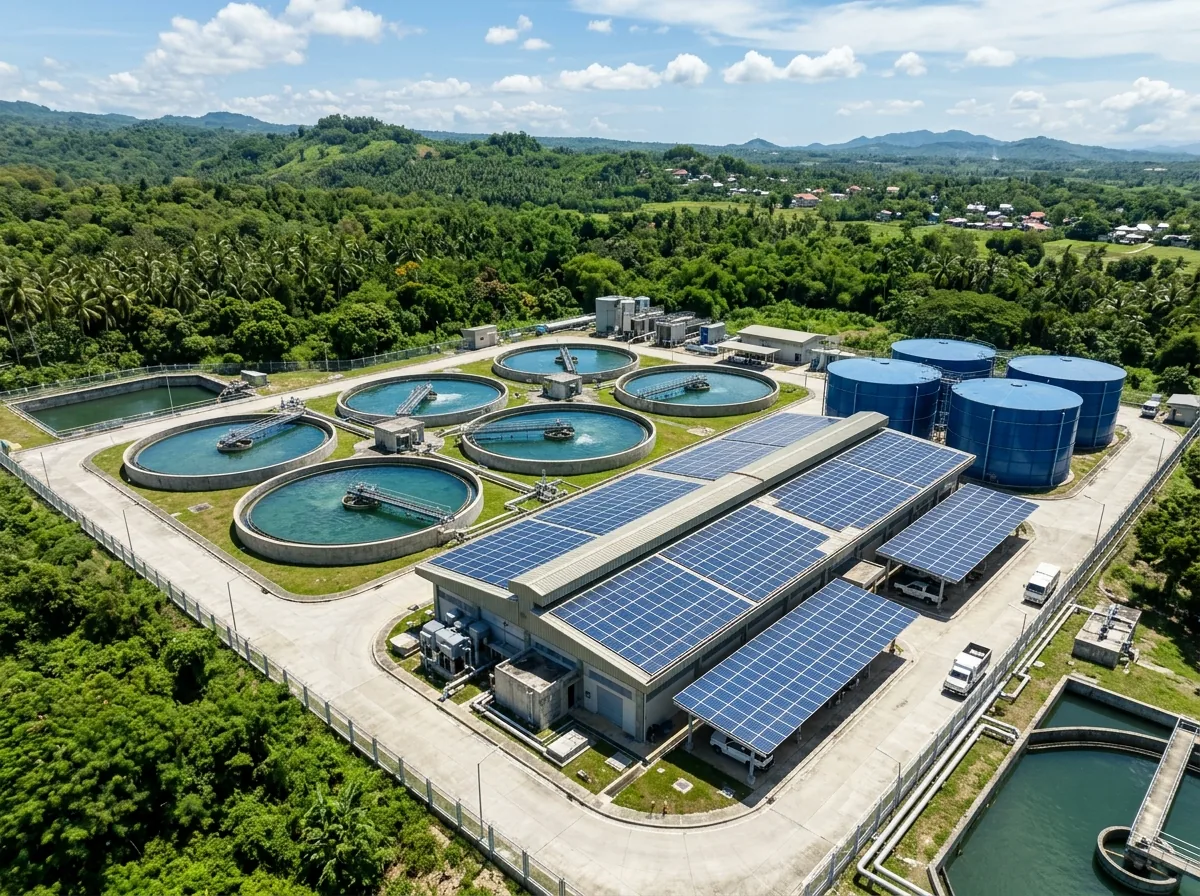
Bulk water suppliers, municipal treatment facilities, subdivision booster stations, and industrial RO plants draw relentless daytime kilowatts driving high-lift centrifugal pumps, clarifier agitators, backwash blowers, and dosing skids. CebuSolar builds solar water pumping systems and three-phase commercial arrays across Cebu.
- 50–500 kW+ 3-phase pumping plants
- 3–5 yrs typical payback period
- MPPT VFD AC/DC pump integration
The problem
Why are electricity costs so steep for Cebu water treatment and pumping plants?
Water utilities and treatment plants operate continuous high-head intake pumps, flocculation mixers, pressurized rapid sand filters, brackish RO trains, and distribution boosters against steady daytime demand. Under Cebu utility tariffs near ₱15–₱16 per kWh, electricity represents one of the highest operating expenses behind treated water delivery.
Whether lifting river intake water outside Carmen, Toledo, and Danao, operating subdivision deep-well booster stations across Consolacion, Liloan, Talisay, and Minglanilla, or driving industrial desalination and wastewater aeration plants in Mactan and Mandaue, hydraulic pumping is pure electrical load. Every vertical meter of dynamic head and every pound of distribution pressure draws steady three-phase current through high-efficiency pump motors.
When VECO, MECO, or CEBECO energy rates climb or unscheduled line drops interrupt pressure zones, operators either incur steep standby diesel generator bills or risk low reservoir levels during afternoon peak consumption. Converting pump-house roofs, reservoir decks, and open plant perimeter yards into active solar generation lowers treatment cost per cubic meter directly.
- High-lift raw-water intake and treated-water distribution booster pumps
- Brackish/seawater RO membrane feed pumps and high-pressure recovery skids
- Clarifier rakes, rapid mixers, chemical dosing pumps, and UV/chlorine rooms
- Filter air-scour blowers and wastewater treatment aeration basins
- Rural or hillside pumping stations battling utility line losses and diesel costs
How solar helps
Which solar solutions fit municipal treatment plants and high-lift pump stations?
Pumping plants hold massive built-in storage via elevated concrete reservoirs and clearwells, allowing operators to run heavy filtration and transfer cycles during sunny daylight hours. CebuSolar matches 620–630 W N-type bifacial Tier-1 panels with three-phase grid-tied inverters, MPPT VFD solar pump drives, and LiFePO4 control backup.
Three-phase grid-tied solar for treatment plants
Treatment facilities, wastewater aeration plants, and urban booster stations connected to VECO, MECO, or CEBECO transformers achieve fastest returns with grid-tied solar. Zero-export Solis three-phase inverters feed active blowers, clarifiers, and booster VFDs all day without needing massive battery rooms.
MPPT solar VFD drives for borehole & lift stations
Our core engineering capability in solar water pumping pairs variable-frequency solar controllers with existing or new three-phase submersible pumps—ramping flow across daylight hours into hilltop storage tanks with dry-well and float protection built in.
Hybrid battery backup for SCADA, dosing & labs
Sudden voltage flickers can scramble PLC treatment sequences, chemical dosing ratios, turbidity analyzers, and SCADA telemetry. Adding hybrid solar with LiFePO4 batteries or off-grid solar protects control panels, telemetry, and security lighting reliably through outages.
System sizing
What size solar system does a Cebu water treatment or pumping plant need?
Hydraulic and electrical sizing accounts for pump motor horsepower, total dynamic head, daily cubic-meter targets, reservoir holding volume, and twelve months of utility bills. CebuSolar offers fixed 6–18 kW hybrid packages for small booster kiosks and custom 50–500 kW+ three-phase solar installations for bulk treatment stations.
| Facility scale | Primary daytime loads | Suggested system size | Architecture & pricing |
|---|---|---|---|
| Subdivision booster kiosk, dosing room, or lab | Chlorine dosing, SCADA panel, small hydro-pneumatic pump, lab AC, lights | 6 kW to 18 kW Hybrid (10–32 panels, 6.2–19.84 kW solar) | Fixed packages: ₱305,000–₱970,000 (5–16 kWh battery, expandable 5–64 kWh) |
| Deep-well transfer station into elevated reservoir | Three-phase AC or DC borehole submersible pump, dry-run & float sensors | Custom MPPT solar VFD pumping | Solar array + AC/DC hybrid pump controller; custom quote after site visit |
| Package water treatment or subdivision STP | Clarifier drives, sand-filter backwash pumps, aeration blowers, booster skids | 50–150 kW three-phase | Control-building rooftop or yard ground-mount; custom quote after audit |
| Bulk water treatment, RO plant & main pump station | High-head intake/distribution pumps, RO train motors, multi-blower banks | 150–500 kW+ three-phase | Multi-inverter commercial plant + genset coordination; custom quote |
Estimates only. Hydraulic head checks, electrical sizing, and one fixed itemized price follow a site survey. Actual savings depend on system size, electricity consumption, location, and utility rates. Prices are subject to change without prior notice.
Cost and payback
How much does solar cost for a water treatment facility in Cebu, and what is payback?
Three-phase plant installations from 50 kW to 500 kW+ and custom hydraulic pump systems are quoted at one fixed price after site inspection, while smaller 6–18 kW control-room hybrid kits range from ₱305,000 to ₱970,000. At October 2026 Cebu tariffs near ₱15–₱16/kWh, typical payback spans 3 to 5 years.
Why do treatment and booster plants realize steady 3 to 5 year returns? Because utilities and HOAs can schedule maximum reservoir refilling and filter backwash runs under bright midday sunlight, offsetting peak utility energy directly against VECO’s October 2026 rate of ₱15.30/kWh and comparable MECO or CEBECO schedules across Cebu Province.
Treatment plants expose equipment to moisture, chlorine vapors, and coastal air, so CebuSolar installs Tier-1 620–630 W N-type bifacial panels from JinkoSolar, JA Solar, Trina Solar, LONGi, and AIKO with Solis inverters, Dyness or Pylontech LiFePO4 batteries, Schneider Electric and Suntree protection breakers, and stainless steel fixings. Model smaller facility bills on our ROI calculator or inspect fixed packages on our cost page.
- One fixed turnkey contract price after site survey, every component listed
- Milestone payments: 40% on order, 40% on delivery and mounting, 20% on switch-on
- Protected by 5-year workmanship, 12-year inverter, and 30-year panel performance warranties (at least 87% output at year 30)
- Modular options for smaller control stations: extra 620 W panels at ₱12,000 and 5 kWh (₱75,000), 10 kWh (₱140,000), or 16 kWh (₱160,000) batteries
- We assist with your LGU electrical permits and utility interconnection documents
How it works
How does CebuSolar engineer and install solar at active water plants?
Our Cebu City system designers verify static water depth, pump VFD specs, reservoir buffer capacity, and main electrical panels on-site before drafting designs. Arrays go up over control buildings or concrete yard racks with brief scheduled changeover to keep municipal and subdivision water supply running.
Hydraulic & load audit
We visit to review 12 months of VECO, MECO, or CEBECO bills, verify pump kW ratings and VFD parameters, and measure filter-house roof or ground space.
Design & fixed quote
We engineer zero-export three-phase strings or solar VFD pump arrays clear of chemical vents, assist with permit forms, and commit to one fixed itemized contract price.
Zero-disruption installation
Mounting and DC wiring complete outside pump bays while treatment flows normally, timing electrical switch-on during an approved low-demand window.
Warranty & Cebu support
Post-handover support includes our Cebu warranty, locally stocked spare parts, and a Metro Cebu response target within 48 hours.
What do Cebu water utility managers and HOA engineers ask about solar?
Bulk water operators, subdivision HOA treasurers, and plant engineers across Metro Cebu, Danao, Toledo, and Carcar often ask about running existing three-phase pump motors, cloudy-day supply backup, corrosive chemical fumes, standby diesel generator coordination, and local municipal permitting before proceeding.
Can existing three-phase submersible or booster pumps run directly on solar?
Yes. For grid-connected treatment facilities, three-phase grid-tied inverters feed existing pumps directly through your main switchboard alongside the utility. For standalone borehole stations, a variable-frequency solar pump drive powers healthy existing three-phase AC submersible motors without pulling well pipes.
How does a solar water pumping station keep supplying water during rainstorms or overnight?
Treatment plants store treated volume inside elevated reservoirs or ground cisterns sized for continuous distribution—and on stations with solar VFD pump controllers, an AC/DC hybrid input lets CEBECO/VECO grid power or a standby generator top up tanks whenever extended cloudy weeks occur.
Will chlorine vapors or moisture around treatment basins damage solar components?
We keep arrays clear of open chemical-dosing vents, use stainless steel fixings designed for coastal salt air and humid conditions, and mount Solis inverters and Schneider Electric breakers inside clean, ventilated electrical rooms isolated from wet pump pits and chemical storage rooms.
What if our pump house roof is too small for the full pumping load?
Many water plants host open buffer land around settling basins, perimeter setbacks, or steel pipe racks where ground-mounted arrays or elevated canopies add full kilowatt capacity without stressing small pump-house roofs.
Does CebuSolar help with municipal permits and utility documentation for water plants?
Yes—we help with your permits by preparing single-line electrical diagrams, structural layout sheets, and Tier-1 hardware specs required for LGU electrical permits and VECO, MECO, or CEBECO zero-export compliance.
Get your personalized solar quote
Tell us about your place, pin it on the map and add a photo of your bill. Our team replies on Viber within one business day.
- 1. We size your system from your bill and map your roof by satellite.
- 2. You get your quote: panels, battery, monthly savings, payback and price.
- 3. Happy with it? We check your roof and wiring on site, then lock in one fixed price.