- Home
- Electronics & Semiconductors
Solar for electronics & semiconductors · High-tech commercial EPC
Solar for Electronics & Semiconductors in Cebu. Lower cleanroom bills, hit corporate ESG targets.
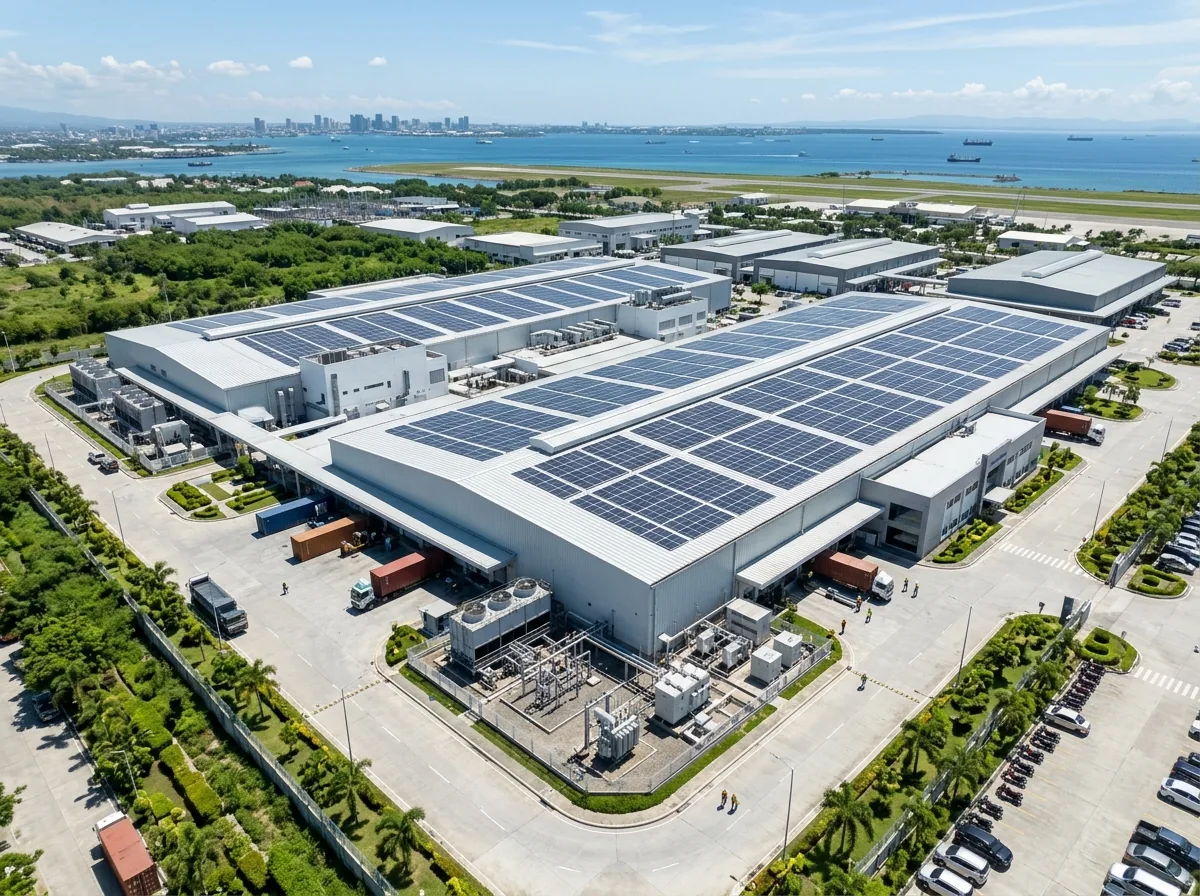
Semiconductor assembly halls, optical lens makers, PCB lines, and medical-electronics plants across Lapu-Lapu PEZA zones and Danao run continuous cleanroom chillers, dry compressed air, and SMT lines under MECO and CEBECO tariffs. CebuSolar engineers three-phase commercial solar plants from 50 kW to 500 kW+ built for precision plants.
- 50–500 kW+ 3-phase plant arrays
- 3–5 yrs typical payback period
- Tier-1 bankable global specs
The problem
Why are energy expenses so high for Cebu electronics and semiconductor factories?
Precision electronics factories run uninterrupted cleanroom positive-pressure AHUs, central water-cooled chillers, dehumidifiers, nitrogen generators, oil-free air compressors, and reflow ovens around the clock. Facing local rates around ₱15–₱16 per kWh, thermal cooling and compressed air make electricity a dominant manufacturing cost line.
Inside MEPZ 1, MEPZ 2, Cebu Light Industrial Park in Lapu-Lapu City, and major electronics campuses in Danao and Mandaue, production rarely pauses for weekends or holidays. Daytime ambient warmth drives chilled-water cooling towers hardest between mid-morning and late afternoon just to maintain tight cleanroom humidity and temperature tolerances across SMT pick-and-place bays, wire-bonders, and automated optical inspection rooms.
At the same time, multinational semiconductor buyers increasingly demand measurable Scope 2 carbon reductions from Cebu export suppliers alongside competitive unit pricing. Turning wide, clear cleanroom factory roofs and parking structures into Tier-1 solar generation cuts monthly MECO, VECO, or CEBECO charges directly while meeting global corporate sustainability audits.
- Centralized chilled-water plants, cooling towers, and cleanroom HEPA make-up air
- Desiccant dehumidifiers maintaining strict assembly-hall dew points
- Oil-free rotary air compressors, vacuum pumps, and nitrogen PSA plants
- SMT lines, reflow soldering ovens, test chambers, and burn-in racks
- Global OEM buyer mandates requiring documented clean electricity use
How solar helps
How does commercial solar integrate with PEZA electronics and cleanroom facilities?
Because electronics campuses run continuous high-baseload chillers and air plants seven days a week, solar electricity flows straight into factory switchgear with zero wasted weekend output. CebuSolar pairs Tier-1 620–630 W N-type bifacial panels with Solis three-phase inverters, zero-export control, and LiFePO4 protection for IT rooms.
Three-phase grid-tied solar on plant switchgear
Export electronics plants with high continuous daytime chiller draw capture rapid return using grid-tied solar tied at the main low-voltage switchboard. Real-time zero-export sensors match inverter production strictly to plant consumption across MECO, VECO, or CEBECO transformers.
Hybrid LiFePO4 backup for labs, QA & admin servers
While factory rotary UPS systems guard SMT production lines, hybrid solar with Dyness or Pylontech LiFePO4 batteries shields quality assurance offices, ERP servers, security turnstiles, and laboratory chillers across brief feeder disturbances.
Employee parking canopies & auxiliary wings
Facilities with packed rooftop chillers or air handlers expand generation quickly over shaded carpark steel canopies, staff canteens, and guardhouses—or fit compact branch offices with fixed 6–18 kW hybrid packages.
System sizing
What size solar installation fits a Cebu electronics or semiconductor plant?
Sizing reflects chiller plant kW demand, cleanroom AHU fan draw, usable unshaded roof and carpark area, transformer ratings, and 12 months of interval utility bills. CebuSolar delivers fixed 6–18 kW packages for light test labs and custom 50–500 kW+ three-phase installations for major export campuses after an audit.
| Facility scale | Primary daytime equipment | Suggested solar capacity | Architecture & pricing |
|---|---|---|---|
| Calibration lab, engineering office, or test annex | Precision bench equipment, cleanroom AC, server rack, QA lighting | 6 kW to 18 kW Hybrid (10–32 panels, 6.2–19.84 kW solar) | Fixed packages: ₱305,000–₱970,000 (5–16 kWh battery, expandable 5–64 kWh) |
| Mid-sized PCB assembly, harness, or sensor factory | Pick-and-place lines, reflow ovens, compressed air, floor HVAC | 50–150 kW three-phase | Klip-lok rooftop grid-tied array; custom quote after site visit |
| Export electronics & optical assembly plant | Chilled-water loops, cleanroom AHUs, vacuum & nitrogen plants, burn-in | 150–300 kW three-phase | Three-phase Solis plant with zero-export & genset sync; custom quote |
| Large semiconductor packaging & MEPZ campus | Central chiller plants, multi-building cleanrooms, parking decks | 300–500 kW+ three-phase | Multi-inverter commercial plant + carport expansions; custom quote |
Estimates only. Power-quality checks, roof structural review, and one fixed itemized price follow a site audit. Actual savings depend on system size, electricity consumption, location, and utility rates. Prices are subject to change without prior notice.
Cost and payback
How much does commercial solar cost for electronics plants, and how fast is ROI?
Three-phase electronics plants from 50 kW to 500 kW+ receive one fixed turnkey quote after structural and electrical audit, whereas smaller 6–18 kW test-lab kits range from ₱305,000 to ₱970,000. At October 2026 Cebu rates near ₱15–₱16/kWh, commercial plants typically achieve 3 to 5 year payback.
Continuous seven-day cleanroom operation ensures maximum solar kWh consumption directly behind the meter, eliminating idle weekend curtailment. Compared against VECO’s October 2026 tariff of ₱15.30/kWh alongside MECO and CEBECO commercial rates across Mactan and northern Cebu, self-generation cuts operating overhead predictably while documenting clean energy production.
Bankable export audits require proven components, so CebuSolar deploys Tier-1 620–630 W N-type bifacial panels from JinkoSolar, JA Solar, Trina Solar, LONGi, and AIKO with Solis inverters, Dyness or Pylontech LiFePO4 batteries, Schneider Electric and Suntree protection breakers, and stainless steel fixings built for Mactan coastal air. Check smaller estimates via our ROI calculator or inspect fixed packages on our pricing page.
- One fixed turnkey contract price ready for corporate capex approval, every part listed
- Milestone payments: 40% on order, 40% on delivery and mounting, 20% on switch-on
- Protected by 5-year workmanship, 12-year inverter, and 30-year panel performance warranties (at least 87% output at year 30)
- Modular options for smaller labs: add 620 W panels at ₱12,000 each or 5 kWh (₱75,000), 10 kWh (₱140,000), or 16 kWh (₱160,000) batteries
- We help with your LGU electrical permits and utility zero-export documents
How it works
How does CebuSolar install solar above cleanrooms without interrupting production?
Our Cebu City installers abide by strict cleanroom perimeter and ESD safety protocols, keeping crews outside sterile manufacturing floors and routing conduit externally to electrical rooms. Final switchboard tie-in aligns strictly with scheduled preventive maintenance windows so production lines keep running.
Plant & roof survey
We visit to review 12 months of MECO, CEBECO, or VECO billing, inspect klip-lok roof decks and AHU clearances, and check main low-voltage switchgear and UPS transfer setups.
Cleanroom-safe design & quote
We specify non-penetrating seam clamps that protect cleanroom ceiling seals against leaks, help with LGU permits, and deliver one fixed price.
Low-disruption installation
Rigging crews follow full zone OSH standards overhead while cleanrooms operate normally below, timing breaker tie-in during a scheduled maintenance shutdown.
Warranty & rapid Metro Cebu care
Every installation includes complete engineering handover backed by our Cebu warranty, stocked spares, and a Metro Cebu response target within 48 hours.
What do Cebu electronics and PEZA plant engineers ask before approving solar?
Facilities managers, corporate EHS leads, and manufacturing directors in MEPZ Lapu-Lapu and Danao often inquire about zero-penetration roof waterproofing over sterile cleanrooms, inverter harmonic power quality, rotary UPS and standby diesel generator interaction, ESD protocols, ESG reporting, and permit assistance.
Can panels install above cleanroom roofs without drilling holes that risk ceiling leaks?
Yes. Even tiny roof leaks above wafer, lens, or SMT cleanrooms are unacceptable. On concealed-fastener standing-seam and klip-lok metal roofs, CebuSolar installs non-penetrating engineered seam clamps that grip standing roof ribs without puncturing the roof sheets, protecting your roof warranty.
Do commercial Solis inverters introduce electrical noise or harmonics onto sensitive equipment?
Solis three-phase inverters are built to international grid-connection and harmonic-distortion standards and run in parallel with your plant’s chillers, UPS isolation transformers and power-factor capacitor banks. During the site visit we review power quality and connection points with your facility engineers.
How does rooftop solar coordinate with plant rotary UPS and standby diesel generators?
CebuSolar connects three-phase solar arrays upstream of automatic generator transfer switches or adds a dynamic PV-genset controller so inverters trip or throttle safely the instant utility power drops and standby engines assume plant load, protecting UPS transfer timing.
Can solar generation data support corporate ESG and customer carbon audits?
Yes. Solis inverters record kilowatt-hour generation that you can export for buyer ESG questionnaires and carbon reporting; a separate revenue-grade meter can be added where your auditors require one.
Does CebuSolar assist with LGU electrical permits, and MECO requirements?
Yes—we help with your permits by preparing single-line electrical diagrams, structural mounting sheets, and Tier-1 datasheets required for LGU electrical offices, and MECO, VECO, or CEBECO zero-export compliance.
Get your personalized solar quote
Tell us about your place, pin it on the map and add a photo of your bill. Our team replies on Viber within one business day.
- 1. We size your system from your bill and map your roof by satellite.
- 2. You get your quote: panels, battery, monthly savings, payback and price.
- 3. Happy with it? We check your roof and wiring on site, then lock in one fixed price.