- Home
- Fish Processing
Solar for fish processing · Coastal commercial EPC
Solar for Fish Processing in Cebu. Lower refrigeration bills, protect cold-chain harvests.
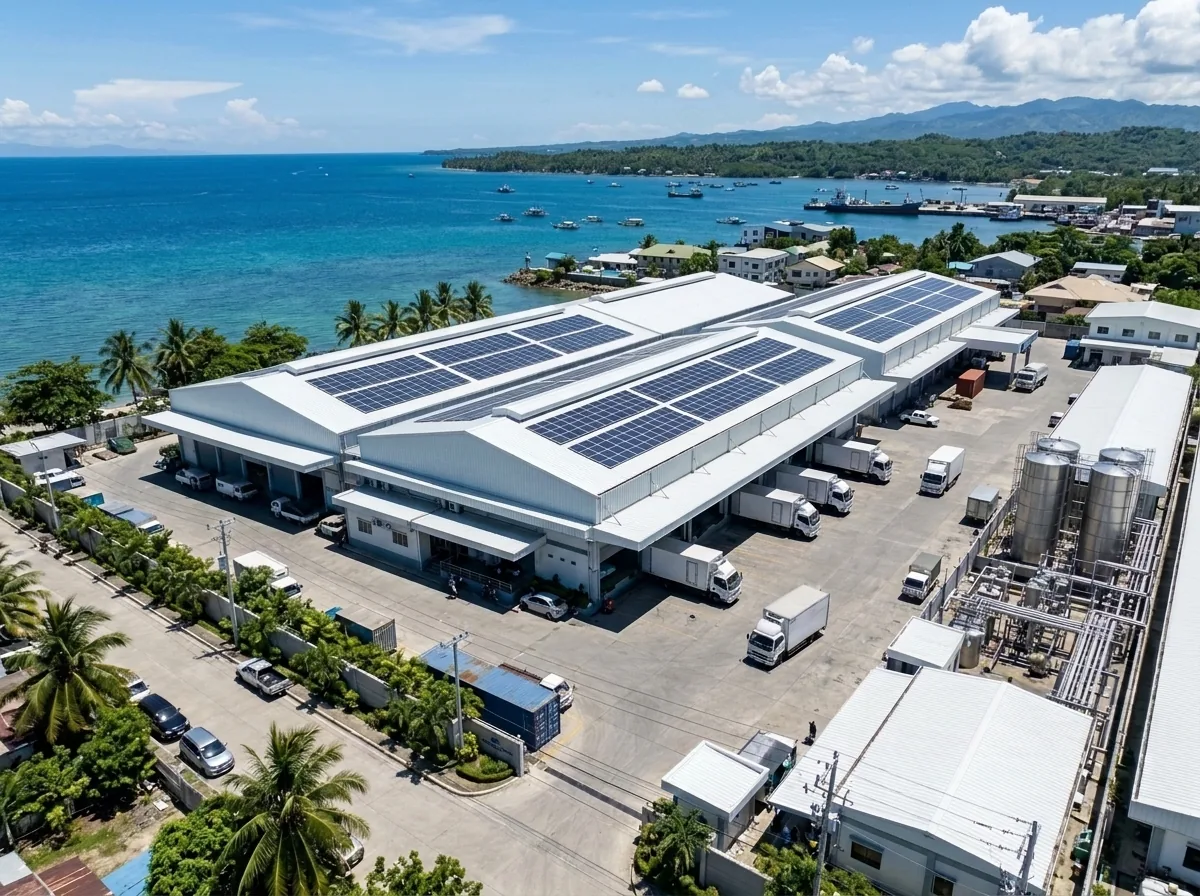
Seafood processors, blast-freezing facilities, and flake-ice plants push compressors hardest during Cebu’s midday heat when condenser pressures climb and utility tariffs peak. CebuSolar builds three-phase commercial and hybrid solar arrays engineered with stainless coastal hardware for VECO, MECO, and CEBECO I, II, and III plants.
- 50–500 kW+ 3-phase plant capacity
- 3–5 yrs typical payback period
- Salt-air ready stainless steel fixings
The problem
Why do Cebu fish processing plants face such heavy daytime power costs?
Fish processing facilities run high-draw blast freezers, brine chillers, flake-ice generators, packing lines, and washdown pumps concurrently through daylight shifts. Warm ambient air forces refrigeration condensers to draw peak kilowatt loads from morning until late afternoon at Cebu rates around ₱15–₱16 per kWh.
Across Mandaue’s Subangdaku and North Reclamation corridors, Lapu-Lapu City’s seafood exporters, Cebu City’s port district, and coastal hubs in Danao, Carmen, Bogo, Medellin, Daanbantayan, San Remigio, Bantayan, Carcar, and Argao, catch intake and packing peak during business hours. Fresh landings arrive from early morning boats and must be washed, sorted, filleted, glazed, and pulled down rapidly through blast tunnels or plate freezers before ambient warmth degrades quality.
Every door opening into chilled holding rooms, every fresh batch of flake or block ice, and every electric dehydrator tray for dried fish and squid pushes three-phase motor loads higher right under midday heat. When voltage sags or provincial feeders drop out across CEBECO, VECO, or MECO lines, cold rooms lose pull-down margin quickly unless heavy diesel backup starts immediately—turning power into both a financial drain and a spoilage risk.
- Three-phase blast-freezer, IQF tunnel, and plate-freezer compressor loads
- Continuous flake-ice and block-ice machines supplying packing tables and boats
- Chilled and frozen storage rooms fighting warm midday door openings
- Electric air-flow dryers, vacuum sealers, grading conveyors, and canning steam controls
- High-volume freshwater and washdown pumping plus outage spoilage exposure
How solar helps
How does solar energy integrate with refrigeration and coastal fish plants?
Daytime sunlight aligns directly with processing shifts and peak condenser load, letting rooftop panels feed compressors before utility power is drawn. CebuSolar matches 620–630 W N-type bifacial Tier-1 panels with Solis three-phase inverters, optional LiFePO4 storage, and elevated-tank solar pumping built for salty coastal air.
Three-phase grid-tied arrays for daytime refrigeration
Plants with steady daylight packing, ice making, and blast-freezing schedules on VECO, MECO, or CEBECO three-phase service see the fastest return from grid-tied solar. Solis string inverters synchronize directly with your main low-voltage switchboard using zero-export control, offsetting expensive daytime kilowatt-hours while compressors run hardest.
Hybrid battery protection for controls and critical chilling
Sudden grid flickers can trip refrigeration PLC boards, vacuum sealers, quality-lab chillers, and electronic control panels. Adding hybrid solar with Dyness or Pylontech LiFePO4 batteries keeps control circuits, cold-room fans, office dispatch systems, and selected chillers steady through brief outages, cutting emergency diesel starts across unstable feeders.
Solar water pumping for washdown and brine prep
Clean processing starts with dependable water pressure for filleting tables, floor sanitation, and condenser cooling towers. Our solar water pumping systems lift borehole or cistern water by day into elevated storage tanks that supply gravity pressure continuously—or pair with off-grid solar at remote coastal landing piers.
System sizing
What size solar plant does a Cebu seafood processor need?
Proper sizing starts with your compressor nameplate amperage, ice-making tonnage, cold-room run hours, and twelve months of utility bills. CebuSolar provides fixed-price 6–18 kW hybrid packages for smaller drying or packing shops and custom-designed 50–500 kW+ three-phase plants for commercial processors after a site audit.
| Facility scale | Primary daytime equipment | Recommended capacity | System type & pricing |
|---|---|---|---|
| Small dried-fish dryer, packing hub, or seafood depot | Chest freezers, vacuum sealers, mechanical air dryers, washdown pressure pump, lighting | 6 kW to 18 kW Hybrid (10–32 panels, 6.2–19.84 kW solar) | Fixed packages: ₱305,000–₱970,000 (5–16 kWh battery, expandable 5–64 kWh) |
| Mid-sized ice plant or local filleting facility | Flake-ice makers, chill rooms, sorting conveyors, borehole water pump | 50–100 kW three-phase | Rooftop or carport grid-tied or hybrid; custom quote after site visit |
| Commercial blast-freezing & cold-storage processor | Blast tunnels, plate freezers, multiple -18°C holding rooms, packing floor HVAC | 100–250 kW three-phase | Three-phase Solis array with zero-export & genset coordination; custom quote |
| Export cannery, multi-line seafood & ice complex | Industrial screw compressors, large ice banks, canning lines, effluent pumping | 250–500 kW+ three-phase | Multi-inverter commercial plant with optional LiFePO4 backup; custom quote |
Estimates only. Final sizing and one fixed itemized price follow a site visit. Actual savings depend on system size, electricity consumption, location, and utility rates. Prices are subject to change without prior notice.
Cost and payback
How much does commercial solar cost for fish processing, and what is the payback?
Commercial processing arrays from 50 kW to 500 kW+ receive a custom quote at one fixed price after our installers inspect your plant, while smaller 6–18 kW hybrid systems run from ₱305,000 to ₱970,000. At Cebu utility rates around ₱15–₱16/kWh in October 2026, typical payback spans 3 to 5 years.
High daytime utilization drives that 3 to 5 year return. Refrigeration compressors pull heaviest current during peak midday sunshine when solar harvest rises highest, so generated power is consumed immediately inside your chillers and ice machines. Against VECO’s October 2026 rate of ₱15.30/kWh and comparable MECO or CEBECO commercial tariffs across Cebu, daytime generation trims monthly operating outlay predictably without relying on fuel deliveries.
Coastal seafood facilities demand hardware that resists salty humidity. CebuSolar specifies Tier-1 620–630 W N-type bifacial panels from JinkoSolar, JA Solar, Trina Solar, LONGi, and AIKO paired with Solis inverters, Dyness or Pylontech LiFePO4 batteries, Schneider Electric and Suntree protection gear, and stainless steel fixings made for salt air. Smaller operators can estimate savings with our ROI calculator or compare package options on our Cebu pricing page.
- One fixed, itemized contract price issued after a site visit
- Milestone payments: 40% on order, 40% on delivery and mounting, 20% on switch-on
- Protected by 5-year installation workmanship, 12-year Solis inverter, and 30-year panel performance warranties (at least 87% output at year 30)
- Modular expansion on 6–18 kW hybrid sites: extra 620 W panels at ₱12,000 each and add-on 5 kWh (₱75,000), 10 kWh (₱140,000), or 16 kWh (₱160,000) batteries
- We assist with your LGU electrical permits and utility documentation
How it works
How does CebuSolar install solar without interrupting cold-chain operations?
Our Cebu City installation crew completes rooftop mounting, conduit trays, and DC string wiring while your freezers and packing lines stay online. Final electrical tie-in is scheduled during a planned defrost or weekend maintenance window so frozen inventory stays protected.
Plant energy & roof audit
We visit from our Cebu City office to review 12 months of VECO, MECO, or CEBECO bills, inspect metal roofing or warehouse trusses near corrosive brine rooms, and log main switchboard capacity.
Engineering & fixed-price proposal
We model array placement around exhaust vents and ammonia/freon condensers, prepare zero-export single-line diagrams, help with permit documents, and lock in one fixed price.
Clean, scheduled installation
Our crew adheres to food-safety hygiene zones, secures stainless mounting hardware, and times main breaker tie-in during a brief pre-arranged maintenance pause.
Warranty & Cebu service
Once commissioned, your seafood facility receives full warranty protection supported by spare parts kept in stock and a Metro Cebu service response target within 48 hours.
What do Cebu seafood processors ask before installing solar?
Plant managers, cold-storage engineers, and dried-seafood exporters across Mandaue, Mactan, Bantayan, and northern Cebu often ask about coastal salt-air corrosion, starting-current spikes on blast-freezer compressors, roof structural capacity, standby diesel generator coordination, and local utility permitting across VECO, MECO, and CEBECO areas.
Can coastal salt air and brine mist corrode solar panels and brackets on a fish plant?
Cheaper galvanized steel fasteners rust quickly near Mactan Channel, Subangdaku, and northern fishing ports like Bantayan or Daanbantayan. CebuSolar uses stainless steel fixings built for coastal salt air, Tier-1 620–630 W N-type bifacial modules from JinkoSolar, JA Solar, Trina Solar, LONGi, and AIKO, and locates Solis inverters and Schneider Electric switchgear inside clean, dry electrical rooms away from open brine spray.
Can solar handle the heavy startup current of blast-freezer and ice-plant compressors?
Yes. In a grid-tied commercial setup, the VECO, MECO, or CEBECO grid absorbs motor starting inrush naturally while the solar inverters supply steady running kilowatts across the compressor cycle. On facilities with variable-frequency drives (VFDs) or soft-starters, solar power feeds base running load all day, lowering both energy consumption and heat-driven afternoon load stress.
How does solar work alongside our standby diesel generator when brownouts hit?
For plants relying on large standby gensets during provincial outages, we wire grid-tied arrays upstream of the automatic transfer switch or add a PV-diesel control interface so solar never backfeeds an idling generator. For smaller critical circuits—like cold-room thermostats, digital scales, office billing PCs, and water pumps—a hybrid battery system holds power steady without waiting for manual genset changeover.
What if our processing building roof has exhaust vents, condensers, or older purlins?
During the site inspection, our system designers map roof vents, skylights, evaporative condenser plumes, and purlin spans to keep panels clear of hot exhaust discharge and shade. Where a processing shed roof cannot carry additional hardware, we engineer adjacent warehouse roofs, loading-bay canopies, carports, or ground-mounted three-phase arrays on yard space outside truck turning lanes.
How does CebuSolar assist with permits for commercial seafood plants?
CebuSolar helps with your permits by preparing electrical drawings, structural mounting layouts, and Tier-1 equipment datasheets for LGU building and electrical offices as well as VECO, MECO, or CEBECO zero-export requirements. Our systems consume daytime power on-site through real-time zero-export limiting, matching commercial fish processing loads without exporting surplus power to the street feeder.
Get your personalized solar quote
Tell us about your place, pin it on the map and add a photo of your bill. Our team replies on Viber within one business day.
- 1. We size your system from your bill and map your roof by satellite.
- 2. You get your quote: panels, battery, monthly savings, payback and price.
- 3. Happy with it? We check your roof and wiring on site, then lock in one fixed price.