- Home
- Restaurants & Food Service
Solar for hospitality dining · Restaurants & kitchens EPC
Solar for Restaurants & Food Service in Cebu. Cut kitchen cooling and dining aircon bills.
Standalone restaurants, coffee roasteries, catering commissaries, seaside resorts, and multi-outlet dining hubs across IT Park, Banilad, Mabolo, SRP, Mandaue, and Mactan run heavy dining-room air-conditioning, walk-in coolers, ice makers, and exhaust hoods from morning prep past dinner rush. CebuSolar builds hybrid and commercial solar for hospitality roofs.
- 6–250 kW+ diners, hubs & commissaries
- 3–5 yrs typical payback period
- Tier-1 620–630 W N-type bifacial
The problem
Why do cooling and kitchen ventilation eat profits at Cebu restaurants?
Hospitality kitchens pair open charcoal or gas heat sources with massive conditioned dining spaces, pulling chilled air outside straight through roaring kitchen exhaust fans from morning prep onward. Under Cebu rates around ₱15–₱16 per kWh, electricity becomes one of the biggest monthly costs.
In busy freestanding dining corridors along Banilad, Busay overlooking Cebu City, North Reclamation Area, Mactan seaside restaurants, Carcar, and provincial roadside complexes, peak ambient Cebu heat forces multiple 3-to-5-ton ceiling cassette air conditioners, beverage bar glass-door chillers, commercial flake/cube ice machines, and reach-in blast freezers into uninterrupted daytime duty—starting well before lunch rush and cooling ingredients long past closing.
Adding insult to steep metered power expenses, an unexpected afternoon utility brownout melts ice reserves, shuts off POS kitchen printers, stops fresh pastry ovens, and warms walk-in meat freezers—forcing noisy backup generators beside guest tables or lost peak dinner covers.
- Dining-hall split, cassette, and ducted inverter air-conditioning combating hot kitchen airflow
- Commercial walk-in chillers, upright stainless freezers, and open display cake/beverage coolers
- Continuous cube and nugget ice machines working double-time during humid midday hours
- High-CFM stainless kitchen exhaust hoods, make-up air fans, and electric combi-steamers
- Espresso machines, POS kitchen ticket terminals, sound systems, and shaded patio cooling fans
How solar helps
Which solar configuration cuts restaurant utility costs and guards inventory in Cebu?
Restaurants match midday solar peaks against intense air-conditioning and kitchen prep while needing silent battery backup across busy dinner brownouts. CebuSolar pairs Tier-1 620–630 W N-type bifacial modules with Solis inverters, Dyness or Pylontech LiFePO4 batteries, stainless coastal hardware, and zero-export control.
Hybrid solar + LiFePO4 for restaurants & cafes
Boutique cafes, garden restaurants, and freestanding bistros get instant daytime savings plus silent blackout protection via hybrid solar with LiFePO4 batteries. Batteries sustain walk-in chillers, POS systems, Wi-Fi, espresso grinders, and dim dining lights without diesel fumes near guests.
Grid-tied arrays for large buffets & commissaries
High-turnover central commissary kitchens, multi-tenant food parks, and large highway banquet restaurants pull fast ROI from commercial grid-tied solar, running heavy cold storage and central HVAC compressors directly on daytime roof electricity without bulky battery overhead.
Published 6–18 kW dining packages
Freestanding quick-service franchises, drive-thrus, bakeshop-cafes, and lechon-house dine-in outlets choose fixed 6–18 kW hybrid packages starting from ₱305,000—scaling up to 50–500 kW+ commercial complexes for large hospitality groups.
System sizing
What size solar installation suits a Cebu cafe, restaurant, or food commissary?
Food-service sizing inspects clear roof spans away from grease-laden kitchen exhaust hoods, daytime prep versus evening dinner peak load, dedicated walk-in freezer circuits needing LiFePO4 backup reserve, and twelve months of billing records. CebuSolar furnishes fixed 6–18 kW hybrid kits and custom 50–500 kW+ arrays.
| Dining outlet scale | Core kitchen & dining loads | Suggested solar capacity | System type & pricing |
|---|---|---|---|
| Specialty coffee shop, bakery outlet, or small casual diner | 2–3 split aircons, cake display, under-counter freezers, POS, espresso | 6 kW to 10 kW Hybrid (10–16 panels, 6.2–10 kW solar) | Fixed packages: ₱305,000–₱520,000 (5–16 kWh battery, expandable 5–64 kWh) |
| Freestanding family restaurant, hilltop cafe, or drive-thru | Multiple dining AC units, walk-in chiller, ice maker, exhaust blower, POS | 12 kW to 18 kW Hybrid (22–32 panels, 13.64–19.84 kW) | Fixed packages: ₱615,000–₱970,000 (5–16 kWh battery, expandable 5–64 kWh) |
| Large seaside buffet pavilion, banquet hall, or central kitchen | Central dining aircon, dual walk-in freezers, prep blast chiller, blowers | 50–120 kW three-phase | Grid-tied roof/carport array + walk-in chiller backup; custom quote |
| Major restaurant-group commissary & multi-venue complex | Large commercial cold chain, cooking kitchens, automated warehouse bay | 120–250 kW+ three-phase | Three-phase Solis commercial plant with zero-export & genset sync; custom quote |
Estimates only. Kitchen exhaust clearance, single/three-phase meter inspection, and one fixed itemized price follow a site audit. Actual savings depend on system size, electricity consumption, location, and utility rates. Prices are subject to change without prior notice.
Cost and payback
How much does restaurant solar cost in Cebu, and how quickly does it pay back?
Freestanding 6–18 kW restaurant hybrid packages run ₱305,000 to ₱970,000 turnkey installed, whereas multi-venue hubs and large 50–500 kW+ commercial commissaries receive one fixed custom quote after on-site inspection. With Cebu power rates around ₱15–₱16/kWh, typical payback averages 3 to 5 years.
Food service operates seven days a week across busy lunch rushes and afternoon tourist peaks when solar panels run at peak conversion, while 24-hour walk-in chillers and beverage display cabinets soak up early-morning and late-afternoon kilowatts before guests even arrive. Benchmarked against VECO’s October 2026 schedule of ₱15.30/kWh, MECO (~₱15.98/kWh in September 2026), and CEBECO commercial tariffs, cutting energy waste directly strengthens outlet EBITDA.
CebuSolar installs Tier-1 620–630 W N-type bifacial modules from JinkoSolar, JA Solar, Trina Solar, LONGi, and AIKO, Solis inverters, Dyness or Pylontech LiFePO4 batteries, Schneider Electric and Suntree protection, and coastal stainless steel fixings. Model outlet payback on our ROI calculator or view full prices on our cost page.
- One fixed turnkey contract price after on-site survey, every component itemized
- Clear milestone terms: 40% on order, 40% on delivery and mounting, 20% on switch-on
- Protected by 5-year workmanship, 12-year inverter, and 30-year panel warranties (at least 87% output at year 30)
- Add extra capacity anytime: extra 620 W panels at ₱12,000 and 5 kWh (₱75,000), 10 kWh (₱140,000), or 16 kWh (₱160,000) batteries
- We help with your local LGU electrical permits and VECO, MECO, or CEBECO zero-export compliance
How it works
How does CebuSolar install over active dining halls without kitchen grease issues?
Our Cebu City crew coordinates roof work strictly during quiet morning pre-opening hours outside active dining service, routes arrays away from oily kitchen exhaust cyclones, anchors solar over dining roofs or shaded parking carports, and ties panels in during quiet maintenance pauses.
Dining & hood survey
We inspect twelve months of VECO, MECO, or CEBECO bills, verify dining roof decks vs. customer parking space, and chart grease-laden exhaust outlets.
Grease-clear layout & fixed quote
We keep modules upwind or clear of exhaust fans, protect walk-in freezers on backup loads if hybrid, help with permits, and issue one fixed quote.
Pre-lunch discreet build
Teams complete structural clamping and neat conduit routing before peak customer hours, scheduling breaker commissioning overnight or mid-morning.
Warranty & fast Metro Cebu service
Commissioned venues hold our Cebu warranty supported by local stocked parts and a Metro Cebu response target within 48 hours.
What do Cebu restaurant owners and commissary chefs ask before going solar?
Restaurateurs, franchise operators, and facility leads in Cebu City, Mactan, and coastal towns frequently ask about kitchen grease and grill smoke, crowded small roofs vs. parking canopies, leased standalone properties, evening dinner savings with LiFePO4 storage, and local permit help.
Won’t oily kitchen exhaust smoke and grill hoods coat panels in hard-to-clean grease?
We chart prevailing Cebu wind patterns and exhaust-mushroom airflow during the initial roof audit so arrays sit well clear or upwind of greasy kitchen exhaust ducts, leaving clean access edges for occasional mild detergent rinsing when preventive kitchen hood cleaning takes place.
Our restaurant peaks at dinner—does solar still deliver strong savings when evening guests arrive?
Yes. Restaurants burn substantial daytime electricity between morning food prep, 24-hour walk-in chillers/freezers, ice production, and lunch/afternoon dining air-conditioning. Better yet, pairing solar with Dyness or Pylontech LiFePO4 battery storage saves midday sun for peak early dinner seating hours too.
Can standalone restaurants mount panels on customer parking canopies if the roof has outdoor seating?
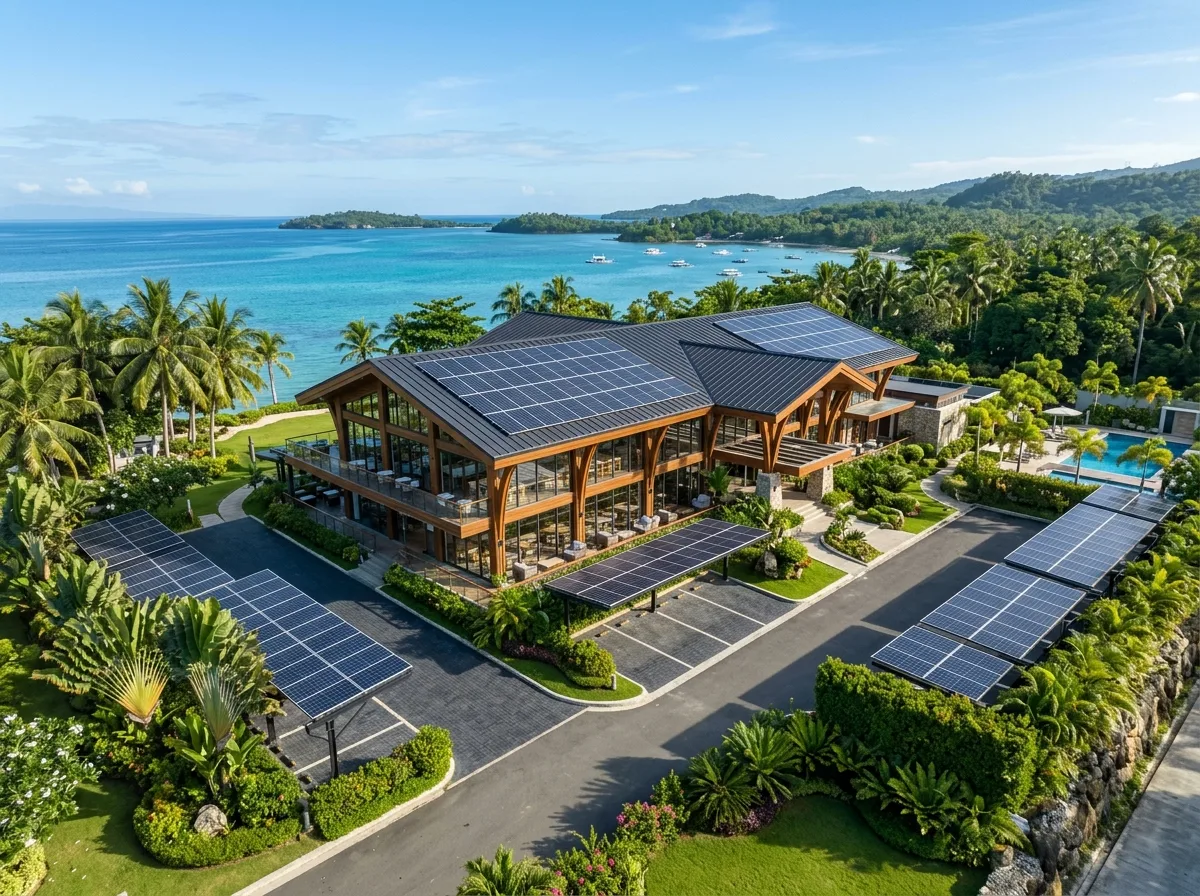
Yes! Steel solar carports over customer parking bays give dual benefits: guests step into shaded cool cars during scorching Cebu noons while Tier-1 bifacial arrays above customer vehicles harvest daytime electricity straight into your main restaurant panel.
If a franchise operates inside a strip complex or long-term leased lot, how does solar fit?
With landlord permission, standalone buildings running their own VECO or MECO utility meter connect directly downstream of the tenant meter with non-penetrating standing-seam clamps or bolt-down frames that stay organized if future leases transition.
Does CebuSolar assist with local city electrical permits for freestanding diners?
Yes—we help with your permits by preparing single-line electrical diagrams, structural layout sheets, and Tier-1 datasheets required for LGU electrical offices and VECO, MECO, or CEBECO zero-export compliance.
Get your personalized solar quote
Tell us about your place, pin it on the map and add a photo of your bill. Our team replies on Viber within one business day.
- 1. We size your system from your bill and map your roof by satellite.
- 2. You get your quote: panels, battery, monthly savings, payback and price.
- 3. Happy with it? We check your roof and wiring on site, then lock in one fixed price.