- Home
- Food Processing
Solar for food & beverage plants · Commercial EPC
Solar for Food Processing in Cebu. Lower daytime chillers and packing-line bills.
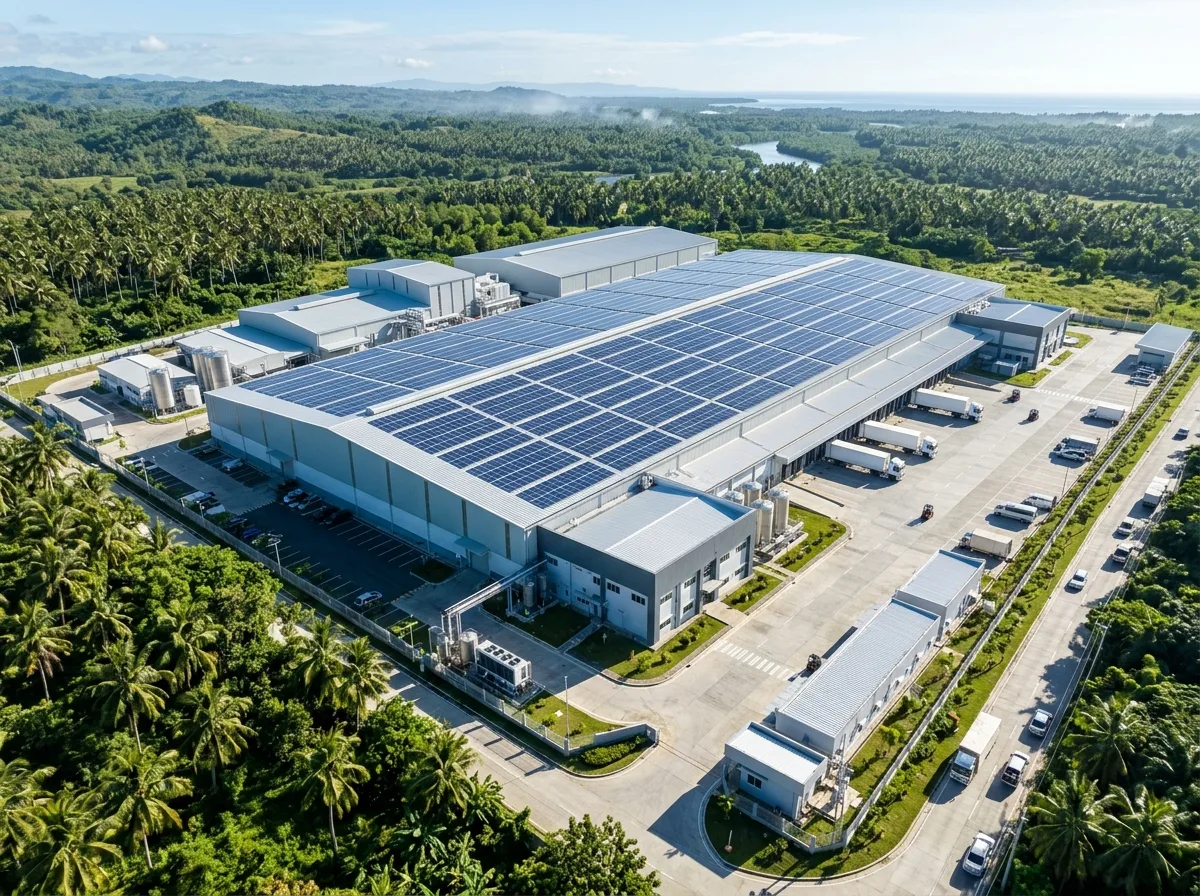
Dried mango processors, sauce and condiment packers, noodle and bakery plants, beverage bottlers, and meat commissaries run continuous daytime cooling, motors, and automated filling lines across Mandaue, Consolacion, Minglanilla, and Lapu-Lapu. CebuSolar engineers three-phase commercial solar tailored to hygienic factory roofs.
- 50–500 kW+ 3-phase food-plant arrays
- 3–5 yrs typical payback period
- Tier-1 620–630 W N-type bifacial
The problem
Why are utility bills climbing rapidly at Cebu food processing plants?
Food manufacturing stacks heavy refrigeration, air-conditioned hygiene halls, compressed-air packaging lines, hot-water sanitation boosters, and dehydrated tunnel blowers together during peak daylight shifts. At Cebu utility tariffs around ₱15–₱16 per kWh, electricity is often one of a factory’s largest operating costs.
In food corridors spanning Mandaue’s reclamation area, Consolacion, Minglanilla, Naga, and Mactan export zones, dried-fruit dehydrators, meat and poultry curing lines, commissary kitchens, bottled juice lines, and condiment factories experience peak demand between morning sanitation start-up and late-afternoon dispatch. Ambient Cebu midday heat forces chilled-water condensers and positive-pressure hall air handling units to pull extra compressor amps right when solar irradiance peaks across broad low-pitch factory roofs.
On top of high per-kilowatt-hour utility charges under VECO, MECO, or CEBECO, voltage dips and sudden provincial feeder trips threaten spoiled work-in-process batches in curing vats, pasteurizers, and blast tunnels unless diesel standby sets carry full plant load. Offsetting daytime motor and cooling draw directly from the roof protects margins per case packed.
- Walk-in blast chillers, spiral freezers, and holding cold rooms
- Air-conditioned clean prep rooms requiring strict hygiene temperatures
- Rotary air compressors, vacuum sealers, and high-speed bottling lines
- Dehydration chamber circulation fans, homogenizers, and mix tanks
- Steam-boiler feed pumps and wastewater pretreatment aeration blowers
How solar helps
Which commercial solar architecture fits Cebu food and beverage processors?
Long food-processing halls combine wide clear-span roofs with steady daytime baseloads ideal for direct self-consumption. CebuSolar builds with Tier-1 620–630 W N-type bifacial modules, Solis three-phase inverters, zero-export meters, and optional Dyness or Pylontech LiFePO4 battery backup for batch-critical controls.
Zero-export grid-tied solar for production plants
Export processors and commissaries on stable VECO or MECO feeders earn the fastest capital recovery with three-phase grid-tied solar. Multi-inverter Solis arrays inject daytime power directly into cold storage, compressor headers, and clean-room aircon buses without battery overhead or exported power.
Hybrid LiFePO4 protection for pasteurizers & QA labs
Brief brownouts on provincial feeders can interrupt vacuum packaging PLC controllers, retort monitoring, and laboratory stability incubators before standby gensets lock in. Pairing hybrid solar with LiFePO4 storage bridges control panels, lighting, and selected small chillers across grid blips.
Washdown water pumping & small-batch workshops
Plants running deep wells for sanitation washdowns and process cooling towers reduce diesel or pump demand via solar water pumping—while smaller artisan bakeries, specialty meat shops, and test kitchens deploy modular 6–18 kW hybrid packages starting at ₱305,000.
System sizing
What size solar array does a Cebu food or beverage processing facility need?
Proper food-plant sizing matches inverter capacity to daytime production shift kW profiles, weekend cold-storage holding loads, exhaust hood setbacks, and standing-seam roof geometry. CebuSolar supplies fixed 6–18 kW packages for specialty kitchens and custom 50–500 kW+ commercial arrays for factories after inspection.
| Food facility type | Primary daytime electrical loads | Suggested solar capacity | System type & pricing |
|---|---|---|---|
| Small artisanal food shop, bakery kitchen, or test lab | Proofing cabinets, mixers, deck chiller, split aircon, packaging sealers | 6 kW to 18 kW Hybrid (10–32 panels, 6.2–19.84 kW solar) | Fixed packages: ₱305,000–₱970,000 (5–16 kWh battery, expandable 5–64 kWh) |
| Mid-sized commissary, sauce, or bakery factory | Walk-in chillers, prep-room HVAC, air compressors, semi-auto wrappers | 50–120 kW three-phase | Rooftop grid-tied array with zero-export & genset interlock; custom quote |
| Export dried fruit, beverage bottling, or canning plant | Blast chillers, dehydration tunnel fans, bottling drives, chilled water loops | 120–300 kW three-phase | Multi-inverter Solis plant with optional QA hybrid bus; custom quote |
| Large regional meat, noodle, or agro-food complex | Central ammonia/Freon plants, multi-line packaging, raw & cold warehousing | 300–500 kW+ three-phase | Full multi-building rooftop & carport solar; custom quote after site audit |
Sizes depend on shift schedules and holding cold-room draw. Structural assessment and one fixed itemized price follow a site audit. Actual savings depend on system size, electricity consumption, location, and utility rates. Prices are subject to change without prior notice.
Cost and payback
How much does commercial solar cost for Cebu food processors, and what is the payback?
Commercial arrays from 50 kW to 500 kW+ are custom-quoted at one fixed price after reviewing roof structure and main low-voltage switchgear, while 6–18 kW hybrid systems run ₱305,000 to ₱970,000. Under Cebu rates near ₱15–₱16/kWh, typical payback spans 3 to 5 years.
Even plants running multi-shift packaging keep refrigeration compressors, air-conditioned staging zones, and washdown filtration active nonstop, giving solar output exceptionally high direct self-consumption every clear day. Benchmarked against VECO’s October 2026 rate of ₱15.30/kWh, plus MECO (~₱15.98/kWh in September 2026) and provincial CEBECO schedules, every self-generated kilowatt-hour directly protects per-kilogram processing margins.
CebuSolar installs exclusively Tier-1 620–630 W N-type bifacial modules from JinkoSolar, JA Solar, Trina Solar, LONGi, and AIKO, paired with Solis inverters, Dyness or Pylontech LiFePO4 batteries, Schneider Electric and Suntree protection, and stainless steel hardware built for coastal salt air. Estimate smaller kitchen scenarios on our ROI calculator or inspect fixed pricing on our cost page.
- One fixed turnkey contract price after site inspection, every part itemized
- Milestone payments: 40% on order, 40% on delivery and mounting, 20% on switch-on
- Backed by 5-year workmanship, 12-year inverter, and 30-year panel warranties (at least 87% output at year 30)
- Expandable smaller hybrid options: add 620 W panels at ₱12,000 and 5 kWh (₱75,000), 10 kWh (₱140,000), or 16 kWh (₱160,000) batteries
- We help with your LGU electrical permits and utility zero-export documents
How it works
How does CebuSolar build on hygienic food roofs without disrupting production?
Our Cebu City installers coordinate with plant QA and sanitation officers so all crews, lifts, and materials remain strictly outside hygiene processing corridors. Using non-penetrating seam clamps where applicable and weekend tie-ins, production carries on with minimal disruption.
Plant & hygiene roof survey
We audit twelve months of VECO, MECO, or CEBECO bills, check roof ridge vents and steam flues, and inspect main cold-plant electrical rooms.
Leak-safe engineering & fixed quote
We map clear panel aisles away from exhaust louvers and skylights, specify waterproof clamping, assist with permits, and issue one fixed quote.
Exterior-access installation
Crews finish rigging overhead without entering clean-room interiors, scheduling brief breaker tie-in during an off-shift sanitation pause.
Warranty & Cebu spare-parts care
Commissioned plants include complete handover docs backed by our Cebu warranty, local spare parts, and a Metro Cebu 48-hour response target.
What do Cebu food-plant engineers and QA leads ask before going solar?
Plant directors, quality assurance managers, and chief mechanics in Mandaue, Consolacion, Minglanilla, and MEPZ frequently ask about sanitary roof waterproofing above cleanrooms, sugar or steam exhaust residue, chiller power quality, seven-day cold-storage savings, standby diesel synchronization, and permit assistance before approving rooftop solar.
Can panels install above insulated sandwich-panel cleanrooms without causing roof leaks?
Yes. Food-grade processing rooms rely on clean overhead sandwich panels that cannot tolerate drips. On standing-seam or concealed-fastener kliplok metal sheets, CebuSolar uses non-penetrating engineered clamps with zero roof perforations, and seals any structural brackets on exposed fastener profiles.
How do solar arrays handle steam vents, exhaust hoods, and dried-fruit odor exhausts?
During the physical site survey, our system designers chart every boiler chimney, fryer hood, and steam exhaust fan across your roof, maintaining clear downwind setbacks and service walkways so heat plumes and residue exhaust safely without fouling panel glass or creating shade lines.
Will weekend utility savings work if production lines pause on Sundays while freezers run?
Yes. Even on Sundays when packaging conveyors rest, holding cold storage rooms, blast tunnels, raw-material chillers, and brine pumps still pull substantial baseload electricity across the afternoon, ensuring zero-export arrays stay productive all seven days per week.
How does solar integrate with standby factory diesel generators during outages?
We wire three-phase Solis inverters upstream of your automatic transfer switch or integrate a dynamic PV-genset controller so inverters trip or throttle safely when standby diesel sets pick up compressor buses, preventing reverse-power generator alarms.
Does CebuSolar assist with local LGU permits for food plants?
Yes—we help with your permits by preparing single-line electrical diagrams, structural clamp specs, and Tier-1 datasheets required for LGU electrical offices and VECO, MECO, or CEBECO zero-export setups.
Get your personalized solar quote
Tell us about your place, pin it on the map and add a photo of your bill. Our team replies on Viber within one business day.
- 1. We size your system from your bill and map your roof by satellite.
- 2. You get your quote: panels, battery, monthly savings, payback and price.
- 3. Happy with it? We check your roof and wiring on site, then lock in one fixed price.