- Home
- Aquaculture & Fish Cages
Solar for aquaculture · Pond & hatchery EPC
Solar for Aquaculture & Fish Cages in Cebu. Keep aerators spinning and fuel bills down.
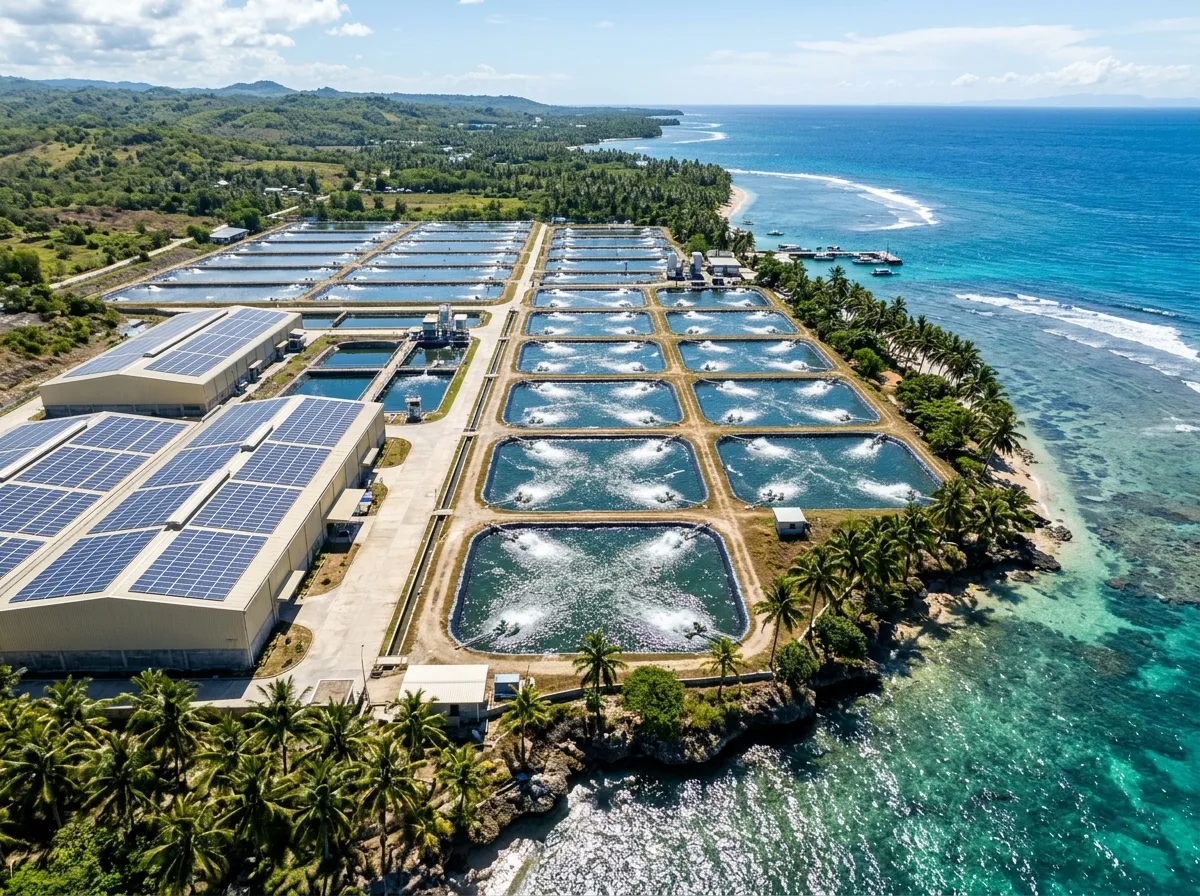
Coastal shrimp hatcheries, intensive bangus ponds, mud-crab nurseries, and nearshore mariculture bases across Bantayan, Bogo, Medellin, Carmen, Barili, and Carcar pull relentless pumping and aeration electricity. CebuSolar builds salt-resistant commercial solar, solar water pumping, and hybrid battery backup for coastal ponds.
- 50–500 kW+ hatchery & pond farms
- 3–5 yrs typical payback period
- Salt-air ready stainless steel fixings
The problem
Why do electricity and diesel costs crush margins at Cebu aquaculture ponds?
Intensive aquaculture burns energy round the clock running paddlewheel aerators, roots blowers for larval broodstock tanks, high-volume brackish water intake pumps, and harvest ice chillers. Paying coastal utility tariffs near ₱15–₱16 per kWh or hauling generator diesel along island dike roads slashes profitability.
Along Bantayan Island, northern bays from Bogo and Medellin down through Carmen, plus western Pinamungajan, Barili, and southern Carcar lagoons, shrimp and bangus farms depend on continuous dissolved oxygen across bright sunny afternoons when water warmth drops oxygen solubility sharply. When tidal flushing slows in dense brackish ponds, every aerator arm and borehole salt-mixing pump must stay spinning continuously.
Worse still, many fishpond compounds sit far down single-phase coastal feeders prone to brownouts, voltage swings, or typhoon-season utility drops. Losing aeration even briefly in heavily stocked vannamei shrimp grow-out ponds triggers fatal dissolved-oxygen crashes within hours unless backup batteries or automatic generators catch the bus reliably.
- Multi-horsepower electric paddlewheel and spiral pond aerators across grow-out compartments
- High-flow coastal brackish/seawater exchange pumps and freshwater bore blending pumps
- Hatchery regenerative roots blowers, algal culture lab chillers, and UV sterilizers
- Slush-ice flakers, harvest chill tanks, and bait/feed cold-storage rooms
- Offshore guardhouse lighting, auto-feeders, perimeter floodlights, and pond monitoring
How solar helps
Which solar architecture protects Cebu shrimp hatcheries and coastal fish farms?
Coastal pond sites combine heavy daytime aeration with sensitive hatchery outage vulnerability. CebuSolar installs Tier-1 620–630 W double-glass N-type bifacial modules paired with coastal stainless steel fixings, Solis three-phase inverters, Dyness or Pylontech LiFePO4 batteries, and dedicated VFD pumping arrays.
Hybrid solar + LiFePO4 backup for hatcheries
Shrimp nauplii and bangus fry hatcheries cannot tolerate dead roots blowers during utility drops. Adding hybrid solar with LiFePO4 battery storage feeds larval air blowers, lab chillers, and brine water circulation across feeder brownouts while slashing daytime electricity bills.
Direct solar water pumping for tidal pond exchange
Remote dikes far from three-phase utility transformers cut costly diesel pump hours using solar water pumping—charging holding reservoirs or feeding brackish exchange flumes throughout bright morning and afternoon peak tides.
Grid-tied arrays, 6–18 kW packages & off-grid cages
Large shore-side farms on three-phase lines trim afternoon aeration spend fast with grid-tied solar, while floating caretaker barges and small family ponds deploy fixed 6–18 kW hybrid packages starting from ₱305,000 or off-grid systems.
System sizing
How much solar capacity does a Cebu fishpond farm or hatchery require?
Pond sizing maps simultaneous daytime aerator horsepower, water intake pumping hours, critical hatchery blowers requiring battery ride-through, and salt-resistant mounting locations across caretaker buildings or pond dikes. CebuSolar offers 6–18 kW packages and custom 50–500 kW+ coastal arrays after site inspection.
| Aquaculture farm size | Primary electrical loads | Suggested solar capacity | Configuration & pricing |
|---|---|---|---|
| Small mud-crab nursery, barge house, or backyard bangus station | 1–2 small blowers, freshwater bore pump, freezer chest, perimeter lights | 6 kW to 12 kW Hybrid (10–22 panels, 6.2–13.64 kW solar) | Fixed packages: ₱305,000–₱640,000 (5–16 kWh battery, expandable 5–64 kWh) |
| Mid-sized prawn hatchery or boutique intensive pond block | Regenerative roots blowers, UV filtration, 8–12 pond aerators, lab aircon | 16 kW to 18 kW Hybrid or 50–100 kW three-phase | Fixed 16–18 kW kits (₱795,000–₱970,000) or custom commercial quote |
| Commercial multi-pond vannamei farm & packing shed | 20–50 paddlewheels, tidal intake pumps, harvest slush-ice chillers | 100–250 kW three-phase | Grid-tied + LiFePO4 hatchery bus + pump VFDs; custom quote |
| Large coastal mariculture complex, feed hub & cold room | High-head intake station, central blowers, ice plant, cold-storage rooms | 250–500 kW+ three-phase | Multi-building stainless coastal plant; custom quote after site visit |
Estimates only. Salt-mist clearance review, transformer sizing, and one fixed itemized price follow a site audit. Actual savings depend on system size, electricity consumption, location, and utility rates. Prices are subject to change without prior notice.
Cost and payback
What do aquaculture solar systems cost in Cebu, and how quickly do they pay back?
Small hatchery and dike-house packages from 6 kW to 18 kW range ₱305,000 to ₱970,000 fixed, while commercial pond complexes of 50 kW to 500 kW+ receive a custom turnkey quote after site survey. Replacing diesel drums and ₱15–₱16/kWh power achieves 3 to 5 year payback.
Hot afternoons raise pond surface temperatures and aquatic oxygen demand at the exact hours Tier-1 rooftop or embankment panels produce maximum power, shaving expensive daytime diesel pump hours and commercial kilowatt-hour bills simultaneously. Benchmarked against provincial CEBECO schedules (~₱15.08–₱15.91/kWh in September 2026) and VECO’s October 2026 rate of ₱15.30/kWh, coastal solar dramatically lowers feed-to-harvest energy expense.
Coastal brackish spray destroys cheap mild steel within months, so CebuSolar deploys Tier-1 620–630 W N-type bifacial glass panels from JinkoSolar, JA Solar, Trina Solar, LONGi, and AIKO, Solis inverters, Dyness or Pylontech LiFePO4 batteries, Schneider Electric and Suntree protection, and stainless steel fixings. Model pond savings on our ROI calculator or check fixed kits on our cost page.
- One fixed turnkey contract price after on-pond inspection, every component itemized
- Clear milestone payments: 40% on order, 40% on delivery and mounting, 20% on switch-on
- Protected by 5-year workmanship, 12-year inverter, and 30-year panel performance warranties (at least 87% output at year 30)
- Flexible expansion: add 620 W panels at ₱12,000 each or stack 5 kWh (₱75,000), 10 kWh (₱140,000), or 16 kWh (₱160,000) batteries
- We help with your municipal LGU electrical permits and CEBECO, VECO, or MECO zero-export documents
How it works
How does CebuSolar install salt-protected solar systems along coastal ponds and barges?
Our Cebu City installers inspect sea-spray wind fetch across pond dikes, specify coastal stainless steel mounting fixings, elevate sealed inverter and LiFePO4 battery rooms safely above storm-surge grades, and install while keeping hatchery aeration running.
Pond & hatchery survey
We visit to check twelve months of CEBECO, VECO, or utility bills, map intake pumps and dike feeder runs, and verify shelter roofs and ground pads.
Salt-air design & fixed quote
We specify stainless steel fixings, surge-safe Schneider/Suntree protection, elevated electrical enclosures, permit help, and one fixed contract price.
Clean dike & roof installation
Teams mount arrays across hatchery roofs or stable compacted embankment pads while aerators stay powered, finishing breaker tie-in.
Warranty & Cebu parts backing
Commissioned pond systems include our Cebu warranty supported by stocked local spare parts Metro Cebu 48-hour response target.
What do Cebu aquaculture operators ask before building coastal solar arrays?
Shrimp growers, hatchery technicians, and fish-cage managers in Bantayan, Bogo, Carmen, and Carcar often ask about salt corrosion along brackish ponds, overnight paddlewheel runtime, dike embankment ground-mounting stability, standby diesel generator integration, and municipal permit help before approving coastal solar installation.
Will salty sea breeze and pond aeration mist corrode brackets or ruin inverters?
CebuSolar constructs coastal sites with double-glass N-type bifacial Tier-1 panels and stainless steel fixings designed specifically for coastal salt air, mounting Solis inverters and Dyness or Pylontech LiFePO4 batteries inside enclosed, shaded, elevated electrical sheds protected away from direct brine splash.
Nighttime aeration pulls heavy power—can solar still help 24-hour aquaculture operations?
Yes. While batteries cover critical overnight blowers during blackouts on hybrid hatcheries, large grow-out ponds pull heavy daytime electricity for tidal water exchange pumps, ice chillers, afternoon heat aeration, and feed blowers. Offsetting daytime aeration and pumping cuts total farm energy expenses substantially.
Can panels sit on earthen embankments if our caretaker hut roof is tiny?
Yes, where compacted mineral embankment pads or adjacent high ground exist safely above king-tide surges. Where dikes are soft silt, CebuSolar builds arrays on solid masonry pump houses, feed warehouses, ice-storage sheds, or driven steel frames inspected on-site first.
How does aquaculture solar coordinate with standby diesel generators during long island brownouts?
On grid-connected farms, three-phase inverters tie upstream of automatic transfer switches or use a dynamic controller so solar shuts down or scales safely under generator power, while hybrid hatchery banks discharge LiFePO4 storage before engines even start.
Does CebuSolar assist with municipal permits on Bantayan, northern Cebu, or southern towns?
Yes—we help with your permits by preparing single-line electrical diagrams, structural layout sheets, and Tier-1 datasheets needed for municipal LGU electrical offices and provincial CEBECO or VECO zero-export compliance.
Get your personalized solar quote
Tell us about your place, pin it on the map and add a photo of your bill. Our team replies on Viber within one business day.
- 1. We size your system from your bill and map your roof by satellite.
- 2. You get your quote: panels, battery, monthly savings, payback and price.
- 3. Happy with it? We check your roof and wiring on site, then lock in one fixed price.