- Home
- Shipbuilding & Ship Repair
Solar for shipyards · Heavy marine EPC
Solar for Shipbuilding & Ship Repair in Cebu. Cut daytime fabrication and drydock power bills.
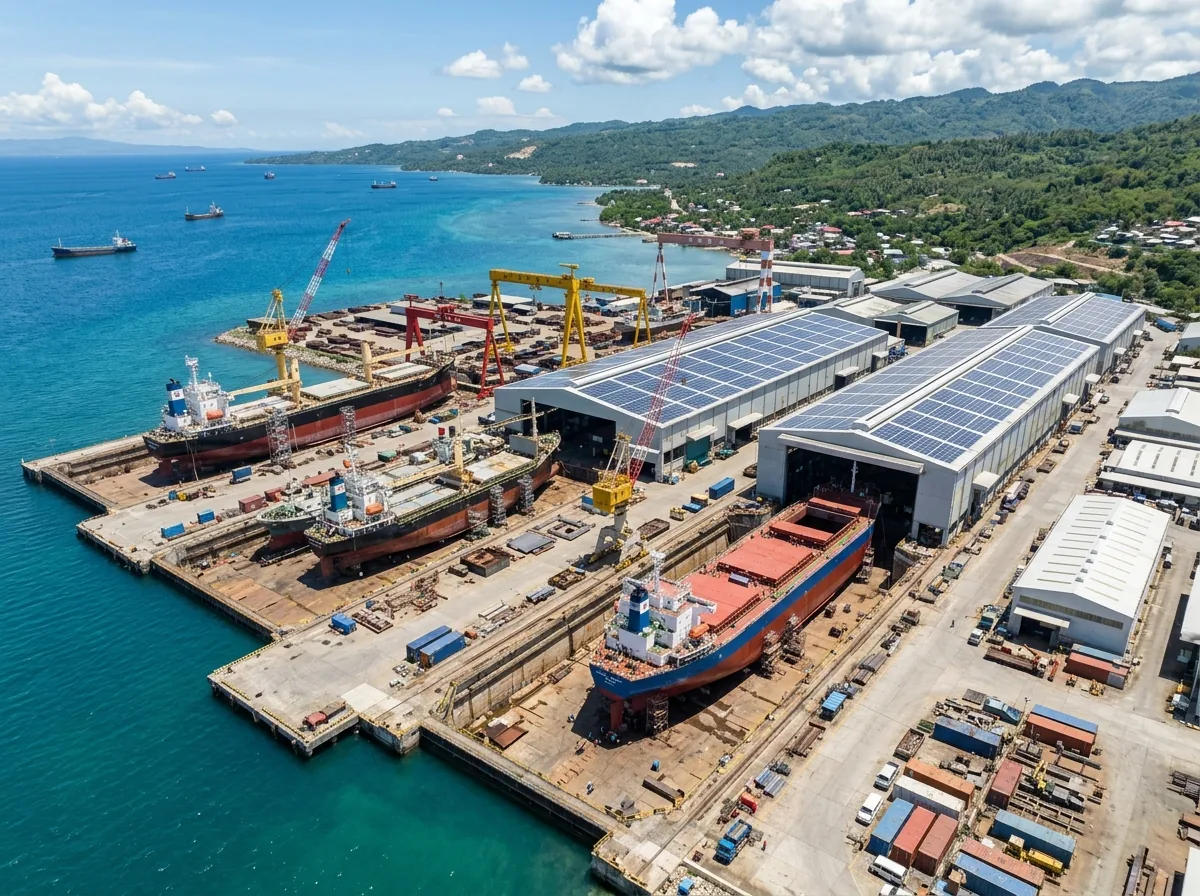
Coastal shipyards, slipways, and drydock yards burn immense daytime three-phase electricity running welding banks, overhead gantry cranes, compressed-air sandblasters, and CNC plate cutters under Balamban, Danao, Consolacion, Mandaue, and Lapu-Lapu skies. CebuSolar builds heavy commercial solar plants with stainless coastal hardware.
- 50–500 kW+ 3-phase shipyard plants
- 3–5 yrs typical payback period
- Salt-air ready stainless steel fixings
The problem
Why are electricity expenses so steep at Cebu shipyards and drydocks?
Marine fabrication yards operate high-draw inverter welding fleets, rotary air compressors for hull blasting, slipway winches, plasma cutting tables, and machine-shop lathes concurrently across daylight shifts. Under Cebu commercial utility rates around ₱15–₱16 per kWh, daytime hull construction and repair loads drive hefty monthly power invoices.
From major western shipyards in Balamban and Asturias to drydocks, barge repair yards, and marine engineering shops along Mactan Channel, Consolacion, Danao, and Tayud, fabrication peaks during bright daylight hours. Large steel hull sheds and machine halls expose expansive corrugated metal roofs right next to high-capacity three-phase substations while welding stations, ventilation blowers, overhead bridge cranes, and compressed-air receivers run simultaneously across busy repair schedules.
Meanwhile, coastal yards operating outside urban grids or on heavily loaded provincial CEBECO feeders face voltage swings and outage risks that halt crane lifts, underwater pump dewatering, and precision machining unless costly standby diesel generators carry the yard. Putting wide fabrication hall roofs to work lowers daytime energy overhead directly on the meter.
- Multi-unit MIG, TIG, and submerged-arc welding power sources
- High-capacity rotary air compressors feeding grit-blasting and air tools
- CNC plasma/oxy-fuel plate cutting tables, hydraulic press brakes, and lathes
- Drydock dewatering pumps, overhead shop bridge cranes, and ventilation fans
- Engineering offices, NDT X-ray labs, and air-conditioned crew welfare buildings
How solar helps
Which solar systems handle heavy marine fabrication and shipyard loads?
Wide steel hull-assembly sheds give shipbuilders unobstructed daytime solar harvesting directly above heavy three-phase motor centers. CebuSolar matches Tier-1 620–630 W N-type bifacial panels with Solis three-phase inverters, zero-export control, LiFePO4 protection for engineering controls, and coastal stainless steel mounting.
Three-phase grid-tied solar for fabrication halls
Shipbuilding yards connected to VECO, MECO, or CEBECO three-phase transformers capture fastest capital return with grid-tied solar. Multi-inverter Solis arrays tie straight into fabrication switchboards via zero-export sensing, feeding compressors, welding buses, and shop lathes all afternoon without battery cost.
Hybrid LiFePO4 backup for CNC labs & engineering offices
Unexpected grid trips mid-cut waste thick marine steel plate on CNC tables and crash CAD servers or shipyard dispatch radios. Adding hybrid solar with Dyness or Pylontech LiFePO4 batteries shields precision controls, quality labs, and security offices until standby generators ramp.
Solar water pumping & auxiliary outbuilding systems
Remote marine slipways and boatyards relying on deep boreholes for hull freshwater washdowns or staff housing cut fuel bills using solar water pumping—while smaller boat-repair sheds can deploy modular 6–18 kW hybrid packages or off-grid power.
System sizing
What size solar plant does a Cebu shipyard or boat-repair yard need?
Marine yard sizing inspects main substation transformer ratings, daylight welding and compressor load profiles, crane hall structural purlins, and twelve months of billing history. CebuSolar supplies fixed 6–18 kW hybrid packages for small boatyards and custom 50–500 kW+ three-phase installations for drydock shipyards after a survey.
| Marine yard scale | Primary daytime equipment | Suggested solar capacity | Configuration & pricing |
|---|---|---|---|
| Small fiberglass boatshop, marine parts shop, or yard office | Handheld welders, fiberglass sanders, air compressor, office aircon, CCTV | 6 kW to 18 kW Hybrid (10–32 panels, 6.2–19.84 kW solar) | Fixed packages: ₱305,000–₱970,000 (5–16 kWh battery, expandable 5–64 kWh) |
| Tug & barge drydock repair workshop | Welding bays, shop machine tools, dewatering pumps, yard air compressor | 50–150 kW three-phase | Fabrication shed rooftop grid-tied array; custom quote after site visit |
| Commercial coastal shipyard & steel plate hall | Multiple fabrication hangars, CNC plasma cutters, rotary screw compressors | 150–300 kW three-phase | Three-phase Solis plant with zero-export & genset sync; custom quote |
| Major shipbuilding complex & multi-drydock yard | Heavy gantry cranes, large blasting air plants, central workshops, offices | 300–500 kW+ three-phase | Multi-inverter commercial plant + optional LiFePO4 backup; custom quote |
Estimates only. Structural purlin assessment, coastal framing specs, and one fixed itemized price follow a site audit. Actual savings depend on system size, electricity consumption, location, and utility rates. Prices are subject to change without prior notice.
Cost and payback
How much does shipyard solar cost in Cebu, and how fast does it pay back?
Three-phase shipyard arrays from 50 kW to 500 kW+ are custom-quoted at one fixed price after structural and substation inspection, whereas smaller 6–18 kW boatshop packages run ₱305,000 to ₱970,000. Facing October 2026 Cebu power tariffs near ₱15–₱16/kWh, shipyards typically achieve 3 to 5 year payback.
Daylight fabrication shifts align closely with peak sunlight, meaning high-amperage welding lines and air compressors absorb nearly all generated solar kilowatts straight off the yard switchboard. Benchmarked against VECO’s October 2026 schedule of ₱15.30/kWh and provincial CEBECO commercial rates across western and northern Cebu, cutting utility demand lowers per-vessel fabrication overhead substantially.
Marine environments punish ordinary hardware, so CebuSolar builds with Tier-1 620–630 W N-type bifacial panels from JinkoSolar, JA Solar, Trina Solar, LONGi, and AIKO, Solis inverters, Dyness or Pylontech LiFePO4 batteries, Schneider Electric and Suntree breakers, and stainless steel fixings built for coastal salt air. Model smaller shop bills on our ROI calculator or inspect fixed packages on our cost page.
- One fixed turnkey contract price after site inspection, every component listed
- Clear milestone payments: 40% on order, 40% on delivery and mounting, 20% on switch-on
- Protected by 5-year workmanship, 12-year inverter, and 30-year panel performance warranties (at least 87% output at year 30)
- Modular options for smaller marine shops: extra 620 W panels at ₱12,000 and 5 kWh (₱75,000), 10 kWh (₱140,000), or 16 kWh (₱160,000) batteries
- We help with your local LGU electrical permits and utility zero-export documents
How it works
How does CebuSolar install solar above active fabrication halls and gantry bays?
Our Cebu City installers coordinate closely with shipyard HSE officers, schedule crane-free roof zones clear of active plate rigging below, and mount coastal stainless steel rails outside work aisles. Brief main-switchboard tie-in occurs during an off-shift or Sunday gap so vessel schedules stay on time.
Yard & transformer audit
We visit to review 12 months of CEBECO, VECO, or MECO bills, inspect high-bay steel trusses and salt corrosion exposure, and log substation and genset ATS panels.
Coastal design & fixed quote
We map panel rows clear of paint-overspray vents and blasting zones, specify stainless fixings and sealed electrical rooms, assist with permits, and set one fixed price.
HSE-compliant installation
Rigging crews adhere strictly to yard safety rules overhead while steel assembly continues safely below, timing breaker tie-in during a planned pause.
Warranty & Cebu parts care
Commissioned yards carry our Cebu warranty backed by locally stocked spare hardware and a Metro Cebu response target within 48 hours.
What do Cebu shipyard managers and marine engineers ask before going solar?
Shipyard directors, drydock superintendents, and marine electrical engineers in Balamban, Tayud, and Mactan often inquire about coastal salt-air durability, paint overspray and grit-blasting dust, welding load spikes, standby diesel generator synchronization, utility zero-export setup, and municipal industrial permit assistance before approving solar installation.
How do solar panels and frames hold up right next to open saltwater and grit blasting?
Coastal shipyards demand materials made for ocean spray. CebuSolar mounts Tier-1 620–630 W double-glass N-type bifacial modules with stainless steel fixings designed for salt air, positions arrays upwind of open hull-blasting or spray-painting bays whenever possible, and installs Solis inverters inside enclosed, filtered electrical rooms.
Can solar handle rapid load spikes from heavy arc welders and overhead cranes?
Yes. Under a grid-tied three-phase connection, your utility transformer absorbs millisecond welding arc transients naturally while Solis three-phase inverters inject smooth steady daytime kilowatts into the yard bus, reducing net power drawn from the meter across the entire shift.
How does yard solar work with standby industrial diesel generators?
Yards running large standby gensets during provincial feeder outages integrate solar upstream of automatic transfer switches or through a dynamic PV-genset controller so solar throttles whenever diesel engines take over yard buses, avoiding reverse-power faults.
Can we start on admin buildings and expand onto larger hull fabrication roofs later?
Yes. Many drydocks begin with engineering offices, machine shops, or covered warehouse roofs and expand across multi-bay fabrication halls as three-phase substations and expansion budgets dictate.
Does CebuSolar assist with municipal permits and utility setup for shipyards?
Yes—we help with your permits by preparing single-line electrical diagrams, structural clamp layouts, and Tier-1 datasheets required for LGU electrical offices and CEBECO, VECO, or MECO zero-export compliance.
Get your personalized solar quote
Tell us about your place, pin it on the map and add a photo of your bill. Our team replies on Viber within one business day.
- 1. We size your system from your bill and map your roof by satellite.
- 2. You get your quote: panels, battery, monthly savings, payback and price.
- 3. Happy with it? We check your roof and wiring on site, then lock in one fixed price.