- Home
- Logistics & Port Operations
Solar for ports & freight hubs · Marine & cargo EPC
Solar for Logistics & Port Operations in Cebu. Cut terminal, reefer, and cross-dock power bills.
Port cargo sheds, bonded air-freight warehouses, container depots, e-commerce sortation hubs, and refrigerated 40-foot reefer plug-in yards pull continuous daytime three-phase power across Cebu North Reclamation Area, Mandaue, Tayud Consolacion, Mactan air-cargo hubs, and Minglanilla. CebuSolar builds heavy commercial solar with salt-air hardware.
- 50–500 kW+ 3-phase cargo & port terminals
- 3–5 yrs typical payback period
- Salt-air ready stainless steel fixings
The problem
Why are utility costs surging at Cebu port terminals and freight distribution yards?
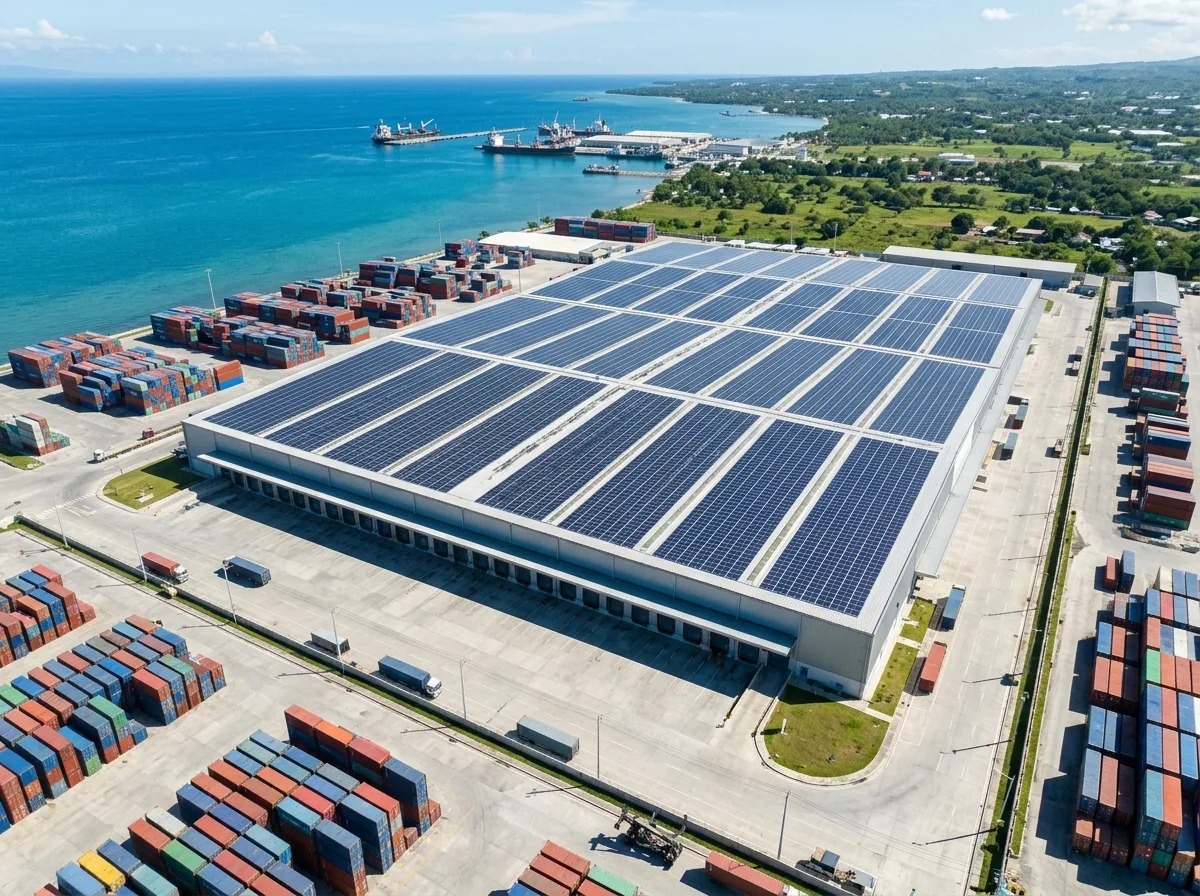
Freight and container hubs pair vast low-slope warehouse roofs with energy-hungry reefer container plug racks, daytime electric forklift charger banks, parcel sortation conveyors, and temperature-controlled bonded cargo bays. Under Cebu utility tariffs around ₱15–₱16 per kWh, energy expenses squeeze per-TEU and per-pallet margins.
Around Cebu International Port, Mandaue Reclamation warehouses, Consolacion shipside yards, Mactan aviation freight forwarders, and southern Minglanilla container inland depots, reefer containers parked under direct tropical sun pull heavy compressor current all afternoon just to hold chilled and frozen cargo temperatures steady. Inside cross-dock buildings, automated conveyor drives, hydraulic dock levelers, high-bay LED lighting, air-conditioned customs inspection offices, and Li-ion/lead-acid reach-truck charging racks stack substantial kilowatt-hours daily.
Meanwhile, coastal salt wind batters outdoor electrical equipment along exposed port piers, while feeder drops disrupt automated warehouse management Wi-Fi scanners, weighing bridge terminals, and refrigerated container banks unless switchgear stays well protected.
- Plug-in 440V/400V reefer container stacks cooling perishables awaiting vessel loading
- Cross-dock parcel sortation conveyors, telescopic unloaders, and dock leveler hydraulics
- Daytime rapid battery chargers for electric forklifts, reach trucks, and pallet jacks
- Temperature-controlled bonded air-cargo and pharma/food transit staging vaults
- Port dispatch control rooms, container weighbridges, security X-ray scanners, and office AC
How solar helps
Which commercial solar setups fit Cebu container yards, freight hubs, and port sheds?
Sprawling single-story cross-dock terminals provide vast uncluttered corrugated steel roof area directly adjacent to port substation transformers. CebuSolar pairs Tier-1 620–630 W N-type bifacial panels with coastal stainless steel fixings, three-phase Solis inverters, zero-export meters, and optional LiFePO4 dispatch backup.
Three-phase grid-tied arrays on freight cross-docks
Distribution centers, courier sorting facilities, and reefer yards connected to VECO or MECO three-phase service achieve fastest capital payback using grid-tied solar. Multi-inverter Solis arrays pump steady afternoon power straight into reefer plug buses and forklift charging bays.
Hybrid LiFePO4 backup for customs IT & weighbridges
Even brief power dips freeze port dispatch software, container weighbridges, RFID gate scanners, and customs inspection cameras, stalling outbound truck queues down access roads. Pairing hybrid solar with LiFePO4 batteries safeguards control offices, dock doors, and lighting.
Gatehouse 6–18 kW packages & container yard canopies
Independent trucking depots, container repair bays, and remote yard offices fit onto fixed 6–18 kW hybrid packages starting from ₱305,000—while open truck-staging yards lacking large sheds add elevated steel carport canopies.
System sizing
What solar capacity suits a Cebu trucking depot, air-cargo hub, or container terminal?
Port and depot sizing inspects simultaneous daytime reefer plug draw, warehouse cold-staging load, forklift charging windows, coastal salt-air wind clearance near container cranes, and twelve months of billing logs. CebuSolar builds 6–18 kW packages for small depots and custom 50–500 kW+ terminal arrays.
| Logistics facility scale | Active daytime terminal loads | Suggested solar capacity | Configuration & pricing |
|---|---|---|---|
| Independent trucking dispatch yard, container shop, or broker office | Dispatch IT servers, weighbridge terminal, yard floodlights, office aircon | 6 kW to 18 kW Hybrid (10–32 panels, 6.2–19.84 kW solar) | Fixed packages: ₱305,000–₱970,000 (5–16 kWh battery, expandable 5–64 kWh) |
| Mactan air-freight forwarder or 3PL sortation warehouse | Cross-dock sorting belts, bonded cool-room HVAC, X-ray scanner, forklifts | 50–150 kW three-phase | Rooftop grid-tied array + scanner/IT hybrid bus; custom quote |
| Regional e-commerce fulfillment hub or mid-sized container yard | Multi-bay sortation conveyors, 15–30 reefer plug racks, rapid forklift bank | 150–300 kW three-phase | Three-phase Solis plant with zero-export & genset sync; custom quote |
| Major port terminal, multi-shed warehouse, & reefer container park | High-count reefer banks, automated bays, cold-chain staging, yard cranes | 300–500 kW+ three-phase | Multi-building commercial array with coastal stainless hardware; custom quote |
Estimates only. Purlin inspection, Mactan flight-path glare checks if near airport, and one fixed itemized price follow a site audit. Actual savings depend on system size, electricity consumption, location, and utility rates. Prices are subject to change without prior notice.
Cost and payback
How much does port and logistics solar cost in Cebu, and when does it pay back?
Commercial logistics arrays of 50 kW to 500 kW+ are custom-quoted at one fixed price after reviewing substation capacity and shed trusses, whereas 6–18 kW depot packages run ₱305,000 to ₱970,000. At Cebu utility rates near ₱15–₱16/kWh, typical payback averages 3 to 5 years.
Broad cross-dock rooftops deliver strong economics because every parked 40-foot reefer plug-in container and afternoon warehouse AC load draws hardest under intense coastal sun, achieving high direct utilization. Benchmarked against VECO’s October 2026 schedule of ₱15.30/kWh, MECO (~₱15.98/kWh in September 2026) along Mactan air-cargo hubs, and CEBECO commercial tariffs, cutting facility utility expense secures long-term 3PL contract competitiveness.
Harsh harbor air demands marine-grade assembly, so CebuSolar constructs logistics plants with Tier-1 620–630 W N-type bifacial panels from JinkoSolar, JA Solar, Trina Solar, LONGi, and AIKO, Solis inverters, Dyness or Pylontech LiFePO4 batteries, Schneider Electric and Suntree protection, and stainless steel fixings. Model small yard offices on our ROI calculator or inspect fixed packages on our cost page.
- One fixed turnkey contract price after site survey, every component itemized
- Milestone payments: 40% on order, 40% on delivery and mounting, 20% on switch-on
- Protected by 5-year workmanship, 12-year inverter, and 30-year panel performance warranties (at least 87% output at year 30)
- Modular options for smaller depots: extra 620 W panels at ₱12,000 and 5 kWh (₱75,000), 10 kWh (₱140,000), or 16 kWh (₱160,000) batteries
- We assist with your local LGU electrical permits and utility zero-export documents
How it works
How does CebuSolar install safely above active container truck bays and loading docks?
Container yards and 3PL cross-docks cannot block tractor-trailer lanes during dispatch waves. Our Cebu City crew hoists pallets into clear perimeter staging zones, executes roof clamping overhead without slowing dock traffic below, and connects inverters during a brief Sunday maintenance pause.
Terminal & roof survey
We examine twelve months of VECO, MECO, or CEBECO bills, inspect high-bay warehouse purlins and coastal salt corrosion, and review main substation rooms.
Port-safe engineering & fixed quote
We specify anti-glare panel layouts if adjacent to Mactan flight corridors, stainless coastal hardware, permit help, and one fixed price.
Zero-traffic installation
Teams complete structural mounting overhead without closing loading dock aprons, timing breaker commissioning on an off-shift gap.
Warranty & fast Cebu service
Commissioned terminals carry our Cebu warranty backed by locally stocked spare hardware and a Metro Cebu response target within 48 hours.
What do Cebu logistics managers and port engineers ask before approving solar?
3PL directors, facility supervisors, and terminal engineers at Cebu port yards, Mandaue warehouses, and Mactan air-cargo hubs often ask about Mactan airport anti-glare compliance, sea-spray salt durability, daytime forklift opportunity charging windows, standby genset coordination, and LGU permit assistance before approving solar.
Will glossy solar panels near Mactan cargo aprons or port channels create pilot glare concerns?
Modern Tier-1 620–630 W panels use textured anti-reflective tempered glass designed to absorb photons rather than reflect sunlight upward. On facilities near Mactan-Cebu International Airport corridors, CebuSolar models panel tilt azimuths and flags any aviation clearances to check during permitting.
How do port terminal arrays withstand constant sea salt air along Cebu Channel wharves?
CebuSolar specifies double-glass N-type bifacial Tier-1 modules alongside stainless steel fixings built for salt-air exposure, mounting Solis three-phase inverters inside enclosed, climate-protected switchgear rooms away from blowing harbor mist.
Can terminals time electric forklift and reach-truck fleet charging around sunny afternoon hours?
Yes! Shifting spare electric forklift battery swaps and opportunity lunch-break charging into sunny midday windows allows heavy warehouse DC chargers to soak up free excess solar kilowatts straight off cross-dock switchboards while reducing evening grid demand.
How does solar work alongside container yard standby diesel generators during grid outages?
Reefer terminals running large standby gensets wire three-phase solar inverters upstream of automatic transfer switches or use a dynamic PV-genset controller so inverters trip or match load whenever diesel sets stabilize parked refrigerated containers.
Does CebuSolar help with municipal electrical permits?
Yes—we help with your permits by preparing single-line electrical diagrams, structural clamp drawings, and Tier-1 datasheets required for LGU electrical offices, and VECO, MECO, or CEBECO zero-export setups.
Get your personalized solar quote
Tell us about your place, pin it on the map and add a photo of your bill. Our team replies on Viber within one business day.
- 1. We size your system from your bill and map your roof by satellite.
- 2. You get your quote: panels, battery, monthly savings, payback and price.
- 3. Happy with it? We check your roof and wiring on site, then lock in one fixed price.