- Home
- Garments & Textiles
Solar for garments & textiles · Apparel factory EPC
Solar for Garments & Textiles in Cebu. Cut daytime sewing and cooling costs.
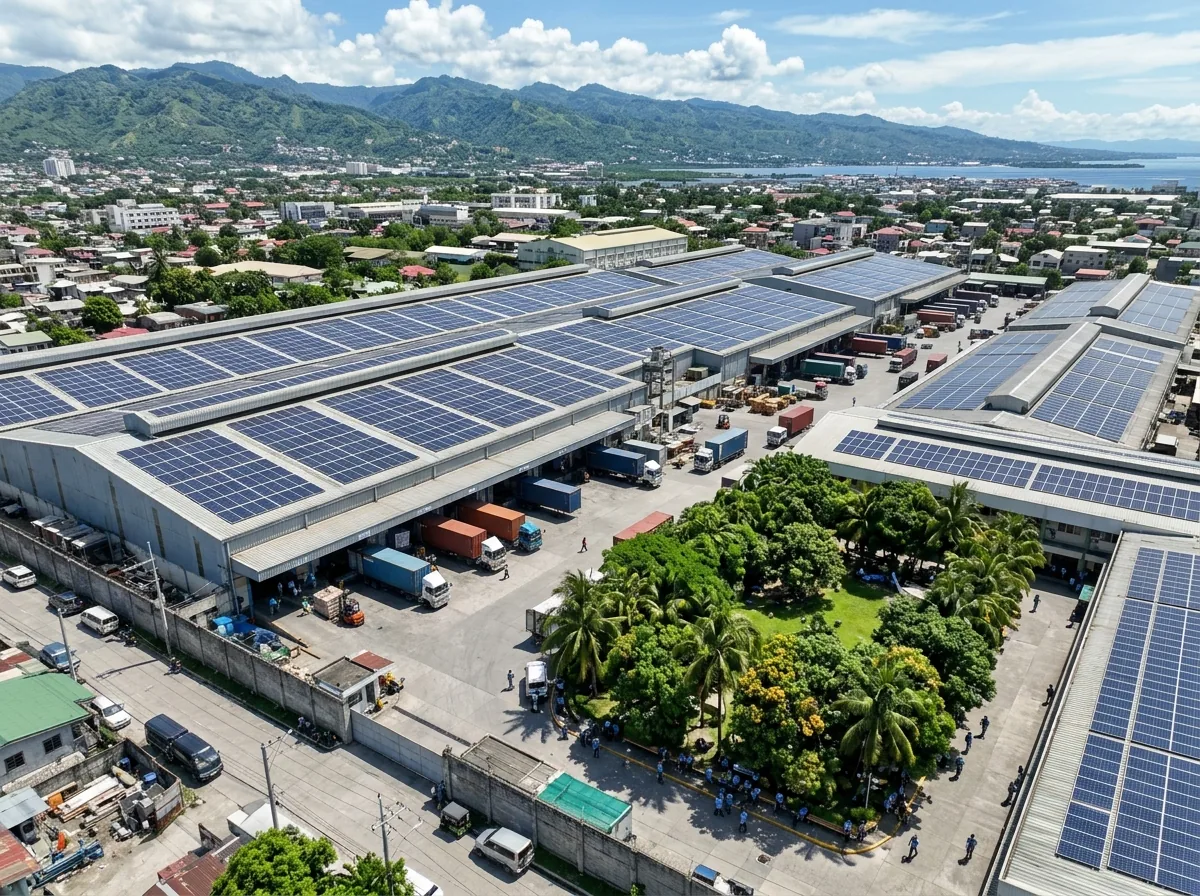
Apparel exporters, embroidery houses, and textile mills pack hundreds of sewing machines, laser cutters, steam boilers, and floor air-conditioners into wide single-storey factory halls running straight through Cebu’s brightest daytime hours. CebuSolar builds three-phase commercial solar arrays that lower VECO, MECO, and CEBECO factory bills.
- 50–500 kW+ 3-phase factory plants
- 3–5 yrs typical payback period
- Daytime shift peak output match
The problem
Why are electric bills so punishing for Cebu garment and textile factories?
Apparel factories operate almost entirely during daylight shifts—driving dense rows of industrial sewing motors, electric fabric cutters, vacuum pressing tables, high-bay floor lighting, and massive comfort cooling loads simultaneously. Facing Cebu rates near ₱15–₱16 per kWh, daytime utility overhead cuts directly into tight per-piece garment margins.
Look inside export apparel buildings across Mactan MEPZ, Mandaue, Consolacion, Liloan, Talisay, and Naga during midday hours, and heat builds rapidly across low-slope steel roofs. Hundreds of operators, heat-transfer curing tunnels, and steam pressing irons radiate internal warmth while wide corrugated metal roofs absorb intense tropical sun, forcing industrial aircons and evaporative air coolers to run flat-out from mid-morning until late afternoon.
Because global apparel buyers negotiate razor-thin cut-make-trim fees, rising VECO, MECO, or CEBECO kilowatt-hour tariffs cannot simply be passed along to overseas brands. Turning expansive flat garment-factory rooftops into shade-giving commercial solar arrays tackles energy cost right during active shift hours.
- Industrial lockstitch, overlock, and multi-head computerized embroidery lines
- Floor-wide HVAC chillers, packaged aircons, and evaporative ventilation blowers
- Electric fabric spreaders, CAD plotters, laser cutters, and fusing presses
- Vacuum steam finishing tables, garment dryers, and curing conveyor ovens
- High-bay task lighting, compressed-air headers, and QA inspection tables
How solar helps
How does rooftop solar benefit Cebu apparel mills and cutting floors?
Garment plants combine ideal solar geometry—huge unshaded single-storey roofs—with daytime-dominant production schedules, delivering immediate bill savings plus cooler roof decks over sewing lines. CebuSolar pairs 620–630 W N-type bifacial Tier-1 panels with Solis three-phase inverters, zero-export control, and LiFePO4 backup for offices.
Three-phase grid-tied solar for daytime shifts
Apparel factories running strong daytime shifts capture maximum financial return using grid-tied solar with zero battery expense. Solis three-phase inverters feed active sewing lines, steam finishing motors, and floor aircons directly via zero-export sensors matching factory load in real time.
Hybrid battery protection for CAD rooms & embroidery
Sudden grid brownouts halt multi-head computerized embroidery machines mid-pattern, scramble CAD pattern plotters, and drop shipping ERP terminals. Adding hybrid solar with Dyness or Pylontech LiFePO4 batteries shields sensitive digital equipment, pattern computers, and dispatch offices.
Modular packages for workshops & screen printers
Boutique uniform makers, screen-printing studios, embroidery jobbers, and fabric warehouses can deploy fixed 6–18 kW hybrid packages immediately—or combine shaded loading-bay carports where main building roofs contain older trusses.
System sizing
What size solar array does a Cebu garment or textile plant need?
Sizing reflects shift hours, floor cooling tonnage, sewing and embroidery motor density, roof truss structure, and 12 months of daytime kWh billing. CebuSolar supplies fixed-price 6–18 kW hybrid systems for smaller apparel studios and engineered 50–500 kW+ three-phase solar plants for major export mills after an audit.
| Factory scale | Primary daytime loads | Suggested solar capacity | Architecture & pricing |
|---|---|---|---|
| Small tailoring shop, uniform maker, or print studio | Sewing machines, embroidery heads, heat press, split AC, lighting | 6 kW to 18 kW Hybrid (10–32 panels, 6.2–19.84 kW solar) | Fixed packages: ₱305,000–₱970,000 (5–16 kWh battery, expandable 5–64 kWh) |
| Mid-sized apparel subcontractor or knitting workshop | Cutting tables, sewing lines, packaged aircons, air compressor, pressing | 50–120 kW three-phase | Rooftop grid-tied array with zero-export; custom quote after site visit |
| Export garment factory & finishing facility | Central floor air-conditioning, steam finishing, fusing presses, warehouse | 120–300 kW three-phase | Three-phase Solis plant + genset coordination; custom quote |
| Large textile weaving, dyeing, or multi-hall apparel plant | Heavy looms, water treatment, chilled-water HVAC, multi-bay sewing floors | 300–500 kW+ three-phase | Multi-inverter commercial plant + optional LiFePO4 backup; custom quote |
Estimates only. Truss inspection, shading review, and one fixed itemized price follow a site audit. Actual savings depend on system size, electricity consumption, location, and utility rates. Prices are subject to change without prior notice.
Cost and payback
How much does garment-factory solar cost in Cebu, and when does it pay back?
Commercial factory plants from 50 kW to 500 kW+ receive a custom quote at one fixed price after structural inspection, while smaller 6–18 kW workshop packages range from ₱305,000 to ₱970,000. Across October 2026 Cebu rates near ₱15–₱16/kWh, daytime apparel plants typically see 3 to 5 year payback.
Why does solar excel on garment rooftops? Because daytime shift hours align closely with bright sun, and covering wide metal roofs physically shades sewing floors below—reducing ceiling heat radiation while feeding electricity straight into motors and air-conditioners against VECO’s October 2026 rate of ₱15.30/kWh and comparable MECO or CEBECO commercial tariffs.
CebuSolar installs durable Tier-1 components across every apparel project: 620–630 W N-type bifacial panels from JinkoSolar, JA Solar, Trina Solar, LONGi, and AIKO, Solis inverters, Dyness or Pylontech LiFePO4 batteries, Schneider Electric and Suntree breakers, and stainless steel fixings. Smaller studios can check payback via our ROI calculator or view fixed prices on our cost page.
- One fixed turnkey contract price after site survey, every part listed
- Three-stage milestone payment: 40% on order, 40% on delivery and mounting, 20% on switch-on
- Backed by 5-year workmanship, 12-year inverter, and 30-year panel performance warranties (at least 87% output at year 30)
- Expandable smaller hybrid kits: add 620 W panels at ₱12,000 each or stack 5 kWh (₱75,000), 10 kWh (₱140,000), or 16 kWh (₱160,000) batteries
- We assist with your LGU electrical permits and utility zero-export documents
How it works
How does CebuSolar build above sewing floors without stopping garment shipments?
Our Cebu City crew works outside loading bays and on exterior roof decks while cutting and sewing teams maintain export shipping deadlines below. Brief final electrical tie-in occurs on a scheduled Sunday or off-shift maintenance gap to avoid lost sewing hours.
Plant & truss survey
We visit to review twelve months of MECO, VECO, or CEBECO demand bills, measure purlin gauge and roof skylights, and verify main low-voltage breaker panels.
Heat-reducing layout & quote
We map clear panel rows and walkways across the metal roof, prepare zero-export electrical drawings, help with permit submissions, and issue one fixed price.
Shift-safe roof installation
Crews complete rail mounting and DC wiring overhead without halting floor lines, timing breaker tie-in on a pre-arranged off-shift gap.
Cebu warranty & fast service
Commissioned plants carry our Cebu warranty backed by spare parts stocked locally and a Metro Cebu response target within 48 hours.
What do Cebu apparel factory managers ask before investing in solar?
Factory directors, compliance auditors, and plant engineers in MEPZ, Mandaue, and southern industrial corridors often ask about indoor sewing-floor cooling benefits, older steel truss roof weight limits, six-day shift sizing, standby diesel generators, and city permit assistance before moving forward.
Does putting solar panels on a garment factory roof actually make the sewing floor cooler?
Yes. Large arrays block intense midday solar radiation from baking bare corrugated steel roof sheets directly over uninsulated or lightly insulated work floors. Lower roof-sheet temperature helps ease radiant ceiling heat into sewing bays while the array supplies electricity to run floor air-conditioning and exhaust blowers.
What if our factory operates six days a week and closes on Sundays?
Even with a six-day Monday-to-Saturday schedule, zero-export solar scales around active weekday and Saturday consumption, while Sunday idle loads—like security lighting, admin servers, and warehouse ventilation—still absorb a share of baseline output and keep overall 3 to 5 year payback compelling.
Can older steel-truss garment sheds safely carry commercial rooftop solar arrays?
Every CebuSolar proposal starts with an on-site structural inspection of steel trusses, purlin spacing, and roof sheet condition. Modern 620–630 W panels add modest distributed weight along structural purlins, and if any bay shows corroded purlins we address mounting placement or utilize carports and adjacent annex roofs.
How does rooftop solar coordinate with standby factory diesel generators?
We wire three-phase inverters upstream of your automatic transfer switch or fit a dynamic PV-genset controller so solar disconnects or adjusts whenever standby diesel engines power the sewing floor during outages.
Does CebuSolar help with city permits and,?
Yes—we assist with your permits by preparing single-line electrical diagrams, structural layout drawings, and Tier-1 datasheets needed for LGU electrical permits, and VECO, MECO, or CEBECO zero-export compliance.
Get your personalized solar quote
Tell us about your place, pin it on the map and add a photo of your bill. Our team replies on Viber within one business day.
- 1. We size your system from your bill and map your roof by satellite.
- 2. You get your quote: panels, battery, monthly savings, payback and price.
- 3. Happy with it? We check your roof and wiring on site, then lock in one fixed price.