- Home
- Furniture & Woodcraft
Solar for furniture makers · Mandaue & Cebu EPC
Solar for Furniture & Woodcraft in Cebu. Cut daytime shop-floor power bills.
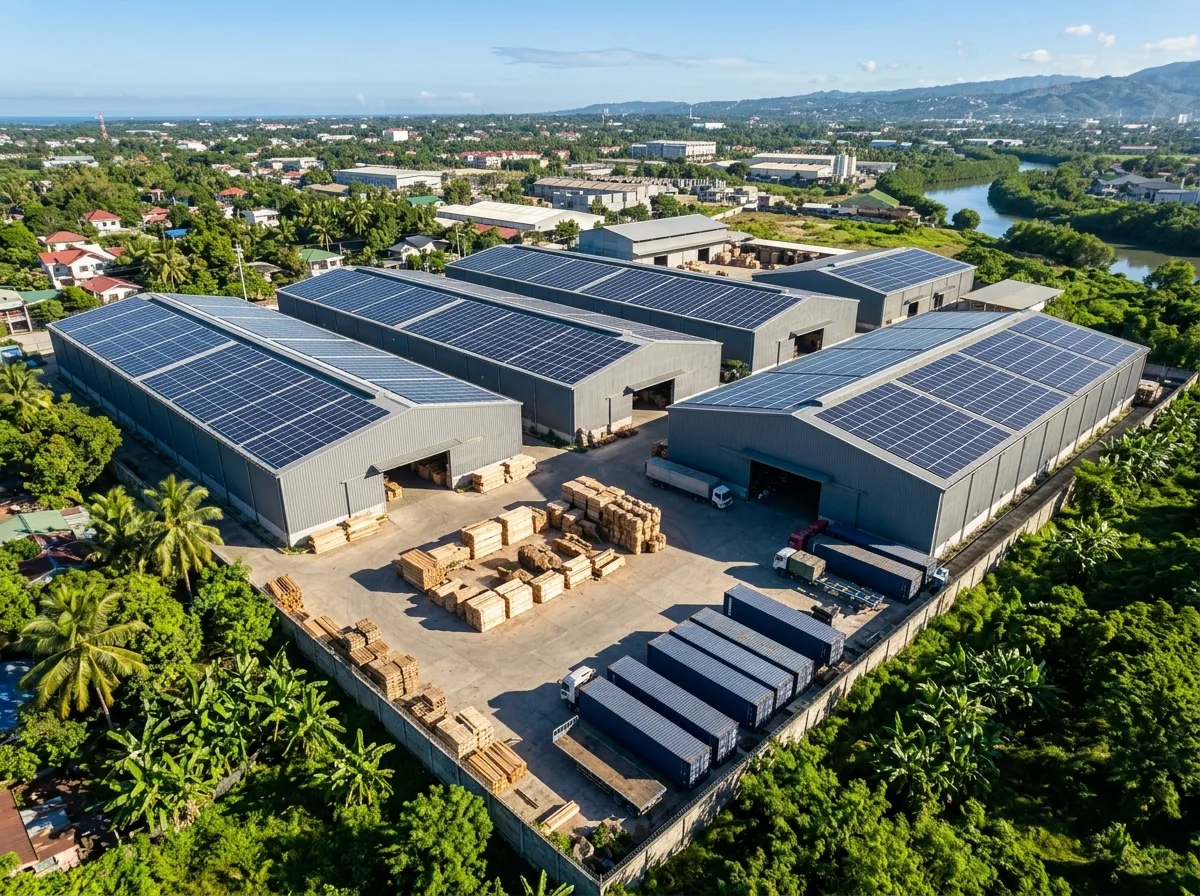
Export furniture, rattan, stone-inlay, and architectural millwork factories run high-draw dust collectors, CNC routers, wide-belt sanders, air compressors, and finishing booths under daytime sun in Mandaue, Consolacion, Liloan, and Compostela. CebuSolar designs commercial rooftop solar built for woodwork shops.
- 50–500 kW+ 3-phase woodworking plants
- 3–5 yrs typical payback period
- Tier-1 620–630 W N-type bifacial
The problem
Why are daytime power expenses rising at Cebu furniture and woodcraft factories?
Woodcraft production stacks high-horsepower central dust extraction blowers, multi-head molders, compressed-air finishing lines, CNC nesting routers, and timber drying kilns across the main daylight work shift. At Cebu commercial electricity tariffs around ₱15–₱16 per kWh, energy cuts sharply into export container margins.
Across furniture manufacturing hubs in Mandaue, Cansaga, Consolacion, Liloan, Compostela, and Talisay, almost the entire factory power curve runs between morning shift start and late afternoon cleanup. Continuous baghouse fans, drum sanders, rotary screw compressors, spray-booth exhaust motors, and office air-conditioning pull steady three-phase power right when overhead corrugated steel warehouse roofs bake beneath tropical Cebu sun.
For woodworking exporters quoting multi-month container programs to international retail buyers, sudden utility fuel-adjustment spikes quickly erode fixed FOB pricing. Meanwhile, brief voltage sags or afternoon feeder dips on suburban northern lines can pause multi-axis CNC toolpaths mid-carve unless inverters and switchboards are stabilized properly.
- High-horsepower central baghouse blowers and cyclone dust-collection systems
- CNC five-axis routers, panel saws, four-side planers, and wide-belt sanders
- Rotary screw compressors feeding pneumatic clamps, nailers, and HVLP spray guns
- Kiln-drying circulation fans, UV curing tunnels, and spray-booth make-up air
- Air-conditioned buyer showrooms, design CAD studios, and packing offices
How solar helps
Which commercial solar setup works best for Cebu furniture workshops?
Broad single-story timber, weaving, and assembly warehouses match daytime shift profiles almost one-to-one with solar output. CebuSolar pairs Tier-1 620–630 W N-type bifacial modules with Solis three-phase inverters, zero-export meters, dust-sealed electrical enclosures, and optional LiFePO4 battery protection for CNC controls.
Daytime grid-tied arrays for main machine halls
Furniture factories running heavy morning-to-late-afternoon shifts recover capital fastest via three-phase grid-tied solar. Multi-inverter Solis systems feed millwork machinery, dust-extraction blowers, and spray-booth motors straight off your main switchboard under zero-export rules with zero battery upkeep.
Hybrid LiFePO4 backup for CNC centers & showrooms
Sudden power drops during intricate wood CNC routing snap costly carbide bits and scrap hardwood blanks, while customer design meetings go dark. Adding hybrid solar with Dyness or Pylontech LiFePO4 batteries safeguards control racks, design offices, and showroom lighting.
Small craft workshops & timber yard pumping
Independent stone-craft ateliers, rattan weaving studios, and boutique carpentry shops use pre-priced 6–18 kW hybrid packages starting from ₱305,000—while rural timber yards or fire-tank reserves add solar water pumping or off-grid power.
System sizing
How much solar power does a Cebu furniture factory or millwork shop need?
Sizing considers simultaneously running motors across rough mill, sanding, and spray-finishing bays, dust-collector motor ratings, structural purlin spans over older steel sheds, and twelve months of billing records. CebuSolar supplies 6–18 kW packages for small studios and 50–500 kW+ commercial arrays for exporters.
| Woodcraft factory size | Typical daytime machinery | Suggested solar capacity | Configuration & pricing |
|---|---|---|---|
| Small carpentry studio, upholstery shop, or craft workshop | Table saws, planers, handheld sanders, small piston compressor, office aircon | 6 kW to 18 kW Hybrid (10–32 panels, 6.2–19.84 kW solar) | Fixed packages: ₱305,000–₱970,000 (5–16 kWh battery, expandable 5–64 kWh) |
| Single-hall millwork or export rattan workshop | Central dust extractor, routers, molders, compressor, spray-booth fans | 50–120 kW three-phase | Rooftop grid-tied array over main bay; custom quote after site audit |
| Multi-line furniture export plant & showroom | Two dust baghouses, CNC centers, wide-belt sanders, kiln blowers, showroom AC | 120–250 kW three-phase | Three-phase Solis plant with zero-export & showroom hybrid; custom quote |
| Major integrated timber & container export campus | Kiln complex, automated finishing tunnels, machining bays, container yards | 250–500 kW+ three-phase | Multi-building rooftop solar + optional LiFePO4 backup; custom quote |
Estimates only. Purlin inspection, spray-exhaust setbacks, and one fixed itemized price follow a site audit. Actual savings depend on system size, electricity consumption, location, and utility rates. Prices are subject to change without prior notice.
Cost and payback
What do commercial furniture solar plants cost in Cebu, and when do they pay back?
Three-phase factory systems from 50 kW to 500 kW+ are custom-quoted at one fixed price after electrical and structural inspection, while 6–18 kW studio kits cost ₱305,000 to ₱970,000. At October 2026 Cebu rates around ₱15–₱16/kWh, typical factory payback lands in 3 to 5 years.
Furniture shops achieve outstanding solar utilization because primary machine rooms, dust collectors, and sanders run almost exclusively during bright daylight production shifts rather than overnight. Benchmarked against VECO’s October 2026 schedule of ₱15.30/kWh and CEBECO II rates in Compostela, daytime generation slashes monthly grid purchases right at peak shift draw.
CebuSolar specifies Tier-1 620–630 W N-type bifacial panels from JinkoSolar, JA Solar, Trina Solar, LONGi, and AIKO, Solis inverters, Dyness or Pylontech LiFePO4 batteries, Schneider Electric and Suntree protection breakers, and stainless steel hardware suited for coastal Mactan-channel air. Estimate small workshop bills via our ROI calculator or inspect fixed rates on our cost page.
- One fixed turnkey contract price after site inspection, every part itemized
- Milestone terms: 40% on order, 40% on delivery and mounting, 20% on switch-on
- Protected by 1-year workmanship, 12-year inverter, and 30-year panel performance warranties (at least 87% output at year 30)
- Small-shop expansion options: extra 620 W panels at ₱12,000 and 5 kWh (₱75,000), 10 kWh (₱140,000), or 16 kWh (₱160,000) batteries
- We help with your local LGU electrical permits and utility zero-export documents
How it works
How does CebuSolar install above sawdust collectors and spray booths safely?
Our Cebu City system designers route external DC conduits clear of woodworking zones, schedule roof mounting while sanding and assembly continue uninterrupted below, and mount inverters inside dust-protected electrical rooms. Main breaker tie-in completes on a planned off-shift or Sunday pause.
Mill & truss survey
We visit to check twelve months of VECO or CEBECO bills, inspect steel roof trusses and cyclone dust piping, and test main switchboard room conditions.
Dust-safe layout & fixed quote
We leave clear aisles away from lacquer spray vents and skylights, specify sealed inverter rooms, help with permits, and issue one fixed quote.
Production-safe roof installation
Mounting crews finish roof rails and external cable trays without disrupting assembly lines, timing electrical tie-in during an agreed Sunday window.
Warranty & rapid Cebu service
Finished plants carry our Cebu warranty backed by local spare parts plus a Metro Cebu response target within 48 hours.
What do Cebu furniture plant owners ask before installing commercial solar?
Export factory directors and maintenance leads across Mandaue, Consolacion, and Liloan often ask about fine wood dust on panel glass, older steel roof structure strength, lacquer exhaust plumes, cooler workshop ceilings, outage ride-through for CNC bays, and LGU permit assistance before ordering solar arrays.
How do solar panels perform near fine sawdust cyclones and lacquer spray-booth vents?
During site design, CebuSolar maps every baghouse exhaust cyclone, sanding exhaust duct, and lacquer spray-booth stack to keep arrays upwind or outside direct exhaust cones. Sealed electrical enclosures protect Solis inverters from fine airborne wood flour, while seasonal water rinsing washes residual dust off tempered module glass.
Can older steel-truss furniture warehouses support Tier-1 solar panel weight?
Yes, after inspection. Our installers examine purlin gauges, truss spans, and sheet metal corrosion across every bay before quoting. Modern 620–630 W modules distribute modest load along existing structural purlins, and if an older drying shed requires reinforcement, we isolate arrays onto newer packing halls or carports first.
Does shading bare steel roofs with solar panels make finishing halls cooler?
Yes. Uninsulated corrugated steel furniture sheds absorb fierce midday radiant heat, turning upper assembly bays sweltering after 11 AM. Covering broad metal roof spans with dark solar modules intercepts direct solar heat before it reaches roof sheets, easing radiant interior temperatures alongside lower air-conditioning energy bills.
What happens to CNC routers and dust motors if a utility feeder drops mid-afternoon?
Pure grid-tied arrays shut down safely alongside utility loss per electrical anti-islanding standards until your standby diesel generator starts. Factories seeking ride-through power on CNC controllers or design offices install a hybrid battery inverter setup isolating sensitive control buses during outages.
Does CebuSolar help with municipal electrical permits in Mandaue and Consolacion?
Yes—we assist with your permits by preparing single-line electrical diagrams, structural mounting sheets, and Tier-1 hardware documentation needed for Mandaue, Consolacion, Liloan, or Compostela LGU electrical clearances and utility zero-export requirements.
Get your personalized solar quote
Tell us about your place, pin it on the map and add a photo of your bill. Our team replies on Viber within one business day.
- 1. We size your system from your bill and map your roof by satellite.
- 2. You get your quote: panels, battery, monthly savings, payback and price.
- 3. Happy with it? We check your roof and wiring on site, then lock in one fixed price.