- Home
- Metal Fabrication
Solar for metalworking · Heavy industrial EPC
Solar for Metal Fabrication in Cebu. Cut daytime shop and cutting bills.
Structural steel fabricators, precision machine shops, sheet-metal bending plants, foundry workshops, and automotive metal stampers pull heavy daytime three-phase power across Mandaue, Consolacion, Naga, Toledo, and Danao. CebuSolar engineers industrial commercial solar tuned to high-bay metal shops.
- 50–500 kW+ 3-phase industrial plants
- 3–5 yrs typical payback period
- Tier-1 620–630 W N-type bifacial
The problem
Why are daytime electricity charges so high at Cebu metal fabrication shops?
Metal fabrication facilities run fiber laser and plasma cutters, CNC milling centers, hydraulic press brakes, air-compressors, induction heaters, overhead bridge cranes, and welding fleets strictly during core daylight fabrication hours. Under Cebu tariffs around ₱15–₱16 per kWh, power overhead squeezes every fabricated ton.
From structural steel yards in Mandaue and Consolacion to precision machining plants serving export electronics in Lapu-Lapu and Danao, as well as heavy fabrication supporting mining and cement complexes around Naga and Toledo, metalworking demand spikes sharply between morning shift roll call and late afternoon. Because few fabrication halls operate full shifts overnight, nearly every kilowatt-hour burned hits utility daylight demand windows.
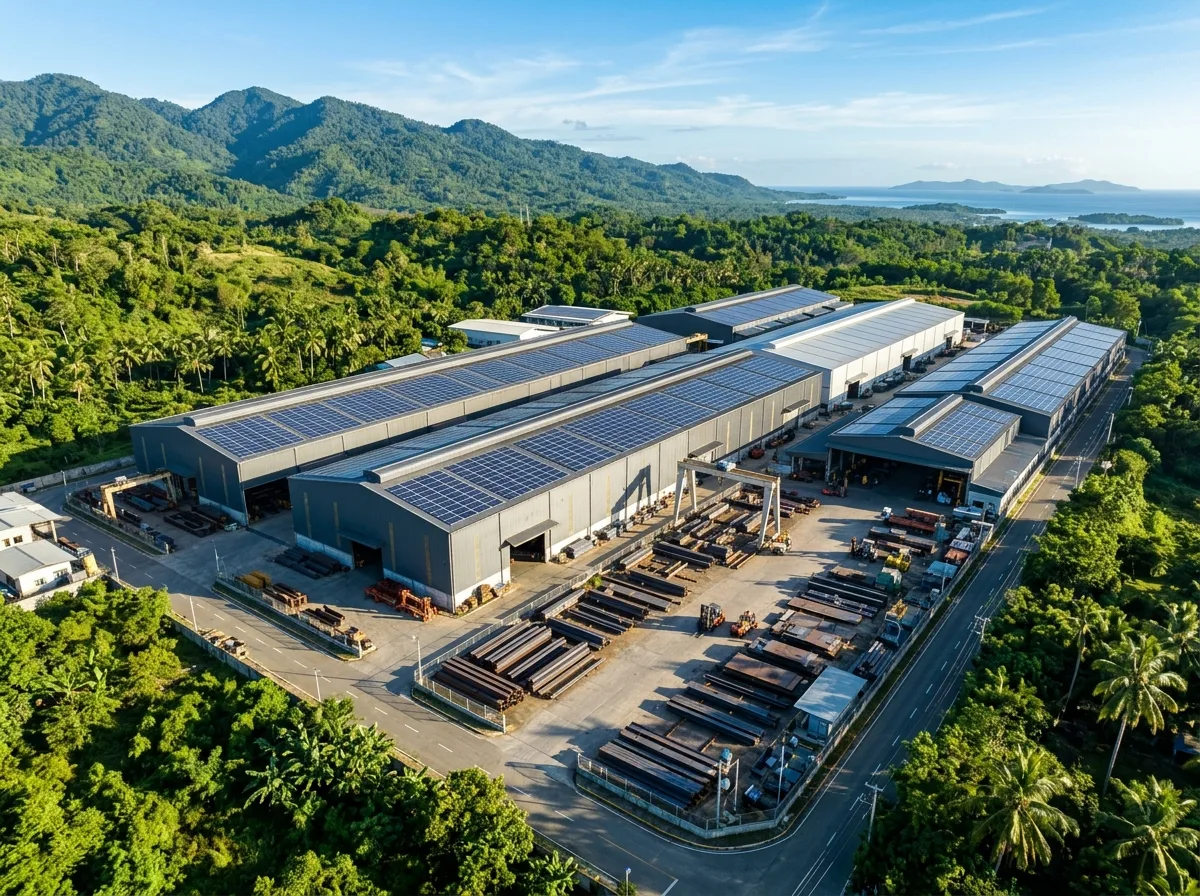
Additionally, wide steel fabrication hangars feature uninsulated long-span metal roofs exposed to direct glare across industrial estates while high-wattage fiber lasers, nitrogen generators, and welding bays fill work floors with heat. Generating power directly atop those sheds turns unused roof steel into predictable daytime power generation.
- Fiber laser and CNC plasma plate cutters plus water-chiller units and nitrogen generators
- Multi-station MIG, TIG, and submerged-arc welding machines and spot-welders
- CNC lathes, machining centers, hydraulic shears, and heavy turret press brakes
- Rotary air compressors feeding abrasive blasting cabinets, grinders, and hoists
- Induction heating coils, powder-coating curing ovens, and bridge crane hoists
How solar helps
Which solar configuration fits metal fabrication plants and machine shops in Cebu?
Heavy fabrication bays line up almost identically with peak daytime sun, enabling direct self-consumption across three-phase buses. CebuSolar pairs Tier-1 620–630 W N-type bifacial modules with Solis three-phase inverters, zero-export meters, Schneider Electric protection, and LiFePO4 backup for precision CNC controllers.
Direct three-phase grid-tied fabrication solar
Shops with substantial daytime cutting, pressing, and welding demand get fastest financial payback from grid-tied commercial solar. Solis three-phase inverters inject steady daytime kilowatts directly into main busbars via zero-export control, cutting net utility draw without heavy battery costs.
Hybrid LiFePO4 protection for CNC machining & lasers
Sudden grid brownouts mid-pass ruin expensive aerospace or semiconductor dies and crack precision end-mills in mid-cut. Integrating hybrid solar with Dyness or Pylontech LiFePO4 batteries safeguards sensitive CNC controllers, metrology CMM rooms, and CAD engineering offices.
Compact packages for machine & welding job-shops
Independent stainless fabrication shops, gate/truss builders, automotive machine shops, and calibration labs can start with fixed 6–18 kW hybrid packages starting from ₱305,000—or pair off-grid systems on remote quarry and farm repair yards.
System sizing
What solar capacity suits a Cebu fabrication hall or precision machine shop?
Metal-shop sizing analyzes average active daytime kilowatt draw rather than brief welder surge peaks, alongside transformer kVA rating, crane clearance, and roof truss layout. CebuSolar installs fixed 6–18 kW kits for independent job-shops and custom 50–500 kW+ arrays for major fabricators.
| Metal shop scale | Primary daytime machinery | Suggested solar capacity | System type & pricing |
|---|---|---|---|
| Small welding shop, lathe/milling garage, or fabrication office | Inverter welders, drill press, chop saw, shop air compressor, office aircon | 6 kW to 18 kW Hybrid (10–32 panels, 6.2–19.84 kW solar) | Fixed packages: ₱305,000–₱970,000 (5–16 kWh battery, expandable 5–64 kWh) |
| Mid-sized sheet-metal & CNC fabrication workshop | Laser or plasma table, press brake, 4–6 CNC machines, screw compressor | 50–120 kW three-phase | Rooftop grid-tied array over production shed; custom quote after site audit |
| Structural steel hangar & powder-coat complex | Multiple welding lines, blasting compressor, bridge cranes, CNC beam line | 120–300 kW three-phase | Three-phase Solis plant with zero-export & QC hybrid option; custom quote |
| Heavy industrial metalwork, casting, or ferroalloy plant | High-draw induction units, heavy presses, multiple hangars, admin offices | 300–500 kW+ three-phase | Multi-hangar commercial solar installation; custom quote after substation review |
Estimates only. Switchboard metering, welding-dust ventilation checks, and one fixed itemized price follow a site audit. Actual savings depend on system size, electricity consumption, location, and utility rates. Prices are subject to change without prior notice.
Cost and payback
How much do metal fabrication solar installations cost in Cebu?
Three-phase fabrication systems from 50 kW to 500 kW+ are custom-quoted at one fixed price after substation and structural review, whereas 6–18 kW shop packages cost ₱305,000 to ₱970,000. At October 2026 Cebu rates near ₱15–₱16/kWh, payback typically ranges 3 to 5 years.
Daylight-only single-shift fabrication profiles consume an exceptionally large share of rooftop generation straight from solar inverters, turning high noon peak heat into lowest-cost electricity for cutters, CNC spindles, and compressors. Benchmarked against VECO’s October 2026 rate of ₱15.30/kWh alongside MECO and CEBECO commercial tariffs, cutting daytime kilowatt-hours keeps bids sharp across tight local construction and industrial tenders.
CebuSolar installs Tier-1 620–630 W N-type bifacial panels from JinkoSolar, JA Solar, Trina Solar, LONGi, and AIKO, Solis inverters, Dyness or Pylontech LiFePO4 batteries, Schneider Electric and Suntree protection, and coastal stainless steel fixings. Model smaller shop savings on our ROI calculator or view fixed tiers on our cost page.
- One fixed turnkey contract price after site inspection, every part itemized
- Clear milestone terms: 40% on order, 40% on delivery and mounting, 20% on switch-on
- Backed by 1-year workmanship, 12-year inverter, and 30-year panel performance warranties (at least 87% output at year 30)
- Modular expansion for smaller shops: add 620 W panels at ₱12,000 and 5 kWh (₱75,000), 10 kWh (₱140,000), or 16 kWh (₱160,000) batteries
- We assist with your local LGU electrical permits and utility zero-export documents
How it works
How does CebuSolar mount arrays above active crane bays and welding lines?
Our Cebu City installers inspect crane girder heights, coordinate safe scaffolding clear of rigging paths overhead, route armored conduits outside grinding zones, and install inverters inside filtered rooms. Switchboard tie-in happens on a Sunday gap to avoid lost fabrication shift hours.
Shop & substation survey
We examine twelve months of VECO, MECO, or CEBECO bills, check high-bay steel trusses and ridge exhaust monitors, and inspect main transformer switchgear.
Clearance design & fixed quote
We align panel sections clear of plasma fume stacks and translucent skylights, specify dust-protected inverter placement, help with permits, and issue one fixed quote.
Safety-coordinated build
Roof crews work strictly overhead clear of ground welding and crane operations below, timing breaker tie-in on a scheduled off-shift window.
Warranty & fast Metro Cebu support
Completed arrays come with our Cebu warranty supported by locally stocked replacement hardware and a Metro Cebu response target within 48 hours.
What do Cebu metal-shop engineers ask before committing to rooftop solar?
Workshop owners, fabrication managers, and plant electrical engineers in Mandaue, Consolacion, Naga, and Danao often ask about welding transients, metal grinding dust on modules, overhead crane bay coordination, standby diesel generator synchronization, Sunday zero-export operation, and LGU permit assistance before ordering a commercial system.
Can grid-tied solar keep up with sudden current spikes from welders and spot-welding presses?
Yes. Under a grid-tied three-phase connection, your utility transformer absorbs millisecond arc-welder surges naturally while Solis three-phase inverters deliver smooth continuous daytime power across base loads—such as air compressors, CNC chillers, shop blowers, and cutting tables—lowering overall metered demand steadily.
Does airborne metal grinding dust or foundry smoke ruin inverter electronics or panels?
Inverters and Schneider/Suntree DC switchgear are mounted inside clean, enclosed electrical rooms well away from open angle-grinding or plasma exhaust stacks. Roof rows sit upwind of heavy exhaust monitors where natural Cebu rain plus scheduled freshwater rinsing maintains high light transmission.
What happens if our CNC laser or precision lathe shop pauses work on Sundays?
Zero-export Solis controllers automatically match inverter production to whatever building load is active—whether full machining Monday–Saturday or Sunday cooling/aircon/security baseload—without pushing unwanted export onto the utility line, while weekday peak production still pays arrays back within 3 to 5 years.
Can solar coordinate with standby diesel generators during provincial CEBECO outages?
Yes. Plants in Danao, Toledo, or Naga operating heavy standby gensets integrate solar upstream of automatic transfer switches or use a dynamic PV-genset controller so inverters trip or modulate when diesel engines take the shop bus.
Does CebuSolar help with municipal building and electrical permits for industrial shops?
Yes—we assist with your permits by preparing single-line electrical diagrams, structural clamp drawings, and Tier-1 datasheets required for LGU electrical offices and VECO, MECO, or CEBECO zero-export compliance.
Get your personalized solar quote
Tell us about your place, pin it on the map and add a photo of your bill. Our team replies on Viber within one business day.
- 1. We size your system from your bill and map your roof by satellite.
- 2. You get your quote: panels, battery, monthly savings, payback and price.
- 3. Happy with it? We check your roof and wiring on site, then lock in one fixed price.