- Home
- Livestock & Hog Farms
Solar for livestock & hog farms · Agribusiness EPC
Solar for Livestock & Hog Farms in Cebu. Lower power and pumping bills across every pen.
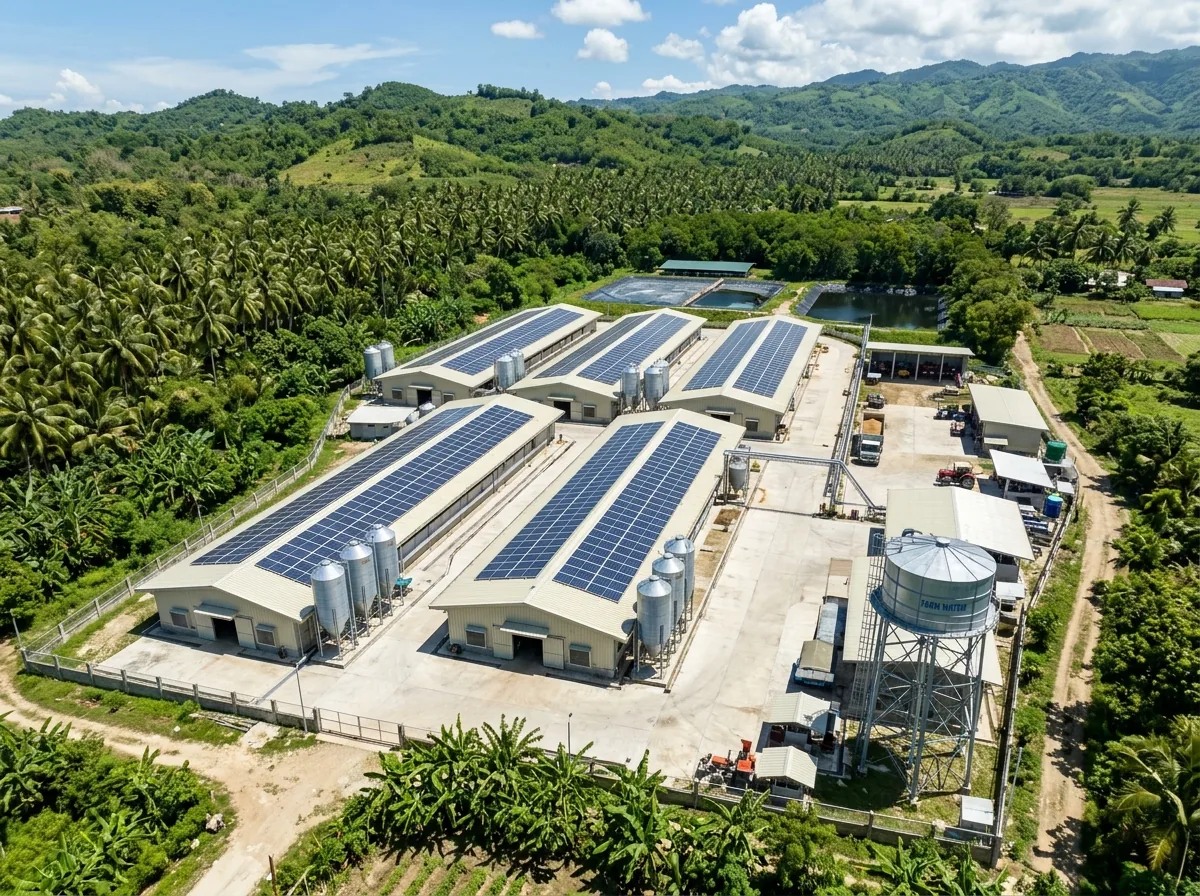
Commercial piggeries, farrowing barns, cattle lots, and integrated livestock farms burn heavy daytime power running tunnel exhaust fans, evaporative cooling misting lines, feed mixers, and high-pressure washdown pumps. CebuSolar engineers three-phase solar arrays, hybrid backup, and solar water pumping across Cebu.
- 50–500 kW+ 3-phase farm systems
- 3–5 yrs typical payback period
- Tank + solar washdown & drinking supply
The problem
Why do electricity and diesel costs climb on Cebu livestock and hog farms?
Modern livestock barns consume continuous power driving deep-well water supply, slatted-pen pressure washers, tunnel ventilation fans, farrowing heat lamps, feed hammer mills, and waste-lagoon agitators. With Cebu retail tariffs near ₱15–₱16 per kWh, electricity and backup generator fuel squeeze farm margins throughout hot dry months.
Across livestock belts in Barili, Carcar, Asturias, Balamban, Pinamungajan, San Fernando, Tuburan, and northern towns around Bogo and Medellin, midday heat pushes barn management hardest. Modern closed-climate hog houses rely on constant mechanical airflow and fine water misting to prevent sow heat stress and preserve weight gain, while large breeder farms grind and blend bulk feed rations daily inside noisy mill sheds.
At the same time, piggeries require tremendous clean groundwater every morning and afternoon for drinking nipples and pen sanitation. Farms sitting at the end of rural CEBECO feeders face voltage fluctuations and sudden feeder outages that stop borehole pumps and exhaust fans unless standby diesel engines run continuously.
- Deep-well submersible pumps filling livestock drinking and washdown towers
- Tunnel-ventilated finisher and farrowing barn exhaust fans and misting lines
- High-pressure pen sanitation washers and biogas or lagoon circulation pumps
- Hammer mills, horizontal feed mixers, pelletizers, and silo augers
- Farrowing heat controls and freezer vaccine storage threatened by brownouts
How solar helps
How do Cebu piggeries and livestock farms put solar energy to work?
Daytime feed milling, pen washdowns, water pumping into elevated towers, and afternoon barn cooling align naturally with peak solar production. CebuSolar integrates Tier-1 620–630 W N-type bifacial panels across barn roofs and open yards with Solis three-phase inverters, LiFePO4 battery storage, and solar borehole pumping.
Three-phase grid-tied solar for fans & feed mills
Large commercial growers connected to three-phase CEBECO or VECO lines achieve fastest returns using grid-tied solar across shed roofs. Zero-export Solis inverters power exhaust fans, misting motors, and daytime feed grinders directly while trimming utility kWh bills immediately.
Hybrid LiFePO4 backup for farrowing houses & labs
Sows and newborn piglets inside climate-controlled farrowing rooms cannot lose air circulation or vaccine refrigerators during feeder trips. Hybrid solar with Dyness or Pylontech LiFePO4 batteries protects critical fans, alarms, and cold storage silently until standby gensets assume heavy load.
Solar water pumping for washdowns & drinking lines
Replace costly grid or diesel borehole pumping using our solar water pumping systems to fill elevated concrete or steel towers all day by sunshine—or supply isolated ranch pens using off-grid solar and modular packages.
System sizing
What size solar array fits a Cebu piggery or livestock complex?
Farm sizing combines borehole water demand, barn fan horsepower, feed-mill shift hours, usable shed roof spans, and twelve months of electric bills. CebuSolar offers fixed-price 6–18 kW hybrid systems for smaller grower barns and custom-engineered 50–500 kW+ three-phase solar plants for commercial livestock operations after a site audit.
| Farm scale | Primary daytime loads | Suggested solar capacity | Architecture & pricing |
|---|---|---|---|
| Small grower barn, backyard piggery, or ranch house | Small well pump, pen lighting, vaccine fridge, office AC, small feed mixer | 6 kW to 18 kW Hybrid (10–32 panels, 6.2–19.84 kW solar) | Fixed packages: ₱305,000–₱970,000 (5–16 kWh battery, expandable 5–64 kWh) |
| Borehole & washdown water tower station | Dedicated deep-well submersible pump filling elevated farm water tower | Custom MPPT solar VFD pump | Ground rack + variable-speed controller + dry-well sensors; custom quote |
| Mid-sized commercial hog farm & feed shed | Farrowing/finisher exhaust fans, misting pumps, pressure washers, feed mill | 50–150 kW three-phase | Barn roof or ground-mounted grid-tied/hybrid; custom quote after site visit |
| Multi-barn breeder complex & integrated mill | Multiple tunnel barns, large feed mill, biogas/waste pumps, cold room | 150–500 kW+ three-phase | Multi-inverter commercial plant + solar water pumping; custom quote |
Estimates only. Final sizing and one fixed itemized price are provided after a farm survey. Actual savings depend on system size, electricity consumption, location, and utility rates. Prices are subject to change without prior notice.
Cost and payback
How much does piggery and livestock solar cost in Cebu, and how fast is payback?
Commercial farm plants from 50 kW to 500 kW+ and custom borehole pump builds receive one fixed turnkey quote after site inspection, while smaller 6–18 kW hybrid barn packages run ₱305,000 to ₱970,000. Across October 2026 Cebu power tariffs near ₱15–₱16/kWh, typical payback spans 3 to 5 years.
Why do livestock farms achieve a 3 to 5 year capital recovery? Because cooling fans, feed grinders, and elevated water-tank refills run actively through sunny daylight hours—meaning solar power displaces daytime electricity immediately against VECO’s October 2026 rate of ₱15.30/kWh and comparable CEBECO provincial agricultural rates across Cebu.
Pig-barn humidity and exhaust air demand corrosion-resistant materials, so CebuSolar installs Tier-1 620–630 W N-type bifacial panels from JinkoSolar, JA Solar, Trina Solar, LONGi, and AIKO with Solis inverters, Dyness or Pylontech LiFePO4 batteries, Schneider Electric and Suntree protection breakers, and stainless steel fixings. Model smaller barn bills on our ROI calculator or view package tables on our cost page.
- One fixed turnkey contract price after farm inspection, listing every part
- Three-stage milestone payment: 40% on order, 40% on delivery and mounting, 20% on switch-on
- 5-year workmanship, 12-year inverter, and 30-year panel performance warranties (at least 87% output at year 30)
- Flexible expansion on 6–18 kW kits: add 620 W panels at ₱12,000 each or stack 5 kWh (₱75,000), 10 kWh (₱140,000), or 16 kWh (₱160,000) batteries
- We assist with your municipal electrical permits and CEBECO or VECO documents
How it works
How does CebuSolar install solar on active hog farms under biosecurity rules?
Our Cebu City installation crew clears farm disinfection gates, vehicle sprays, and shower-in protocols where required, staging materials along perimeter lanes clear of pig pens. Feed-shed roofs or ground mounts assemble outside housing interiors while brief breaker tie-in protects ongoing barn airflow.
Biosecurity site & bill audit
We visit from Cebu City to review twelve months of CEBECO or VECO utility bills, inspect shed roofs, feed mills, and well heads, and test main switchboard capacity.
Corrosion-safe design & quote
We keep inverters inside clean electrical rooms clear of ammonia exhaust, specify stainless hardware, assist with permits, and present one fixed price.
Perimeter-safe installation
Teams follow every farm sanitation checkpoint, mounting overhead or ground arrays and timing grid tie-in during a scheduled brief window.
Warranty & local parts care
Commissioned farms carry our Cebu warranty backed by locally stocked spare hardware and a Metro Cebu response target within 48 hours.
What do Cebu hog and livestock farm owners ask before going solar?
Farm operators, veterinarians, and agribusiness managers across Barili, Carcar, Asturias, and northern Cebu often inquire about barn ammonia and humidity corrosion, feed-mill motor surges, ground-mounted arrays clear of pig sheds, standby diesel generators, and local municipal electrical permitting before committing.
How do solar mounts and inverters resist ammonia and high humidity on piggeries?
Moisture and barn gases shorten the life of cheap zinc-plated steel hardware. CebuSolar specifies stainless steel fixings built for salt air and harsh environments, Tier-1 double-glass 620–630 W N-type bifacial panels, and positions Solis inverters and Schneider Electric switchboards inside clean, shaded utility rooms upwind of exhaust fans.
Can solar start heavy feed-mill hammer motors and high-pressure washdown pumps?
Yes. In a grid-tied three-phase installation, the CEBECO or VECO grid absorbs brief motor starting inrush while solar feeds continuous grinding and washing kilowatts all day. For off-grid water pumping, soft-start MPPT drives ramp motors without harsh current spikes.
What if we prefer keeping crews off occupied hog barn roofs completely?
Many commercial piggeries mount arrays on feed warehouse roofs, farm offices, vehicle bays, or fenced ground-mount yards beside perimeter walls—avoiding worker traffic over live farrowing and finisher houses entirely while delivering similar energy savings at the main meter.
How does farm solar work alongside standby diesel generators during feeder outages?
We wire three-phase solar upstream of your automatic transfer switch or fit a generator-synchronization controller so solar disconnects or throttles safely whenever backup diesel assumes farm load—while optional LiFePO4 batteries keep critical control alarms and vaccine fridges running.
Does CebuSolar help with municipal permits and utility setup for farms?
Yes—we assist with your permits by preparing single-line electrical diagrams, structural mounting sheets, and Tier-1 datasheets required for LGU electrical permits and CEBECO, VECO, or MECO zero-export compliance.
Get your personalized solar quote
Tell us about your place, pin it on the map and add a photo of your bill. Our team replies on Viber within one business day.
- 1. We size your system from your bill and map your roof by satellite.
- 2. You get your quote: panels, battery, monthly savings, payback and price.
- 3. Happy with it? We check your roof and wiring on site, then lock in one fixed price.