- Home
- Vinegar & Condiment Factories
Fermentation & bottling · Metro & provincial kitchens
Solar for Vinegar & Condiment Factories in Cebu. Cut pasteurizing, mixing, and bottling kWh.
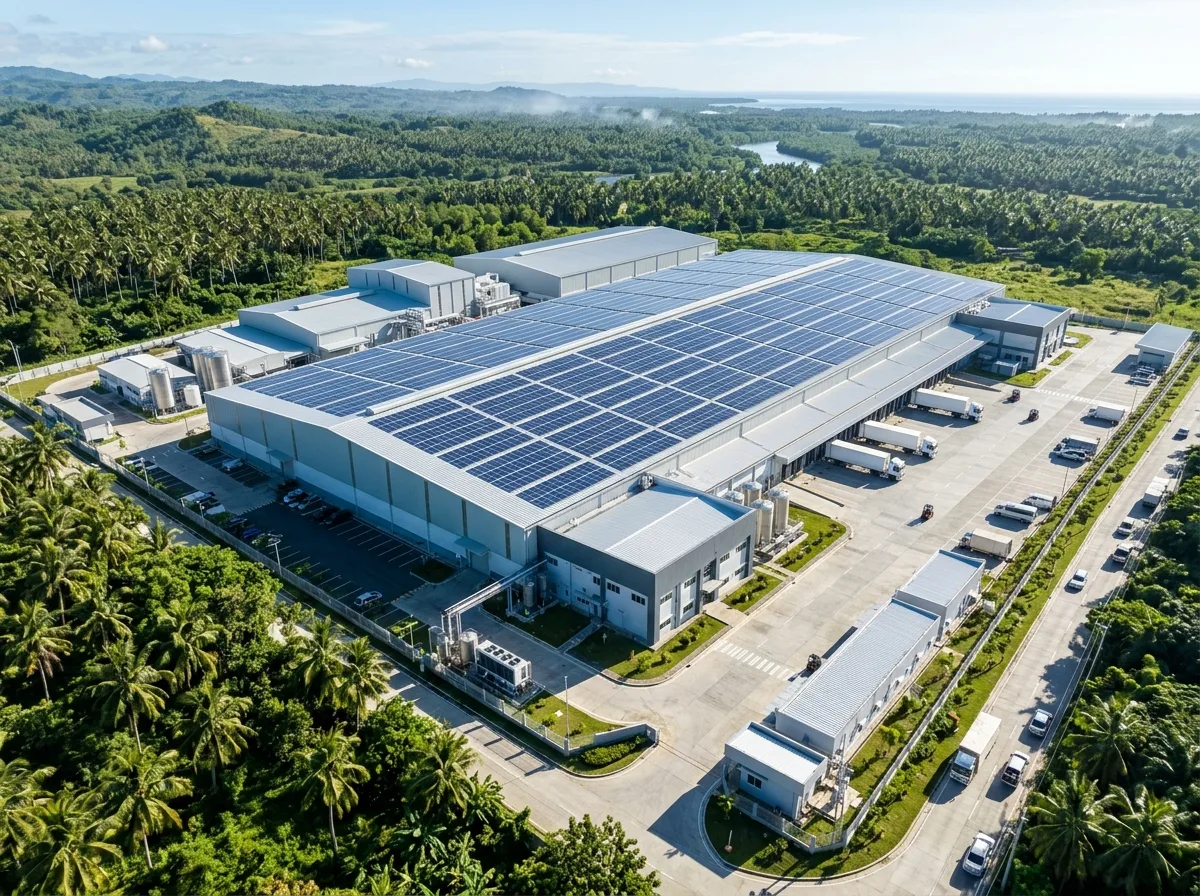
Cane and coconut vinegar fermenters, Visayan spiced sukang plants, banana ketchup cookers, and soy sauce bottlers across Mandaue, Consolacion, Minglanilla, Carcar, and Talisay run electric jacketed kettles and rotary fillers on ~₱15–₱16/kWh rates—hitting 3–5 yr ROI via commercial and hybrid solar.
- 8–300 kW+ craft bottlers to sauce lines
- 3–5 yrs typical capex payback
- Stainless fixings clear of acid vapor
The problem
Why do acetators, pasteurizers, and shrink tunnels squeeze Cebu condiment margins?
Producing bottled coconut sukang pinakurat, regional soy sauce blends, sweet-chili glazing bottles, and institutional food-service gallon condiments leaves processors pinned tightly between grocery retail price ceilings and relentless daytime electrical loads across wash-down, blending, pasteurizing, chilling, and automated packaging lines across Cebu utility districts.
Even small artisanal condiment lines pull surprising continuous wattage from morning washdowns onward: submerged acetic-acid fermenter air compressors pump uninterrupted bubbles round the clock through stainless fermentation tanks, colloid homogenizers mill thick garlic-chili pastes, jacketed mixing kettles and plate pasteurizers circulate hot water, vacuum monoblock fillers seal bottles steadily alongside electric shrink-sleeve label tunnels, and commercial water-purification RO rigs run continuously feeding batching tanks. Add warehouse carton conveyors and cooled essence storerooms drawing heavy amperage solidly through blazing midday hours while monthly VECO or CEBECO generation pass-throughs steadily erode wholesale per-case profits.
Meanwhile, uninsulated warehouse corrugated metal roofs trap baking tropical heat right over warm kettle kitchens and packing workers all shift long.
- 24/7 submerged acetator blower compressors & temperature recirculation chillers
- High-shear condiment homogenizers, spice mills & jacketed batch mixers
- Plate pasteurizer transfer pumps, bottle rinser jets & vacuum cap-sealers
- Electric heat shrink-band tunnels, inkjet coders & carton case tapers
- RO ingredient filtration skids & temperature-controlled flavor ingredient vaults
Engineered solution
How does acid-safe rooftop solar trim daytime bottling and fermentation costs?
Condiment plants combine corrosion-smart rooftop hardware with clean hybrid backup: battery-free zero-export commercial inverters slash heavy daytime pasteurizer, grinder, and bottling kW directly at low cost, while compact LiFePO4 battery subpanels prevent submerged acetator aeration collapses that can kill active vinegar cultures.
Submerged acetator bacteria safeguard
Vinegar cultures need air, so a blower stoppage during an outage can harm a batch. Putting the aeration blowers and batch controls on a LiFePO4 battery circuit keeps them running through outages; we size the battery to the blowers.
Acetic & salt-fume resistant racking
Salt-brine patios and vinegar fermenting halls release mildly acidic vapors; CebuSolar routes sealed EMT electrical raceways clear of exhaust stacks using heavy stainless bolts, aluminum anodized frames, and distant breaker room siting.
High daytime bottling offset
Eight-hour filling shifts align peak vacuum pumps, shrink-label tunnels, and RO purifiers directly under sunny roofs (commercial solar installation), dropping variable electricity costs on every case packed daily.
System sizing
What solar capacity suits an artisanal spice packer vs. a 3-phase bottling factory?
CebuSolar inspects three-phase transformer demand logs, submerged fermentation tank blower ratings, and acidic exhaust clearances thoroughly before proposing a system. We match artisan table-sauce bottlers using fixed packages from 8 kW to 18 kW while scaling up through 300 kW+ industrial factories island-wide.
| Plant Scale | Active Processing & Bottling Profile | Suggested Solar Tier | Deployment & Pricing Model |
|---|---|---|---|
| Craft spiced vinegar kitchen or small pantry bottle co-op | RO filter, spice blender, bench bottle filler, shrink bander, office AC | 8 kW to 18 kW Hybrid (14–32 panels) | Fixed 8–18 kW packages (₱445,000–₱970,000) |
| Regional gallon soy-sauce & condiment blending depot | 2–4 stainless agitation vats, plate heat exchanger, conveyor labelers | 30–75 kW Three-Phase Grid-Tie | Zero-export 3-phase MDP tie-in + aeration battery; custom quote |
| Industrial submerged-acetator vinegar & ketchup plant | Continuous acetator blowers, colloid mills, pasteurizers, monoblock lines | 80–180 kW Three-Phase C&I | Full roof solar + isolated critical fermenter microgrid; custom quote |
| Large multi-brand FMCG sauce & beverage bottling hub | Automated glass/PET blow-fillers, central cooling towers, cold rooms | 200–300 kW+ Three-Phase C&I | High-capacity campus solar offset at MDP; custom quote |
Estimates only. Purlin steel checks, exhaust chimney setbacks, and exact itemized pricing follow a site audit. Actual savings depend on occupancy, size, location, and rates. Prices are subject to change without prior notice.
Cost and payback
What do condiment factory solar setups cost, and when do savings repay?
Craft spice and vinegar artisans lock transparent fixed solar pricing starting at ₱305,000 up to ₱970,000 without hidden extras. Larger bottling plants receive itemized engineering bills of materials recovering capital comfortably inside 3 to 5 years across expensive Cebu utility territories.
Benchmarked against Visayan Electric’s October 2026 schedule of ₱15.30/kWh, Mactan (~₱15.98/kWh), and provincial CEBECO schedules (~₱15.08–₱15.91/kWh September 2026), slicing daytime kettle, RO, and shrink-tunnel consumption cuts unit bottling expenses (manufacturing ROI analysis).
Systems pair Tier-1 620–630 W N-type bifacial panels (JinkoSolar, JA Solar, Trina Solar, LONGi, AIKO), Solis inverters, Dyness/Pylontech batteries, Schneider gear, and stainless steel mounts (commercial solar costs).
- Lower utility bills across heavy daytime blending & filling runs
- 1-year workmanship, 12-year inverter, and 30-year panel (at least 87% at yr 30) warranties
- Transparent cash terms: 40% order, 40% equipment delivery & mounting, 20% switch-on
- Metro Cebu service: we aim to reach you within 48 hours
- Electrical plans and help with the LGU permit and utility paperwork
How it works
How does CebuSolar survey and wire sauce plants without contamination?
Dispatching our team straight from Mclin Building, Corner T. Padilla St. and M.J. Cuenco Ave. in Cebu City, our team walks wet packing corridors respectfully without breaching FDA hygiene zones, sites electrical equipment far clear of steam stacks, and installs on Sundays.
Hygiene-aware plant audit
We study 12-month power invoices outside wash-down bottling rooms, locate stainless acetator exhaust stacks, and verify warehouse steel framing spans free.
Vapor-safe exterior routing
Our drawings run UV-sealed conduits over roof ridges directly down exterior concrete walls into air-conditioned utility closets (structural specs).
No-disruption roof build
Technical crews bolt anodized rails outside sealed food rooms leaving canning and bottle sanitation untouched (install guide), testing transfer switches Sunday.
Live generation & bank funding
SolisCloud reports daily generation alongside local service support and optional bank financing keeping company cashflow nimble.
Common Cebu condiment & vinegar factory manager solar questions
Food-safety QA leads and plant managers across Mandaue, Consolacion, Carcar, and Minglanilla frequently ask how acetic acid vapor affects aluminum frames, whether submerged vinegar fermenters survive brownouts, how shrink tunnels pull steady solar watts, and what guarantees back parts.
Can mild vinegar or brine exhaust vapor corrode rooftop solar mounts over time?
With thoughtful roof mapping, arrays sit safely upwind of open tank vents; anodized aluminum frames paired with stainless hardware and EPDM seals resist corrosion better than plain galvanized brackets (hardware durability).
How much battery backup keeps submerged vinegar acetators alive during rural outages?
Only what must keep running: usually the fermentation air blowers and temperature pumps, not the boilers. We measure those loads on site and size a modular LiFePO4 battery (5–64 kWh) to them.
Our plant also runs electric RO water purification filters—are those similar to water stations?
They’re similar loads. RO pumps run steadily in the daytime, so they suit solar the same way as at water refilling stations.
What happens when bottling schedules pause on Sunday maintenance days while fermenters stay on?
Zero-export CTs measure total incoming load instantaneously and feed active fermentation aerators, brine chillers, and cold spice rooms while throttling excess generation below zero meter export (zero-export explanation).
Get your personalized solar quote
Tell us about your place, pin it on the map and add a photo of your bill. Our team replies on Viber within one business day.
- 1. We size your system from your bill and map your roof by satellite.
- 2. You get your quote: panels, battery, monthly savings, payback and price.
- 3. Happy with it? We check your roof and wiring on site, then lock in one fixed price.