- Home
- Water Refilling Stations
Solar for water stations · Retail & bottling EPC
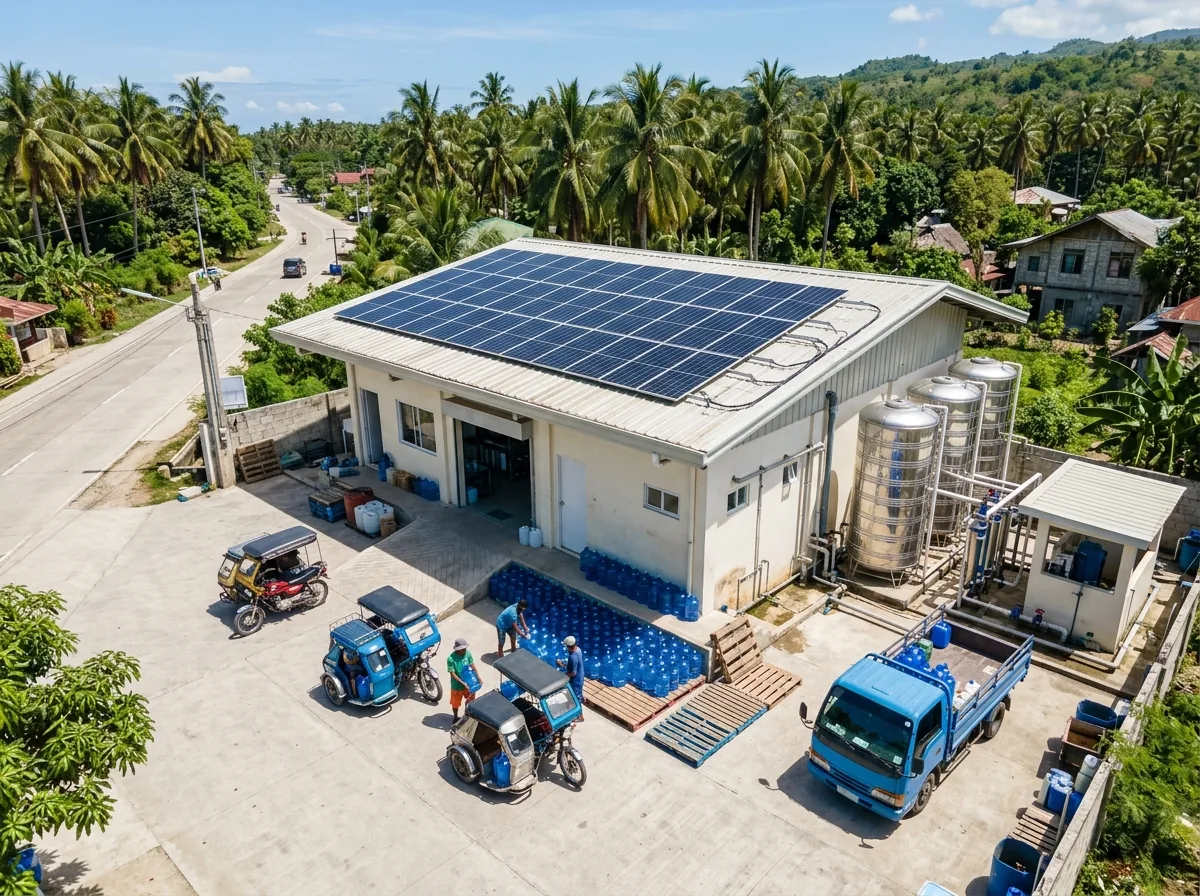
Solar for Water Refilling Stations in Cebu. Lower cost per gallon, keep pumps running.
Purified and alkaline water refilling stations run high-pressure reverse-osmosis booster pumps, raw-water transfer motors, UV sterilizers, ozonators, and bottle washers straight through busy daytime filling hours. CebuSolar sizes fixed hybrid solar packages and commercial arrays that cut utility bills across VECO, MECO, and CEBECO feeders.
- ₱305,000–₱970,000 6–18 kW fixed packages
- 3–5 yrs typical payback period
- Brownout ready LiFePO4 pump backup
The problem
Why do electricity costs squeeze margins at Cebu water refilling stations?
Water refilling stations convert electric motor runtime directly into every 5-gallon container sold, powering multi-stage raw water feeders, high-head RO membrane pumps, pressurized product transfer lines, heat-shrink guns, and air-conditioned lobbies. At Cebu power rates near ₱15–₱16 per kWh, electricity chips away at slim per-container margins daily.
Across dense barangays in Cebu City, Mandaue, Talisay, Lapu-Lapu, Minglanilla, Consolacion, Liloan, Carcar, and northern towns under CEBECO, peak water production and tricycle delivery loading happen strictly between sunrise and late afternoon. High-pressure reverse osmosis stages demand steady torque, while deep-well raw water pumps add extra kilowatt-hours at stations relying on groundwater rather than municipal water mains.
Whenever provincial brownouts or feeder maintenance drops local grid power, purification skids stop instantly—leaving delivery queues stalled unless noisy portable generators burn expensive gasoline or diesel. Switching daytime purification and bottle-washing over to rooftop solar plus LiFePO4 storage stabilizes cost per container while protecting daily fulfillment schedules.
- High-pressure multi-stage reverse-osmosis membrane booster pumps
- Raw-water deep-well submersible pumps or municipal intake transfer motors
- Automatic gallon bottle washers, pressurized rinse jets, and heat-shrink sealers
- UV disinfection lamps, ozone generators, sediment backwash, and shop aircon
- Lost daytime deliveries whenever feeder brownouts interrupt filling lines
How solar helps
Which solar setup works best for a Cebu water refilling station?
Because almost all purification, washing, and customer refilling occurs during daylight hours, water stations consume rooftop solar electricity immediately with minimal wasted surplus. CebuSolar matches fixed 6–18 kW hybrid systems, dedicated raw-water solar pumping, and three-phase commercial arrays for high-volume bottling depots.
Fixed 6–18 kW hybrid packages with LiFePO4 backup
Single-branch neighborhood refilling stations fit inside our transparent 6 kW to 18 kW hybrid packages pairing Tier-1 620–630 W N-type bifacial panels, a Solis inverter, and Dyness or Pylontech LiFePO4 batteries. Your RO pumps run on sunshine by day and switch onto battery storage during brownouts.
Grid-tied arrays for high-output multi-line plants
Larger commercial bottling operations and multi-membrane refilling depots on stable VECO or MECO lines with existing backup gensets capture fastest return using grid-tied solar. Zero-export current sensing feeds multi-horsepower purification skids directly all day without battery investment.
Dedicated solar borehole pumping for raw water
Stations drawing groundwater from deep wells slash intake pumping costs further with solar water pumping filling elevated stainless steel raw-water tanks by day. Remote barangay water hubs can also pair storage tanks with off-grid solar.
System sizing
What size solar system does a water refilling station in Cebu need?
Sizing reflects membrane GPD capacity, pump motor horsepower, raw-well depth, electric bottle-washing heaters or sealers, and twelve months of utility billing. CebuSolar provides transparent fixed-price 6–18 kW hybrid systems for standard storefronts and custom-engineered 50–500 kW+ three-phase plants for commercial bottling facilities.
| Station size | Primary daytime equipment | Suggested solar package | Configuration & pricing |
|---|---|---|---|
| Single-skid neighborhood refilling shop | One RO booster skid, transfer pump, UV/ozone lamps, bottle washer, shop fans | 6 kW to 10 kW Hybrid (10–16 panels, 6.2–10 kW solar) | Fixed packages: ₱305,000–₱520,000 (5–16 kWh battery, expandable 5–64 kWh) |
| High-volume refilling station with borehole or AC | Dual RO skids, deep-well raw pump, split aircon, heat-shrink station, office | 12 kW to 18 kW Hybrid (22–32 panels, 13.64–19.84 kW solar) | Fixed packages: ₱615,000–₱970,000 (5–16 kWh battery, expandable 5–64 kWh) |
| Commercial bottled-water & ice-pack plant | Multi-stage industrial RO banks, automated bottle fillers, shrink tunnels, chillers | 50–150 kW three-phase | Rooftop or yard three-phase grid-tied or hybrid; custom quote after site visit |
| Regional spring-water bottling & distribution hub | Borehole pumping field, multi-line bottling conveyors, warehouse HVAC, cold rooms | 150–500 kW+ three-phase | Multi-inverter commercial plant + solar water pumping; custom quote |
Estimates only. Final sizing and one fixed itemized price are provided after a site visit. Actual savings depend on system size, electricity consumption, location, and utility rates. Prices are subject to change without prior notice.
Cost and payback
How much does water-station solar cost in Cebu, and how fast does it pay back?
Neighborhood 6–18 kW hybrid packages with LiFePO4 battery storage range transparently from ₱305,000 to ₱970,000 installed, while 50–500 kW+ commercial bottling plants receive one fixed custom quote after site inspection. At October 2026 Cebu rates near ₱15–₱16/kWh, typical payback takes 3 to 5 years.
Daylight purification schedules maximize direct solar self-consumption because RO boosters and bottle-rinse jets operate peak hours under bright sunlight. Compared against VECO’s October 2026 tariff of ₱15.30/kWh alongside MECO and CEBECO retail schedules, every solar kilowatt-hour produced on your shop roof widens operating margin per container sold.
Even on small commercial roofs, CebuSolar builds with full Tier-1 reliability: 620–630 W N-type bifacial panels from JinkoSolar, JA Solar, Trina Solar, LONGi, and AIKO, Solis inverters, Dyness or Pylontech LiFePO4 batteries, Schneider Electric and Suntree breakers, and stainless steel fixings. Check your monthly bill against fixed options on our ROI calculator or view complete battery combinations on our Cebu pricing page.
- One fixed, itemized price after a shop survey—no hidden rail, breaker, or wire add-ons
- Three-stage payment: 40% on order, 40% on delivery and mounting, 20% on switch-on
- Protected by 1-year installation workmanship, 12-year inverter, and 30-year panel performance warranties (at least 87% output at year 30)
- Easy expansion on 6–18 kW systems: extra 620 W panels at ₱12,000 each and stackable 5 kWh (₱75,000), 10 kWh (₱140,000), or 16 kWh (₱160,000) batteries
- We help with your LGU electrical permits and VECO, MECO, or CEBECO paperwork
How it works
How does CebuSolar install solar on a water station without halting daily deliveries?
Our Cebu City system designers check pump motor amp draws and metal roof framing first, then mount arrays overhead while your refilling crew fills containers uninterrupted below. Switchboard tie-in occurs during a brief pre-arranged late-afternoon pause after daily tank storage is full.
Shop & pump audit
We visit to check 12 months of VECO, MECO, or CEBECO bills, measure roof area beside stainless water tanks, and test pump starting amps on single-phase or three-phase service.
Sized package & fixed quote
We match the right 6–18 kW hybrid unit or commercial array to your daily filling hours, assist with permit forms, and deliver one fixed itemized price.
Clean overhead installation
Our mounting crew secures coastal stainless hardware neatly over your shop roof, timing breaker panel tie-in outside busy delivery hours.
Local warranty & fast service
Your station receives our Cebu warranty backed by spare parts kept in stock and a Metro Cebu response target within 48 hours.
What do Cebu water-station owners ask before going solar?
Franchise owners, independent station operators, and barangay water managers across Metro Cebu and provincial municipalities often inquire about RO pump motor inrush currents, single-phase versus three-phase inverters, cramped shop roofs, brownout battery runtime, and local LGU permitting before installing solar.
Can a 6 kW to 12 kW hybrid system handle pump motor startup surges during brownouts?
Yes, when properly sized around pump horsepower. During our shop audit, we measure actual running and starting current across your RO booster and transfer motors so the Solis hybrid inverter and Dyness or Pylontech LiFePO4 battery bank carry starting torque during grid drops without tripping overload protection.
What if our refilling storefront roof is small or shaded by neighboring buildings?
High-output 620–630 W N-type bifacial modules maximize kilowatt capacity inside compact storefront roofs—even small 10-panel (6.2 kW) arrays fit modestly sized roofs. Where rooftop water tanks occupy part of the slab, we engineer elevated steel canopies over tank decks or yard parking overhangs.
How big a battery should we pick to keep filling containers through afternoon outages?
Every 6–18 kW hybrid package comes with 5 kWh, 10 kWh, or 16 kWh of LiFePO4 storage and lets you stack up to three add-on modules (5–64 kWh total range). During sunny brownouts, your solar panels continue feeding RO motors directly while the battery absorbs cloud dips and motor peaks.
Can we also power a deep-well pump directly off solar without battery expense?
Yes. If your station draws raw groundwater from a borehole into elevated stainless or concrete holding tanks, our dedicated solar water pumping drive fills tanks all day directly from dedicated panels—saving your hybrid inverter and battery strictly for indoor purification skids and UV sterilization.
Does CebuSolar assist with permits for commercial water refilling stations?
Yes—we help with your permits by assembling single-line electrical diagrams, inverter datasheets, and mounting specifications required for municipal LGU electrical clearance and VECO, MECO, or CEBECO zero-export compliance. Zero-export sensing ensures generated solar power runs your pumps on-site.
Get your personalized solar quote
Tell us about your place, pin it on the map and add a photo of your bill. Our team replies on Viber within one business day.
- 1. We size your system from your bill and map your roof by satellite.
- 2. You get your quote: panels, battery, monthly savings, payback and price.
- 3. Happy with it? We check your roof and wiring on site, then lock in one fixed price.