- Home
- Soap & Detergent Factories
Hygiene & cleaning lines · Mandaue, Minglanilla & Liloan
Solar for Soap & Detergent Factories in Cebu. Cut mixing, plodding, and bottling kWh.
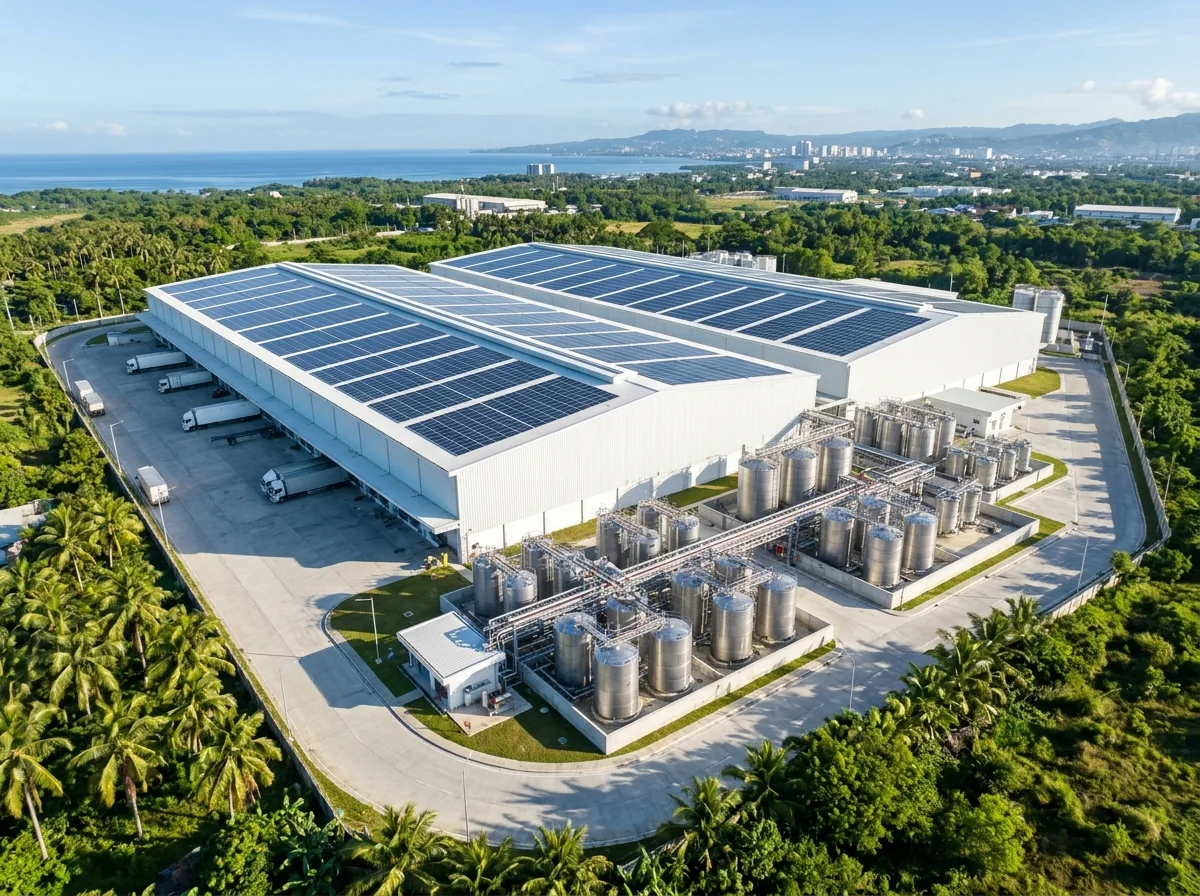
Laundry bar soap extruders, coconut-oil saponification kettles, liquid dishwashing mixers, and industrial sanitizer bottlers across Subangdaku, Bakilid, Minglanilla, and Liloan run high-torque 3-phase process motors under ~₱15–₱16/kWh grid schedules—capturing 3–5 yr ROI via commercial and grid-tied solar.
- 18–500 kW+ toll blenders to mega lines
- 3–5 yrs typical industrial payback
- Stainless fixings away from caustic fumes
The energy squeeze
Why do plodders, homogenizers, and chillers push Cebu soap manufacturing costs up?
Home-care laundry bar makers, institutional commercial degreaser suppliers, and export herbal coconut soap brands operate heavy steam kettles, high-shear homogenizers, vacuum plodders, and automated shrink-sleeve filling lines simultaneously—burning pricey daytime power while retail shelf margins tighten continuously across grocery stores.
Turning raw tallow, coconut fatty acids, caustic alkalis, and surfactants into uniform retail bars or bottled liquids consumes substantial mechanical torque every workday morning through afternoon. High-viscosity sigma kneaders and heavy ribbon blenders grind dense detergent pastes, vacuum duplex plodders extrude continuous billets under strong screw pressure, chill rolls freeze molten noodles rapidly, and rotary screw compressors feed pneumatic labelers, stamper presses, and pouch sealers nonstop. Unlike nocturnal service companies, mixing and bottling floors draw peak amperage solidly between 7:30 AM and 5:30 PM.
Operating purely off unhedged utility power leaves unit formulation margins exposed every time VECO or provincial co-ops adjust generation charges.
- Sigma mixers, roll mills & twin-screw vacuum bar soap plodder motors
- High-shear stainless liquid detergent homogenizers & heated process kettles
- Spray-drying tower exhaust blowers & industrial powder ribbon blenders
- Multi-head liquid fillers, pneumatic stampers & shrink-tunnel wrappers
- Laboratory QC ovens, air-conditioned fragrance vaults & warehouse bays
Solar fit
How does clean three-phase rooftop solar match compounding and bottling loads?
Because mixing shifts align squarely with peak daylight sun while electrical rooms sit comfortably isolated from splash-down chemical bays, sealed three-phase Solis commercial inverters feed continuous heavy motor loads—pairing selective hybrid battery backup solely for PLC fillers and fragrance rooms.
Daytime 3-phase motor offset
Connecting 400 V zero-export solar straight onto your main industrial MDP feeds mixing paddles, screw plodders, and bottling air compressors all shift long without massive room batteries.
Corrosion-shielded exterior routing
To keep alkali fumes away from the electronics, our Solis inverters install inside separate dry ventilated MCC electrical rooms via stainless conduit hardware.
Batch integrity during sags
Isolating automated pouch heat-sealers, dosing load cells, and temperature controllers onto dedicated LiFePO4 battery subpanels avoids spoiled paste mid-mix across sudden utility voltage blinks.
System sizing
What kW capacity fits a toll liquid blender vs. a full bar soap plant?
CebuSolar engineers specialty bar soap and liquid detergent solar arrays straight from verified three-phase transformer load recordings and measured industrial metal roof spans—never crude square-meter rules of thumb—scaling neatly from compact toll-blending packages up through large 500 kW+ factories across Cebu.
| Factory Scale | Daytime Compounding Profile | Suggested Solar Tier | Deployment & Pricing Model |
|---|---|---|---|
| Small herbal coco-soap workshop or boutique liquid bottler | Batch agitators, curing-room dehumidifiers, semi-auto fillers, labelers | 8 kW to 18 kW Hybrid (14–32 panels) | Fixed 8–18 kW packages (₱445,000–₱970,000) |
| Toll liquid detergent blenders & regional janitorials warehouse | Stainless homogenizer tanks, RO water plant, air compressor, cool storage | 30–80 kW Three-Phase Grid-Tie | Zero-export 3-phase MDP tie-in; custom commercial quote |
| Mid-scale bar soap mill & automated pouch packaging facility | Sigma mixer, vacuum duplex plodder, chiller, rotary stampers, wrappers | 100–250 kW Three-Phase C&I | Full roof solar + isolated QC lab battery subpanel; custom quote |
| National powder detergent plant & surfactant compounder | Spray blowers, heavy ribbon blenders, packaging robotics, warehouse cooling | 250–500 kW+ Three-Phase C&I | Multi-shed array matching base demand; custom quote |
Estimates only. Transformer kVA demand logging, purlin load checks, and exact itemized pricing follow a complimentary site walk. Actual savings depend on occupancy, size, location, and rates. Prices are subject to change without prior notice.
Cost and payback
What do chemical & soap solar builds cost, and how fast do savings stack?
Small clean-room coconut soap workshops choose transparent fixed packages starting from ₱305,000 up to ₱970,000—while automated three-phase detergent extrusion and bottling facilities receive exact itemized BOM quotes matched strictly to weekday shift consumption—often hitting brisk 3 to 5 year payback comfortably.
Benchmarked against VECO’s October 2026 schedule of ₱15.30/kWh alongside MECO (~₱15.98/kWh) and CEBECO feeders (~₱15.08–₱15.91/kWh September 2026), cutting peak shift consumption converts high electricity invoices straight into lower per-case production overhead (industrial payback guide).
Projects specify Tier-1 620–630 W N-type bifacial panels (JinkoSolar, JA Solar, Trina Solar, LONGi, AIKO), Solis three-phase inverters, Dyness/Pylontech LiFePO4 batteries, Schneider breakers, and stainless steel mounts (chemical & paint reference).
- Lower electric utility charges when sized to daytime shifts
- 1-year workmanship, 12-year inverter, and 30-year panel (at least 87% at yr 30) warranties
- Transparent terms: 40% order, 40% equipment delivery & mounting, 20% switch-on
- Metro Cebu service: we aim to reach you within 48 hours
- Electrical plans and help with the LGU permit and utility paperwork
How it works
How does CebuSolar survey and wire soap factories around production?
Operating straight from Mclin Building, Corner T. Padilla St. and M.J. Cuenco Ave. in Cebu City, our technical team conducts free structural steel frame checks, routes electrical switchgear clear of caustic mixing hoods, and completes switchboard tie-ins over scheduled weekends.
Free plant load & safety walk
We study 12 months of electric bills, map alkali exhaust ducting clear of roofs, and check three-phase MCC switchgear headroom.
Corrosion-aware engineering
Our drawings route weather-sealed DC conduits neatly around spray-tower vents into dry switchgear bays (fastener & storm engineering).
Clean off-shift commissioning
Installers clamp roof hardware silently overhead leaving blending runs undisturbed (install workflow), completing zero-export breaker tests on Sunday.
Cloud monitoring & wash care
SolisCloud monitors real-time plant generation alongside simple water-rinse maintenance schedules clearing occasional powder exhaust dust off glass arrays.
Common Cebu soap & detergent factory director solar questions
Plant engineers and operations leads across Mandaue, Minglanilla, and Liloan often ask whether alkaline spray-tower emissions etch glass modules, how motor startup inrush currents behave alongside inverters, whether warehouse re-roofing is necessary first, and how bank financing works.
Can alkali vapor or detergent spray-tower exhaust corrode aluminum solar panels or glass?
We map every exhaust chimney upwind and keep solar strings well clear of direct caustic plumes; anodized aluminum frames, tempered Tier-1 solar glass, and stainless steel clips clean thoroughly during routine water washdowns.
Do high inrush currents from vacuum plodders or sigma mixers trip three-phase solar inverters?
No. A grid-tied inverter works alongside the grid, and the grid supplies the short starting surge of large motors while the panels carry the steady running load. We check your motor ratings and switchboard during the site visit.
What happens when our compounding floor switches off on public holidays or wash-down Sundays?
Fast three-phase zero-export CTs throttle generation down immediately onto only base warehouse chillers, RO pumps, and lighting—eliminating backfeed meter anomalies (zero-export overview).
Our plant relies on bank corporate credit lines—do Cebu banks finance commercial soap plant solar?
Yes. Many businesses use bank financing with our itemized quote, with the power savings helping cover the payments; CebuSolar doesn’t lend money.
What warranty protection covers parts if an inverter fault occurs mid-production?
Every commercial build carries written 1-year workmanship, 12-year inverter, and 30-year panel (at least 87% output) guarantees, plus a 48-hour Metro Cebu response target with spare parts in stock; see Warranty and Solar FAQ.
Get your personalized solar quote
Tell us about your place, pin it on the map and add a photo of your bill. Our team replies on Viber within one business day.
- 1. We size your system from your bill and map your roof by satellite.
- 2. You get your quote: panels, battery, monthly savings, payback and price.
- 3. Happy with it? We check your roof and wiring on site, then lock in one fixed price.