- Home
- Corn Mills & Feed Blending
White corn grits & blending · Barili, Carcar & Bantayan
Solar for Corn Mills & Feed Blending in Cebu. Power grits rollers, shellers, and mixers.
Cebu white-corn grits mills, custom agricultural toll blenders, hammer-mill grain grinders, and vertical hog/poultry ration mixers across Barili, Carcar, Toledo, Bantayan, Daanbantayan, and Consolacion pull intense daytime 3-phase kW on ~₱15–₱16/kWh power—achieving 3–5 yr ROI via commercial and grid-tied solar.
- 10–300 kW+ toll grits shops to grain silos
- 3–5 yrs typical capex payback
- Daylight load built for toll-milling shifts
The energy squeeze
Why are daytime milling fees failing to cover Cebu rural power rates?
With Cebuanos dining primarily on steamed bugas mais across provincial tables while livestock raisers depend heavily on affordable cracked-corn farm rations, village corn-grits millers and custom vertical feed mixers see narrow per-sack toll fees squeezed constantly between farmer grain prices and high rural electricity tariffs.
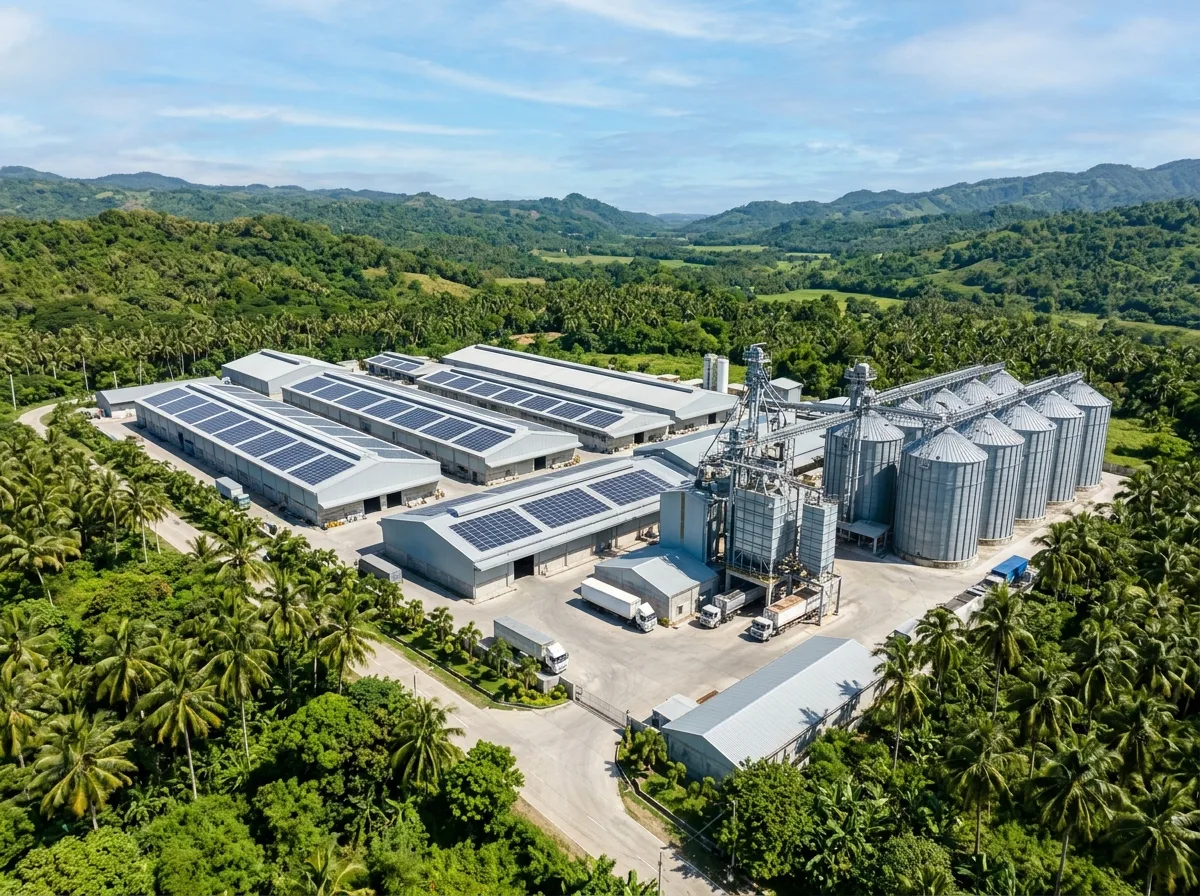
Inside a busy custom corn mill and farm-supply blending shed from 7:30 AM until 5:00 PM sack pickups, electrical loads jump sharply as farmers unload harvest sacks: rotary cob shellers strip whole ears fast, aspirators and degerminators separate bran for white bugas mais, multi-pass fluted steel roller mills grind crisp #12 and #14 grits simultaneously alongside high-speed hammer mills crushing dry corn kernels and copra meal for nearby piggery/poultry rations, bucket elevators hoist grain upward into holding bins, and twin-auger vertical mixers blend vitamins and molasses before baggers stitch 50-kilo sacks closed. All heavy mechanical work stops promptly before sundown—meaning millers pay steep utility demand charges almost purely across peak solar sunlight hours.
Broad galvanized grain-shed roofs sit baking above hot milling hoppers all afternoon contributing nothing to offset motor kW.
- Motorized corn cob shellers, destoners, magnetic separators & degerminators
- Multi-pass fluted roller grits mills & grain-sifting oscillating plansifters
- High-RPM hammer mills pulverizing yellow corn, soy meal & copra cake
- Vertical batch auger mixers, molasses pumps & automated 50-kg bag stitchers
- Flatbed grain warehouse moisture blowers & truck weighbridge offices
Solar fit
How does rooftop solar power grits rollers and custom mixers without big batteries?
Because village white-corn milling and custom toll-blending operations finish neatly by 5:00 PM daily rather than grinding overnight shifts, battery-free zero-export grid-tie solar directly matches operating hours with sunny rooftops—slashing motor kWh immediately at minimal hardware cost while adding hybrid backup only for scales and offices.
High self-consumption on 8-to-5 milling
Connecting Solis commercial grid-tie inverters straight onto grain-shed mains funnels abundant noon kilowatts into roller mills, elevators, and auger mixers all shift long with minimal wasted power.
Dual-fuel savings in brownout towns
Many rural CEBECO III and CEBECO I corn mills keep backup diesel engines idling when town grid drops; daytime solar cuts both the grid power and the generator fuel they buy.
Weighbridge & bagging scale battery bridge
Wiring digital intake moisture meters, truck scales, billing computers, and bag-sewing stations onto compact LiFePO4 battery subpanels keeps farmer grain receipts flowing through sudden co-op dips.
System sizing
What solar capacity fits a village toll corn mill vs. a commercial blending depot?
CebuSolar inspects three-phase main switchboards alongside degerminator motor horsepower and dust-free storage walls carefully before proposing an array—fitting rural barangay toll mills neatly into 10–18 kW fixed kits up through full 300 kW+ commercial grits and agricultural custom-mix depots across Cebu island.
| Milling Scale | Active Grain & Blending Load | Suggested Solar Tier | Deployment & Pricing Model |
|---|---|---|---|
| Barangay white-corn grits shop & small agri-supply store | 15 HP stone/roller mill, small hammer grinder, bag stitcher, scale, AC | 10 kW to 18 kW Hybrid (16–32 panels) | Fixed 10–18 kW packages (₱495,000–₱970,000) |
| Municipal custom livestock ration blender & grits line | Degerminator, 2-ton vertical auger mixer, hammer mill, grain sifters | 30–75 kW Three-Phase Grid-Tie | Zero-export 3-phase tie-in at MDP; custom quote |
| Provincial commercial bugas mais & grain warehouse | Multi-pass roller stands, bucket elevators, pneumatic dust fans, truck scale | 80–180 kW Three-Phase C&I | Broad grain storage roof arrays + office battery; custom quote |
| Integrated island-grade silo & wholesale feed blending plant | Dual hammer mill lines, horizontal paddle mixers, drying blowers, office | 200–300 kW+ Three-Phase C&I | High-capacity commercial grid-tie offsetting continuous daytime load; quote |
Estimates only. Provincial transformer inspections, grain-cyclone dust setbacks, and exact itemized pricing follow a free walkthrough. Actual savings depend on occupancy, size, location, and rates. Prices are subject to change without prior notice.
Economics & specs
What do corn mill installations cost, and when does solar pay back?
Town toll-millers lock published fixed packages from ₱305,000 to ₱970,000 without surprise billing—while regional commercial blenders receive exact itemized BOM proposals cutting steep ~₱15–₱16/kWh co-op power rates within predictable 3 to 5 year payback periods across Cebu.
Measured against provincial CEBECO I, II, and III rates (~₱15.08–₱15.91/kWh in September 2026) plus VECO (~₱15.30/kWh October 2026), slicing grinding kWh per milled sack safeguards mill operator margins even during low corn harvest margins (poultry farm feed buyers).
Every installation delivers Tier-1 620–630 W N-type bifacial modules (JinkoSolar, JA Solar, Trina Solar, LONGi, AIKO), Solis inverters, Schneider switchboards, and stainless steel hardware (C&I pricing breakdown).
- Lower power bills for daytime milling runs
- 1-year workmanship, 12-year inverter, and 30-year panel (at least 87% at yr 30) warranties
- Clear payment milestones: 40% order, 40% equipment delivery & mounting, 20% switch-on
- Metro Cebu service: we aim to reach you within 48 hours
- Electrical plans and help with the LGU permit and utility paperwork
Install workflow
How does CebuSolar survey and wire rural grain sheds safely around dust?
Dispatching field teams straight from Mclin Building, Corner T. Padilla St. and M.J. Cuenco Ave. in Cebu City to Barili, Carcar, Toledo, and northern towns, we plan inverter isolation away from fine corn bran cyclones free and complete switchovers over quiet Sundays.
Provincial warehouse audit
We study 12 months of co-op billing histories, locate grain-bran dust vents downwind, and test metal truss thickness before recommending array placement (structural specs).
Dust-isolated electrical closet
Our drawings house heat-dissipating Solis inverters safely inside dust-tight office rooms outside dusty sifter areas using sealed rigid galvanized conduits throughout (panel maintenance).
Non-disruptive weekend switch
Technical crews bolt structural aluminum frames overhead while corn farmers load milled sacks underneath (install process), completing CT tests Sunday.
Cloud monitoring & easy rinses
The Solis monitoring app shows managers when summer bran settling dulls yield—so a quick rinse with a garden hose can restore output.
Common Cebu corn mill & feed blender operator solar questions
Mill operators and agricultural blenders across Barili, Carcar, Toledo, Bantayan, and Consolacion often ask how dried corn chaff dust cleans off glass panels, whether large single-phase rural motors run, how big pelleted plants compare separately, and whether island transport adds extra hidden surcharges.
Won’t flying corn husk bran and hammer-mill flour settle thickly atop rooftop solar arrays?
Without good placement, bran settles readily on dry roofs; our system designers place solar rows upwind of bran blowers and leave walking gaps so yard helpers spray solar glass crystal clear during dry months (washing guide).
How is a toll corn grits & blending shop different from a giant commercial pellet feed mill?
Large commercial pellet feed mills often run steam conditioning and longer hours, while local grits mills and custom ration mixers usually work daytime shifts that suit zero-export solar without a battery.
Do high inrush currents starting heavy 25 HP hammer mills trip Solis three-phase inverters?
No. A grid-tied inverter works alongside the grid, and the grid supplies the short starting surge of the hammer mill. We check your motor ratings and switchboard during the site visit.
Does CebuSolar service Bantayan Island corn & feed supply sheds as well as mainland Cebu?
Yes. We install on Bantayan Island and in northern Cebu towns, and include the island in our site visits (poultry farm solar).
Get your personalized solar quote
Tell us about your place, pin it on the map and add a photo of your bill. Our team replies on Viber within one business day.
- 1. We size your system from your bill and map your roof by satellite.
- 2. You get your quote: panels, battery, monthly savings, payback and price.
- 3. Happy with it? We check your roof and wiring on site, then lock in one fixed price.