- Home
- Cassava & Starch Processing
Agri-milling & starch · Northern & midwest rural grids
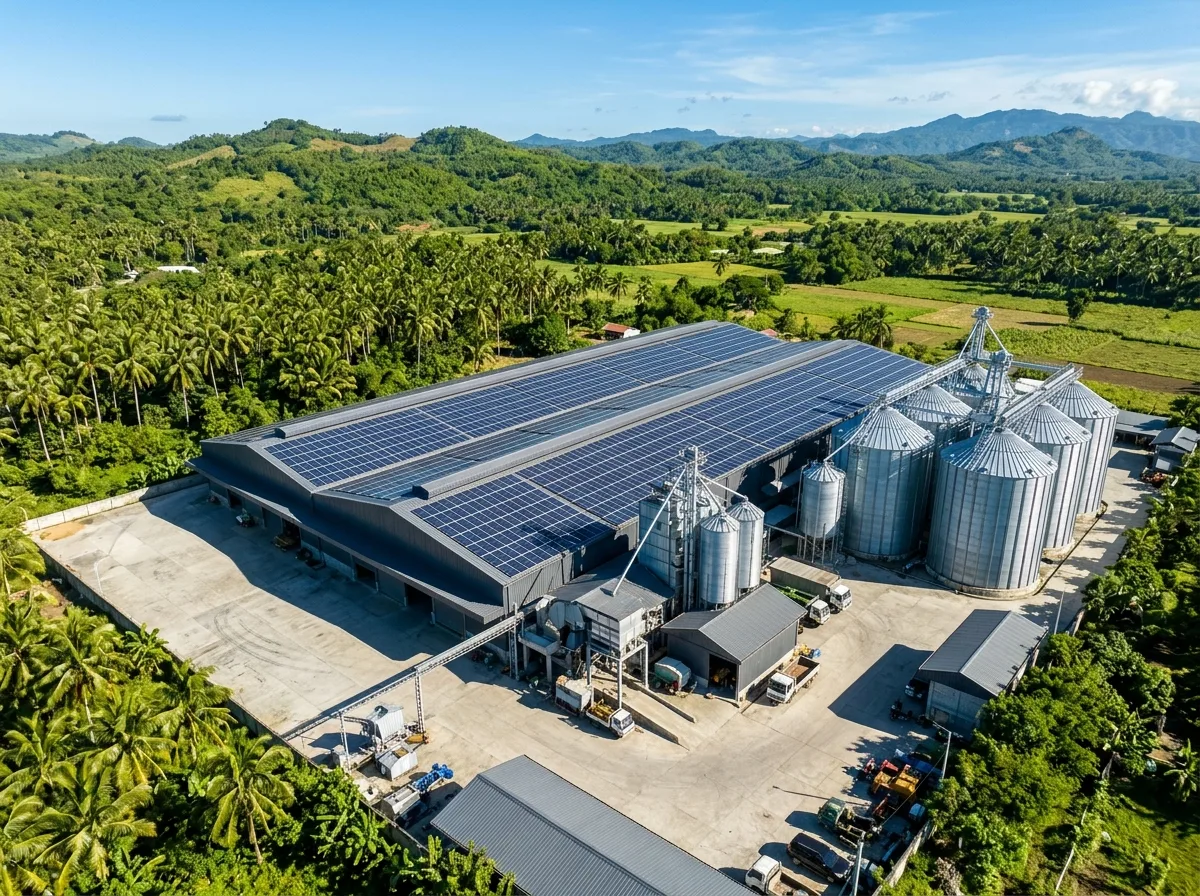
Solar for Cassava & Starch Processing in Cebu. Power raspers, centrifuges, and dryers cheaply.
Cassava flour mills, wet-starch washing extractors, chip slicers, and food-grade tapioca processors across Bogo, Daanbantayan, Tuburan, Balamban, Barili, and Toledo pull steady daytime horsepower on ~₱15–₱16/kWh rural co-op feeders—achieving 3–5 yr ROI via commercial and hybrid solar.
- 12–500 kW+ village chippers to starch lines
- 3–5 yrs typical capex payback
- Wash & pump built for CEBECO co-ops
The energy squeeze
Why are provincial co-op power costs and outages hurting Cebu cassava processors?
Freshly dug cassava starts to spoil within a few days unless scrubbed, rasped, separated, and dried rapidly—meaning rural starch extractors and native cassava chip mills across northern and western Cebu cannot wait idly through midday brownouts or pay spiraling CEBECO daytime kWh charges without losing seasonal profits.
Inside a wet cassava starch or dry food-flour mill between 7:00 AM and 5:00 PM delivery windows, high-load motors stack continuously: borehole submersible pumps lift enormous clean process water volumes into rotating drum root washers, high-RPM saw-tooth raspers shred raw tubers into fine slurry, multi-stage centrifugal extractors and decanter bowls spin out refined starch milk, rotary flash-dryer blowers move hot air steadily through cyclones, and hammer-mill pulverizers sift bagged fine flour onto warehouse pallets. Operating at the outer ends of rural cooperative lines exposes millers to both expensive kilowatt tariffs and damaging low-voltage sags mid-run.
Relying on costly backup diesel generators during peak harvest spikes quickly turns profitable crop processing upside down.
- Deep-well wash water pumps & motorized rotary stone-peeling tuber drums
- High-RPM stainless cassava raspers, hammer mills & vibratory starch screens
- Decanter centrifuges, hydrocyclone pump banks & dewatering filter presses
- High-CFM pneumatic flash-dryer blowers, screw feeders & flour sifters
- Covered sun-drying slab blowers, automated bag stitchers & depot scales
Mill architecture
How does solar cut starch milling costs and safeguard harvest runs?
Provincial cassava plants harness solar two ways simultaneously: durable zero-export commercial arrays feed heavy high-horsepower raspers and centrifugal extractors right across bright daytime hours while dedicated solar water pumping fills concrete wash settling ponds silently at zero grid draw.
Daytime rasping & drying offset
Since fresh root intake arrives early mornings through afternoon pressing shifts, three-phase solar arrays convert intense rural Cebu sunshine directly into cheap horsepower on raspers, pumps, and flash-dryer blowers.
Independent borehole wash-water tanks
Washing starch milk clean consumes high daily water volume; dedicated solar borehole pumps elevate clean water continuously into elevated cistern tanks whenever daylight shines—saving main transformer capacity for heavy centrifuges.
Emergency dewatering hybrid protection
Starch milk left in stopped equipment can spoil during a CEBECO outage. A LiFePO4 battery circuit or generator auto-start can keep the key pumps and controls running long enough to finish or drain the batch; we size it to those loads.
Capacity sizing
What solar capacity suits a cooperative chipper vs. a continuous starch mill?
CebuSolar inspects rural cooperative transformer capacity, seasonal cassava harvest load profiles, and galvanized metal drying-shed trusses thoroughly on-site prior to submitting engineering quotes. We fit cooperative chipper workshops into our 8 kW to 18 kW packages while scaling through 500 kW+ starch plants.
| Mill Scale | Processing Machinery Load | Suggested Solar Tier | Deployment & Pricing Model |
|---|---|---|---|
| Barangay cassava chipper & village native flour mill | Tuber chipper, small hammer pulverizer, well pump, bagger, shed lights | 8 kW to 18 kW Hybrid (14–32 panels) | Fixed 8–18 kW packages (₱445,000–₱970,000) |
| Semi-mechanized wet starch extractor & drying warehouse | Root washer drum, rasper motor, vibrating sieves, decanter centrifuge | 40–90 kW Three-Phase Grid-Tie | Zero-export 3-phase MDP tie-in + pumping aid; custom quote |
| Commercial feed-grade or food-grade cassava flour plant | Multi-stage peelers, flash dryer blower fans, hammer mills, dust baggers | 100–250 kW Three-Phase C&I | Broad drying shed roof solar + wash pump split; custom quote |
| Continuous regional agro-industrial starch refinery | High-horsepower hydrocyclones, multistage decanters, bag-house cyclones | 250–500 kW+ Three-Phase C&I | Full campus roof and ground-mount solar; custom quote |
Estimates only. Provincial co-op transformer audits, harvest-month profile logging, and finalized itemized BOM prices follow a site survey. Actual savings depend on occupancy, size, location, and rates. Prices are subject to change without prior notice.
Cost and payback
What do cassava mill solar systems cost, and how fast do harvests pay back?
Village cooperatives choose crisp fixed pricing between ₱305,000 and ₱970,000—while industrial extraction mills receive exact itemized commercial quotes calibrated across seasonal milling schedules to hit solid 3 to 5 year payback comfortably against high rural CEBECO tariffs across Cebu.
Measured against provincial CEBECO I, II, and III rates (~₱15.08–₱15.91/kWh in September 2026) alongside metro VECO (~₱15.30/kWh October 2026), slicing heavy wash-water pumping and daytime grinding electricity lowers variable cost per kilo immediately (Cebu agriculture solar hub).
Installations specify Tier-1 620–630 W N-type bifacial panels (JinkoSolar, JA Solar, Trina Solar, LONGi, AIKO), Solis inverters, Dyness/Pylontech LiFePO4 batteries, Schneider gear, and stainless steel mounts (mill solar benchmarks and C&I pricing).
- Lower electric utility bills during active daytime tuber runs
- 1-year workmanship, 12-year inverter, and 30-year panel (at least 87% at yr 30) warranties
- Clear payment milestones: 40% order, 40% equipment delivery & mounting, 20% switch-on
- Metro Cebu service: we aim to reach you within 48 hours
- Electrical plans and help with the LGU permit and utility paperwork
How it works
How does CebuSolar travel, survey, and build provincial Cebu cassava plants?
Dispatching field teams straight from Mclin Building, Corner T. Padilla St. and M.J. Cuenco Ave. in Cebu City to farms anywhere north or south, our system designers verify steel warehouse purlins free, elevate panels clear of flour cyclones, and switch circuits.
Provincial mill survey
We visit northern towns like Bogo/Tabogon or southern hubs, logging harvest season power demand and checking concrete-drying pad space (ground frames).
Dust-conscious electrical design
Our layouts tuck sealed Solis inverters safely inside dust-free office vaults away from dry starch bagging cyclones (cleaning care) with stainless fasteners on racking rated for 240 km/h winds (typhoon guide).
Non-stop harvest construction
Small crews clamp exterior roofing overhead leaving tuber weighing bays wide open (installation steps), finishing breaker commissioning during weekly cleanup pauses.
Remote island telemetry & washes
SolisCloud reports clear kWh output straight to owners while easy low-pressure roof sprays rinse seasonal fine tapioca flour off solar glass.
Common Cebu cassava & starch mill operator solar questions
Co-op managers and agri-processors across Bogo, Daanbantayan, Tuburan, Balamban, and Barili often ask how off-harvest seasonal gaps affect payback, how fine cassava flour dust washes off glass panels, whether existing backup gensets couple, and how rural co-op voltage dips work.
Our tuber intake drops sharply during planting offseason—does solar still deliver 3–5 yr ROI?
Yes—during your free site engineering check, we model full twelve-month historical co-op bills rather than sizing strictly for peak harvest weeks, ensuring year-round warehouse cooling, groundwater pumping, and feed blending absorb solar (ROI check).
Won’t fine white tapioca flour from flash-dryer cyclones settle thickly atop our panels?
Dry starch dust settles noticeably during calm rainless months if left unchecked; we configure dedicated maintenance walkways alongside panels upwind of cyclone exhausts so yard crews can rinse the glass quickly (panel washing).
Will CEBECO II or III rural voltage instability trip commercial three-phase solar inverters?
Solis inverters are set to the utility’s grid settings and disconnect safely if the voltage goes outside them; a hybrid battery can keep office PCs and weighbridge controls steady (utility guide).
Our plant primarily opens concrete open-air drying slabs rather than giant closed warehouses—can we still install solar?
Yes—elevated coastal or farmyard ground-mount steel arrays beside drying pavements produce power without needing a factory roof.
Get your personalized solar quote
Tell us about your place, pin it on the map and add a photo of your bill. Our team replies on Viber within one business day.
- 1. We size your system from your bill and map your roof by satellite.
- 2. You get your quote: panels, battery, monthly savings, payback and price.
- 3. Happy with it? We check your roof and wiring on site, then lock in one fixed price.