- Home
- Bus Terminals & Transport Hubs
Transit complexes · Concourses, ticketing & e-shuttle bays
Solar for Bus Terminals & Transport Hubs in Cebu. Power passenger concourses, ticketing lounges, and maintenance pits.
Intercity bus terminals, provincial van transfer hubs, Ro-Ro ferry passenger wings, and electric shuttle depots across Cebu City, Mandaue, Talisay, Toledo, Carcar, and Bogo run relentless lighting, lounge cooling, and maintenance bays on ~₱15–₱16/kWh power—achieving 3–5 yr ROI via commercial and hybrid solar.
- 18–500 kW+ transfer lots to metro terminals
- 3–5 yrs typical capex payback
- Battery backup for gates, ticketing & boards
The energy squeeze
Why are passenger waiting lounges, escalators, and pit shops draining Cebu transit budgets?
Regional bus hubs and Ro-Ro passenger terminals welcome thousands of commuting families before dawn until late night seven days every week. Operating chilled glass boarding lounges, X-ray luggage screeners, electronic queue boards, and high-bay platform fans nonstop produces hefty monthly power invoices under Cebu tariffs.
Walk across an active provincial bus terminal between 7:00 AM and 5:00 PM departure blocks and electric loads stack relentlessly: multi-ton cassette HVAC units battle continually open automatic glass doors inside crowded ticketing concourses, X-ray baggage belts, handheld metal detectors, e-ticketing turnstiles, and computerized reservation counters demand stable uninterruptible feeds through grid sags, massive ceiling HVLS circulation fans spin continuously overhead moving humid heat over diesel engine idling bays, rear service maintenance pits fire rotary tire compressors, hydraulic lifts, and welding rectifiers, and overnight electric e-jeepney or shuttle depots increasingly need affordable solar charging during midday driver split shifts.
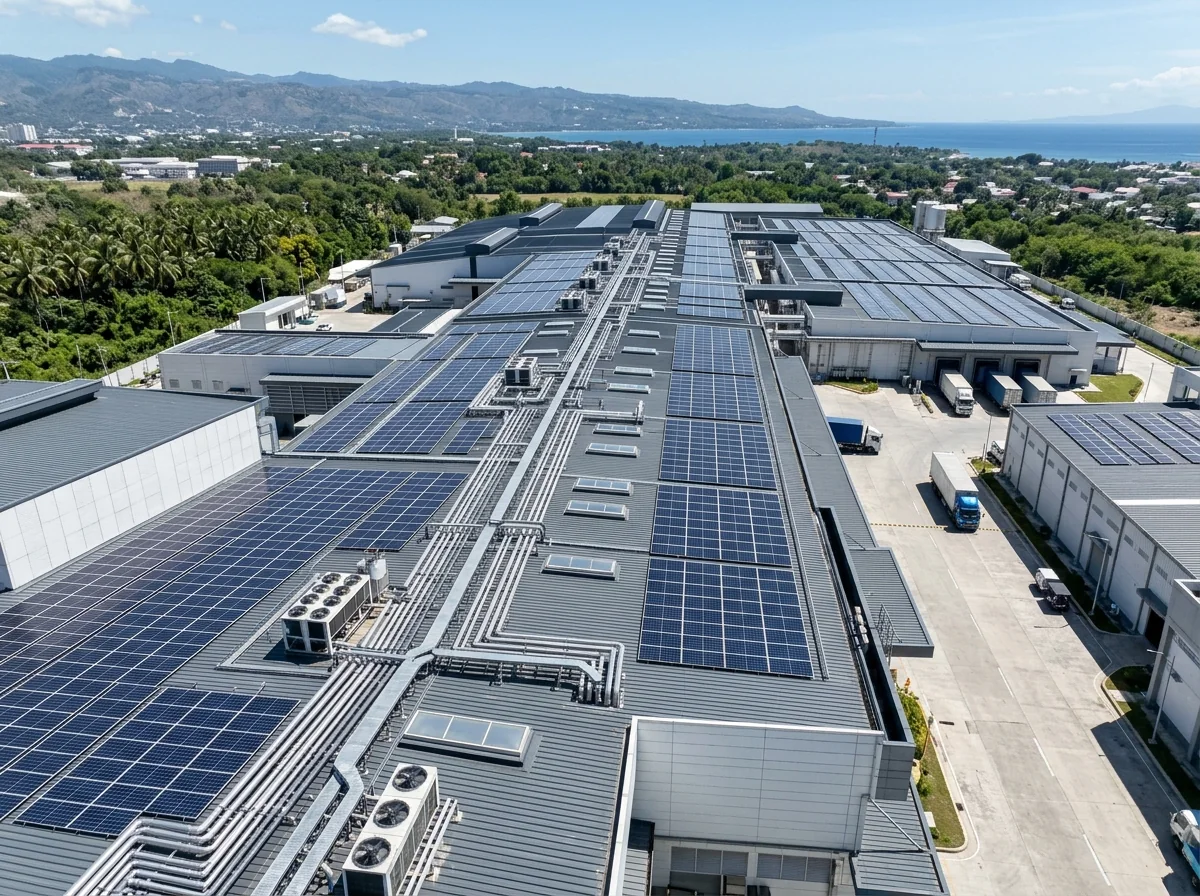
All the while, vast sweeping steel concourse platform roofs take the full Cebu sun every day without producing power.
- Air-conditioned ticketing concourses, VIP boarding lounges & dispatch rooms
- Concourse high-bay LED banks, HVLS ceiling blowers & departure LED boards
- Passenger security X-ray scanners, turnstile gates & CCTV NVR arrays
- Maintenance workshop air compressors, pit lifts, tire machines & welders
- Commercial food-stall concession submeters & electric shuttle charging bays
Transit engineering
Why do sweeping bus platform roofs pair with zero-export and hybrid solar?
Transport concourses sit over generous shade-free steel spans ideally shaped for rapid solar deployment: connecting battery-free commercial inverters cuts daytime aircon, compressor, and terminal lighting draw directly while modular LiFePO4 batteries carry turnstiles, ticketing PCs, PA speakers, and boom gates steadily through blackouts.
Spanning long loading platform canopies
Terminals naturally boast broad concrete and curved steel roofs over commuter queues; bolting 620–630 W N-type bifacial panels across passenger sheds shades platforms noticeably cooler underneath while sending cheap electricity directly to lobby HVAC and shops.
Turnstiles & ticketing uptime
Brownouts can stop ticket scanners, barrier arms, PA announcements and CCTV. Putting them on a LiFePO4 battery circuit keeps them running; the system switches over automatically.
Daytime e-jeepney & shuttle charging relief
Modernizing commuter fleets park idle shuttle units between midday off-peak loops right when solar production crests—letting terminals feed EV bus depot chargers directly off roof power and can reduce the need for a bigger transformer.
Capacity sizing
What solar capacity suits a provincial town bus stand vs. a metro regional terminal?
CebuSolar inspects three-phase utility transformer sizing, curved truss deck profiles, and tenant submeter counts thoroughly prior to generating engineering proposals. We fit small van terminals with fixed 12–18 kW packages while scaling municipal and flagship regional terminals up into 500 kW+ arrays.
| Terminal Scale | Concourse, Security & Fleet Load | Suggested Solar Tier | Deployment & Pricing Model |
|---|---|---|---|
| Municipal V-hire van terminal or small ferry waiting shed | Ticket booth AC, barrier gate, CCTV NVR, PA amplifier, platform LEDs | 12 kW to 18 kW Hybrid (22–32 panels) | Fixed 12–18 kW packages (₱615,000–₱970,000) |
| Single-carrier provincial bus maintenance yard & dispatch depot | Pit air compressors, welding bay, dispatch office HVAC, yard floodlights | 40–100 kW Three-Phase Grid-Tie | Zero-export 3-phase tie-in + gate battery bank; custom quote |
| Municipal integrated bus terminal & market tenant complex | A/C boarding lounge, baggage X-ray, turnstiles, food-stall cooling feeders | 120–250 kW Three-Phase C&I | Full platform shed rooftop array behind main meter; custom quote |
| Major regional intercity terminal & Ro-Ro port hub | Central chilled concourses, escalators, e-shuttle chargers, multi-bay roofs | 250–500 kW+ Three-Phase C&I | High-capacity multi-canopy C&I offset; custom quote |
Estimates only. Structural purlin audits, tenant load profiles, and finalized itemized BOM prices follow a complimentary site walk. Actual savings depend on occupancy, size, location, and rates. Prices are subject to change without prior notice.
Cost and payback
What do transport hub solar systems cost, and when do savings pay back?
Provincial transfer booths choose upfront published pricing between ₱305,000 and ₱970,000 without hidden extras. Larger intercity terminals and carrier maintenance depots receive itemized C&I hardware bills of materials cutting high daytime utility costs solidly inside crisp 3 to 5 year payback windows across Cebu.
Benchmarked against Visayan Electric’s October 2026 schedule of ₱15.30/kWh, Mactan (~₱15.98/kWh), and provincial CEBECO grids (~₱15.08–₱15.91/kWh September 2026), slicing 365-day concourse cooling and maintenance pit power converts recurring utility bleed directly into profitable transit operations (logistics hub benchmark).
Systems specify Tier-1 620–630 W N-type bifacial modules (JinkoSolar, JA Solar, Trina Solar, LONGi, AIKO), Solis inverters, Dyness/Pylontech LiFePO4 modules, Schneider gear, and stainless steel mounts (C&I cost pricing).
- Lower utility bills across heavy continuous 7-day concourse runs
- 1-year workmanship, 12-year inverter, and 30-year panel (at least 87% at yr 30) warranties
- Clear cash milestones: 40% order, 40% equipment delivery & mounting, 20% switch-on
- Metro Cebu service: we aim to reach you within 48 hours
- Electrical plans and help with the LGU permit
Build protocol
How does CebuSolar survey and build over busy commuter platforms without delays?
Dispatching our team straight from Mclin Building, Corner T. Padilla St. and M.J. Cuenco Ave. in Cebu City, we inspect tall platform purlins safely without blocking departing coaches free, mount panels on racking rated for 240 km/h winds clear of diesel exhaust chimneys, and synchronize switchboards during late-night pauses.
Concourse & structural walk
We analyze twelve months of electric bills, check tall arched truss thickness above coach bays safely, and plan array rows away from noisy bus exhaust soot plumes (structural specs).
Concessionaire subpanel planning
Our drawings wire solar upstream behind main transformer feeders so central HVAC, barrier turnstiles, and leased food-stall distribution feeders benefit accurately together (C&I buyer guide).
Commuter-safe night & bay rigs
Our riggers hoist and clamp panels from isolated scaffolding walkways safely over closed midnight bay windows without stalling daytime passenger queues below (install process).
Live monitoring & soot rinses
The Solis monitoring app shows when soot lowers output, so staff can rinse the rows with hose water every few months (wash schedule).
Common Cebu transit terminal manager & bus carrier solar questions
Terminal administrators and bus-fleet maintenance heads across Cebu City, Talisay, Toledo, Carcar, and Bogo frequently ask whether diesel exhaust smoke coats solar panels thickly, how ticket scanners stay online during grid faults, whether arched metal roof bays hold weight, and how bank financing works.
Won’t diesel bus exhaust fumes coat rooftop solar arrays over loading bays and cut output?
Soot can build up on panels near idling buses, so we place arrays over waiting areas and ticketing roofs away from the bays where possible, and plan a rinsing schedule (cleaning guide).
Can barrier gates, X-ray baggage belts, and reservation terminals keep running smoothly in blackouts?
Yes. Gate controllers, ticketing PCs, CCTV, PA and emergency lights on a LiFePO4 battery circuit keep running through outages; we size the battery to those loads.
What if our municipal terminal rents curved long-span steel canopies instead of concrete flat decks?
Curved arch trusses carry aluminum racking using variable height rails or flush clamps matched neatly along slope ribs following our structural steel inspection beforehand (roof clamp options).
Can commercial concessionaire tenants inside our waiting lobby tie into central terminal solar?
Yes—whenever landlord terminals bill stall electricity behind the central master utility meter (just like commercial retail malls), daytime solar directly offsets total hub grid purchases proportionally.
What warranties protect panels and inverters above high-traffic provincial bus hubs?
Every transport terminal installs backed by formal written 1-year workmanship, 12-year inverter, and 30-year panel (at least 87% at year 30) guarantees, plus a 48-hour Metro Cebu response target; check Warranty and Solar FAQ.
Get your personalized solar quote
Tell us about your place, pin it on the map and add a photo of your bill. Our team replies on Viber within one business day.
- 1. We size your system from your bill and map your roof by satellite.
- 2. You get your quote: panels, battery, monthly savings, payback and price.
- 3. Happy with it? We check your roof and wiring on site, then lock in one fixed price.