- Home
- Supermarkets
Solar for supermarkets · Seven-day retail EPC
Solar for Supermarkets & Groceries in Cebu. Cut chiller and aircon bills every day.
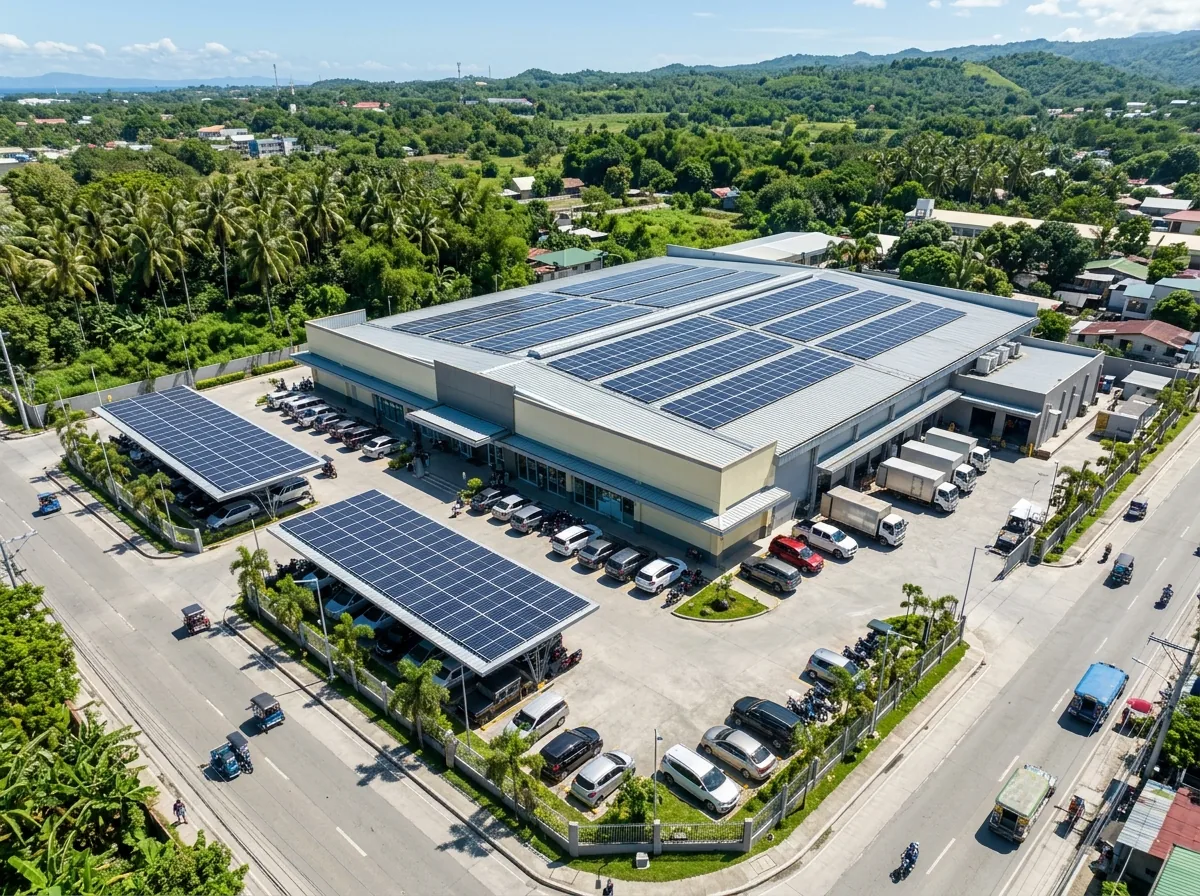
Supermarkets, wet-and-dry groceries, and neighborhood hypermarkets open seven days a week, pulling relentless daytime electricity for open dairy and meat chillers, island freezers, store air-conditioning, bakery ovens, and checkout lighting. CebuSolar engineers three-phase commercial and hybrid solar plants across VECO, MECO, and CEBECO towns.
- 7 days/wk daytime load match
- 3–5 yrs typical payback period
- 50–500 kW+ 3-phase store arrays
The problem
Why are monthly power bills so high for supermarkets and groceries in Cebu?
Grocery stores operate high-draw open produce chillers, frozen meat gondolas, back-of-house walk-in vaults, and wide-span sales-floor air-conditioning straight through Cebu’s peak afternoon heat every single day of the week. Facing retail rates near ₱15–₱16 per kWh, refrigeration and cooling quickly become a store’s heaviest overhead after payroll.
Whether serving busy shoppers in Cebu City, Mandaue, Talisay, and Lapu-Lapu or anchoring town centers across Consolacion, Liloan, Danao, Bogo, Toledo, Carcar, and Argao, retail grocery stores never close for weekends. Automatic sliding doors open continuously in 33°C+ afternoon warmth, pulling humid outdoor air straight onto refrigerated display racks and forcing remote compressor racks and split aircons to run full capacity from morning opening until closing time.
In-store bakeries, rotisserie warmers, fresh-meat prep rooms, bright display lighting, and point-of-sale servers compound that steady daytime demand. Worse, provincial feeder brownouts threaten chilled dairy and frozen inventory while interrupting checkout scanners—unless stores burn expensive diesel fuel or integrate reliable battery backup.
- Open refrigerated produce, dairy, beverage, and fresh-meat display cases
- Walk-in cold rooms, chest freezers, and remote compressor condenser racks
- Continuous sales-floor air-conditioning fighting constant entrance door traffic
- In-store bakery deck ovens, rotisserie cases, LED aisles, and cold prep rooms
- POS terminals, barcode scales, security cameras, and freezer stock at outage risk
How solar helps
How does solar power lower operating expenses for Cebu grocery stores?
Supermarkets enjoy ideal solar geometry: wide, low-rise metal roofs positioned right above constant seven-day refrigeration and store cooling loads. CebuSolar matches 620–630 W N-type bifacial Tier-1 panels with Solis three-phase inverters, zero-export protection, LiFePO4 POS backup, and shaded customer parking canopies.
Three-phase grid-tied solar for store chillers & HVAC
Because grocery stores run full refrigeration and aircon seven days a week without weekend shutdowns, grid-tied solar delivers fast returns with zero wasted weekend harvest. Solis inverters with zero-export current transformers supply display chillers and rooftop aircons directly as shoppers fill aisles.
Hybrid battery protection for POS lanes & cold rooms
Sudden voltage drops freeze cash registers, weigh-scales, credit-card terminals, and CCTV networks mid-transaction. Adding hybrid solar with Dyness or Pylontech LiFePO4 batteries keeps POS lanes, emergency aisle lights and walk-in controls running through outages; the system switches over automatically while the generator starts.
Solar parking carports & mini-mart packages
Stores with tight roof structures or busy outdoor lots can erect shaded solar parking canopies that keep shopper vehicles cool while generating power. Smaller neighborhood groceries, minimarts, and cold-meat shops can start immediately with fixed 6–18 kW hybrid packages.
System sizing
What size solar system does a Cebu supermarket or grocery branch need?
Grocery sizing maps display-case compressor tonnage, sales-floor air-conditioning load, roof purlin spacing, and twelve months of daytime kilowatt-hour billing. CebuSolar supplies fixed-price 6–18 kW hybrid packages for minimarts and custom-engineered 50–500 kW+ three-phase rooftop arrays for full-size supermarkets after a store audit.
| Store format | Primary daytime loads | Suggested solar capacity | Configuration & pricing |
|---|---|---|---|
| Minimart, convenience store, or neighborhood grocery | Beverage chillers, chest freezers, split aircon, POS lanes, aisle LEDs | 6 kW to 18 kW Hybrid (10–32 panels, 6.2–19.84 kW solar) | Fixed packages: ₱305,000–₱970,000 (5–16 kWh battery, expandable 5–64 kWh) |
| Town-center supermarket branch | Open dairy/meat cases, backroom cold storage, floor aircons, bakery prep | 50–120 kW three-phase | Rooftop grid-tied or hybrid with zero-export; custom quote after site visit |
| Large full-service supermarket & wet section | Remote compressor rack, central HVAC, ice bins, meat cutting & deli ovens | 120–250 kW three-phase | Three-phase Solis plant + optional customer carport; custom quote |
| Regional hypermarket or multi-anchor retail center | Extensive chilled aisles, central chillers, escalators, food-court exhausts | 250–500 kW+ three-phase | Multi-inverter commercial plant + genset coordination; custom quote |
Estimates only. Final store sizing and one fixed itemized price are confirmed after a site audit. Actual savings depend on system size, electricity consumption, location, and utility rates. Prices are subject to change without prior notice.
Cost and payback
How much does supermarket solar cost in Cebu, and how quickly does it pay back?
Three-phase retail arrays from 50 kW to 500 kW+ are custom-quoted at one fixed price following structural and switchboard inspection, whereas 6–18 kW minimart hybrid packages range from ₱305,000 to ₱970,000. Across October 2026 Cebu rates near ₱15–₱16/kWh, stores typically achieve 3 to 5 year payback.
Because grocery refrigeration operates 365 days a year without weekend lulls, retail buildings harvest steady daily utility offsets right through high summer sales peaks. Evaluated against VECO’s October 2026 rate of ₱15.30/kWh alongside MECO and CEBECO commercial tariffs across Cebu, daytime solar generation protects slim retail margins directly at the meter.
CebuSolar installs Tier-1 620–630 W N-type bifacial panels from JinkoSolar, JA Solar, Trina Solar, LONGi, and AIKO with Solis inverters, Dyness or Pylontech LiFePO4 batteries, Schneider Electric and Suntree protection breakers, and stainless steel fixings built for coastal towns. Smaller store owners can estimate bills on our ROI calculator or inspect fixed tiers on our cost page.
- One fixed turnkey contract price issued after a store audit, every component itemized
- Clear milestone payments: 40% on order, 40% on delivery and mounting, 20% on switch-on
- 1-year installation workmanship, 12-year Solis inverter, and 30-year panel performance warranties (at least 87% output at year 30)
- Modular expansion for smaller stores: extra 620 W panels at ₱12,000 each and 5 kWh (₱75,000), 10 kWh (₱140,000), or 16 kWh (₱160,000) batteries
- We assist with your local LGU electrical permits and VECO, MECO, or CEBECO documents
How it works
How does CebuSolar install solar without interrupting store shoppers or cold aisles?
Our Cebu City crew stages panels and conduit outside receiving docks and works entirely above roof decks while cashiers and shoppers move safely inside below. Final main-breaker tie-in happens before store opening hours so display chillers and POS lanes aren’t interrupted during trading hours.
Store & roof inspection
We visit to review 12 months of VECO, MECO, or CEBECO bills, inspect sales-floor roof trusses and remote chiller condenser pads, and check main switchboard capacity.
Engineering & fixed proposal
We lay out panels neatly clear of rooftop HVAC units and vents, prepare zero-export single-line diagrams, help with permits, and present one fixed price.
Shopper-safe installation
Exterior roof mounting proceeds without blocking customer entrances or parking bays, timing electrical switch-on before early store opening.
Warranty & fast Cebu care
Every branch carries our Cebu warranty backed by locally stocked spare hardware and a Metro Cebu service response target within 48 hours.
What do Cebu supermarket and retail store owners ask before going solar?
Retail operations managers, multi-branch grocers, and franchise owners across Metro Cebu and provincial town centers often inquire about leased building roofs, shopper parking canopies, POS continuity during outages, rooftop condenser spacing, and multi-branch municipal permit support before approving an installation.
Does rooftop solar also help keep a metal-roofed supermarket cooler during afternoon heat?
Yes. Large rows of 620–630 W Tier-1 solar panels intercept harsh midday sun before it heats bare corrugated roofing sheets directly over sales aisles and stockrooms. That added shade helps ease ceiling radiant heat load while the array feeds store air-conditioning and display-chiller compressors below.
Can we deploy solar across multiple grocery branches with different CEBECO or VECO meters?
Yes. Multi-branch stores can standardize design specs across stores while sizing each site individually around its local utility meter, roof area, and compressor load—whether a standalone minimart using a 6–18 kW hybrid package or a large flagship supermarket building a 150 kW+ three-phase array.
How does solar coordinate with a store’s automatic transfer switch and backup generator?
We wire three-phase grid-tied inverters upstream of your automatic transfer switch or add a PV-genset synchronization controller so solar steps down safely whenever the supermarket transfers onto diesel backup during prolonged outages, while hybrid batteries keep POS lanes live.
What if our supermarket leases the building or shares a parking lot with other retail shops?
Because supermarket leases often run multiple terms and commercial arrays recover cost in 3 to 5 years, tenants can install modular bolted roof systems with landlord sign-off—or landlords install the array over main roofs and parking bays to lower building operating expenses across retail tenants.
How does CebuSolar help with city permits and zero-export compliance for grocery stores?
CebuSolar helps with your permits by preparing single-line electrical diagrams, hardware datasheets, and mounting plans for city or municipal electrical offices and VECO, MECO, or CEBECO zero-export compliance. Real-time zero-export sensors keep every generated kilowatt inside your store’s active chillers and lighting.
Get your personalized solar quote
Tell us about your place, pin it on the map and add a photo of your bill. Our team replies on Viber within one business day.
- 1. We size your system from your bill and map your roof by satellite.
- 2. You get your quote: panels, battery, monthly savings, payback and price.
- 3. Happy with it? We check your roof and wiring on site, then lock in one fixed price.