- Home
- Mattress & Foam Plants
Bedding & foam industry · Mandaue & Consolacion
Solar for Mattress & Foam Makers in Cebu. Put vast factory storage roofs to work.
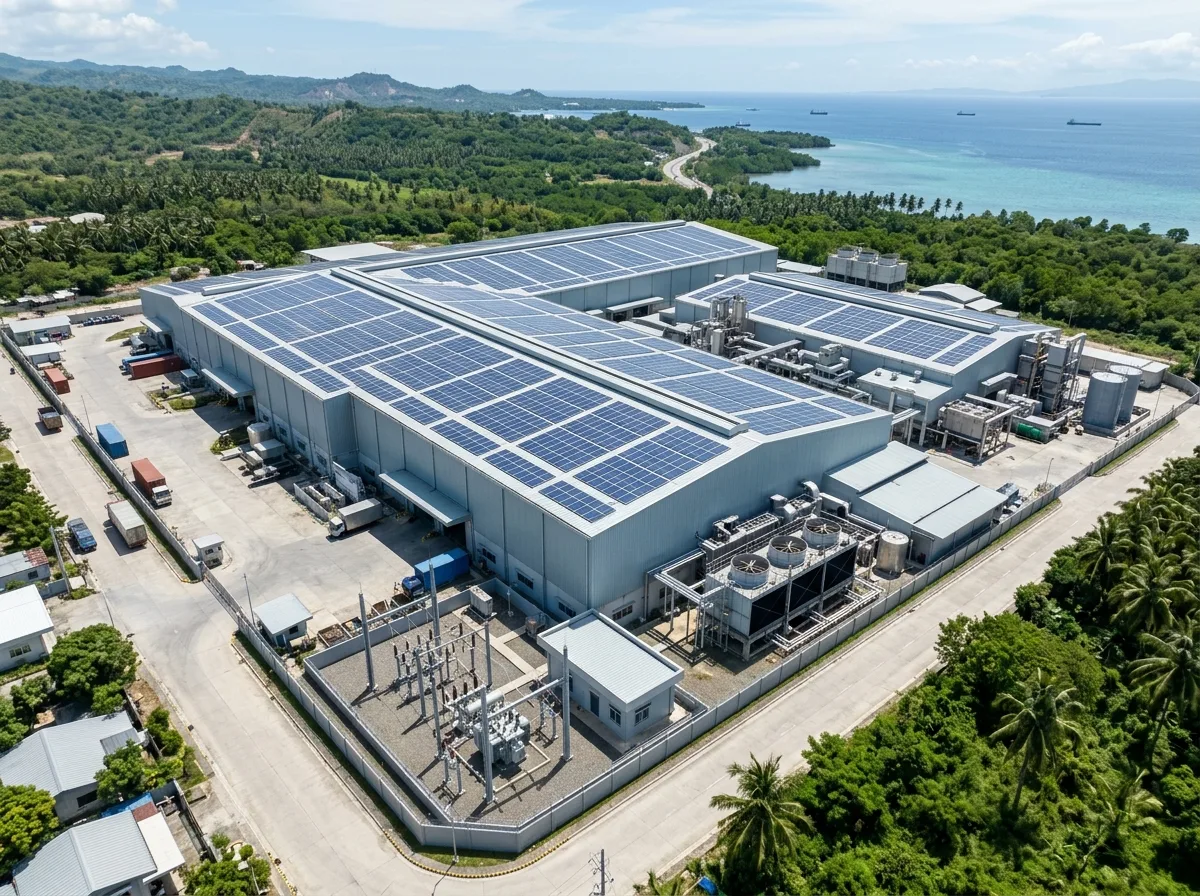
Polyurethane foam cutters, quilted ticking machines, high-power spring coilers, and bedding assembly factories occupy sprawling steel warehouse sheds across Mandaue, Consolacion, Compostela, and Naga—making mattress plants natural fits for high-yield 50–500 kW+ commercial solar paying back in 3 to 5 years.
- 50–500 kW+ wide-span bedding factory scale
- 3–5 yrs typical payback period
- stainless steel + EPDM dry storage protection
The problem
Why do daytime motor loads and huge bays push mattress makers toward solar arrays?
Cebu bedding manufacturers combine surprisingly massive low-pitch warehouse roof footprints built for bulky foam bun storage alongside continuous daytime hydraulic roll-pack compressors, automated Bonnell spring wire coilers, tempering furnaces, ventilation extractors, and multi-needle CNC quilting tables drawing pricey ₱15–₱16/kWh commercial utility power.
Along industrial estates from Paknaan and Canduman north through Consolacion, Liloan, and Minglanilla, mattress and upholstery suppliers run single or extended daytime shifts matching domestic department-store furniture contracts and resort hospitality bedding orders. Every hydraulic vacuum-roll press squeezing finished foam mattresses for cargo container export, multi-bay sewing conveyor, and central high-cfm ventilation fan hits peak load squarely between 8 AM and 5 PM.
Crucially, raw PU blocks and wrapped cotton ticking fabrics demand zero roof leakage anywhere over bulky inventory rows—making cheap leaky fastener shortcuts completely unacceptable inside bedding storage halls.
- Multi-needle computerized mattress quilting & border-hemming stations
- Carousel vertical/horizontal PU foam slab splitters & CNC contour saws
- Bonnell & pocket-spring wire coiler presses + stress-relief electric heaters
- Hydraulic vacuum-compression bedding wrappers & central air compressors
- High-bay exhaust hoods, dusty trim blowers & climate-cooled showroom wings
How solar helps
Which commercial solar architecture delivers lean capex on vast Cebu foam bays?
Unlike cramped retail outlets forced to wrestle shading skylights, mattress and foam plants already command gigantic continuous metal roofs above bulky storage racks—allowing CebuSolar to deploy lean zero-export battery-free 3-phase arrays at lower initial capex with fast daytime ROI across shifts.
Wide-bay 3-phase grid-tied daytime offset
Vast low-slope warehouses match 3-phase zero-export grid-tied solar—absorbing continuous spring coiler, CNC cutter, quilting station, and extractor fan power all daytime without heavy battery banks or meter swaps.
Dry EPDM leakproof fastening above textiles
Stored cotton ticking rolls and finished beds stay dry under heavy tropical monsoon squalls using raised-crown stainless bolts sealed tight with compression EPDM washers or non-penetrating standing-seam clamps.
Control desk & showroom hybrid backup
Smaller bedding fabrication workshops or factory outlet display showrooms pair daylight production with 6–18 kW LiFePO4 battery systems keeping computer design stations, embroidery quilting controllers, and lighting on during brownouts.
System sizing
What solar size fits a Cebu upholstery shop vs. a national mattress plant?
CebuSolar inspects twelve monthly utility statements, checks motor surge draws on automated compression wrapping presses, inspects tall ventilation exhaust cowls, and measures clean sunny warehouse bays—delivering fixed 6–18 kW packages for boutique showrooms right up to custom 50–500 kW+ industrial factories.
| Manufacturing Scale | Representative Equipment Load | Suggested Capacity | Deployment & Pricing Model |
|---|---|---|---|
| Boutique foam cutter, cushion jobber & factory mattress showroom | Single contour band saw, stitching machines, showroom display AC | 6 kW to 18 kW Hybrid (10–32 panels, 6.2–19.84 kW solar) | Fixed packages: ₱305,000–₱970,000 (with 5–16 kWh battery) |
| Mid-size Mandaue bedding & spring-assembly warehouse | Quilting line, pocket-spring assemblers, compressor, cutting deck | 60–150 kW three-phase | Zero-export 3-phase warehouse solar + PLC backup; custom quote |
| Large PU foam pouring block & mattress finishing factory | Foaming conveyor ventilation, block cranes, vacuum roll-packers | 150–350 kW three-phase | Multi-shed 3-phase Solis array avoiding curing bays; custom quote |
| Major regional bedding & upholstery industrial campus | Central compressed air plants, multiple quilting & coil fabrication lines | 350–500 kW+ three-phase | Campus-wide 3-phase EPC integrated at main switchgear; custom quote |
Estimates only. Structural purlin assessment, curing exhaust separation check, and fixed itemized contract quoting follow our on-site survey. Actual savings depend on system size, electric draw, location, and rates. Prices are subject to change without prior notice.
Cost and payback
How much does factory solar cost for Cebu bedding makers, and how fast is payback?
Boutique upholstery outlets choose transparent published pricing from ₱305,000 to ₱970,000—whereas full 50–500 kW+ industrial foam plants receive custom itemized fixed contracts after site inspection. Offsetting Metro VECO (₱15.30/kWh) and CEBECO daytime electricity typically pays back in 3 to 5 years.
Benchmarked against VECO’s October 2026 schedule of ₱15.30/kWh and provincial co-op schedules across Cebu, spacious storage bays practically invite effortless high-wattage installations without awkward multi-story lifts. Removing expensive commercial battery vaults via zero-export 3-phase grid-tied engineering recovers corporate cash aggressively while protecting profit per unit shipped against tariff inflation.
Every installation standardizes verified Tier-1 620–630 W N-type bifacial glass (JinkoSolar, JA Solar, Trina Solar, LONGi, AIKO), Solis inverters, Schneider Electric and Suntree switchgear, and stainless hardware. Test preliminary scenarios on our ROI calculator or inspect commercial pricing guides (commercial cost page).
- Transparent fixed engineering contract price delivered after warehouse audit
- Commercial payment schedule: 40% order, 40% delivery & mount, 20% switch-on
- 1-year workmanship, 12-year inverter, and 30-year panel (at least 87% at yr 30) warranties
- Itemized quotes, electrical plans and datasheets for your accountant and permit
- We assist with municipal LGU electrical permits and utility zero-export setups
How it works
How does CebuSolar install safely above high-flammability foam storage bays?
Deploying crews straight from our Cebu City office at Mclin Building, Corner T. Padilla St. and M.J. Cuenco Ave., we plan no welding or grinding above foam storage roofs, using cold-bolted stainless steel fasteners, armored external wiring raceways, and quiet weekend breaker commissioning.
Free truss & fire-zone walk
We audit twelve months of utility bills, inspect purlin spacing above bulky foam stacks, and map armored conduit routes strictly outside indoor fluff bays.
Cold-mount design & fixed BOM
We size zero hot-work bolted clamps sealed against monsoon drips (roof sealing guide), assist with LGU permits, and deliver fixed itemized pricing.
Spark-free steel roof installation
Experienced technicians mount anodized frames safely exterior to production lines (build steps), landing final switchboard tie-ins during quiet Sunday plant gaps.
Local Metro aftercare support
SolisCloud telemetry pairs with a 48-hour Metro Cebu response target and spare parts stocked in Cebu under our 1/12/30-year warranty commitment.
Common Cebu bedding & foam manufacturer questions before going solar
Factory directors, plant maintenance leads, and warehouse safety managers across Mandaue and Consolacion frequently ask how fire safety rules treat DC wire routing over stored polyurethane blocks, whether wide clear-span steel trusses hold commercial arrays safely, how skylights fit around panels, and how fast grid-tie saves.
Are installers permitted to weld brackets or grind metal above stored PU foam and cotton?
No. We plan bolted mounting with stainless fasteners and external conduit, with no welding or grinding above stored foam, and follow your hot-work rules (buyer’s guide).
Will our translucent warehouse skylights still illuminate indoor sewing lines after solar is added?
Yes—our installers survey skylights carefully beforehand and bridge rail tracks strictly around natural translucent daylight roof panels so daytime sewing floor light stays uninterrupted.
What if our foam-pouring chemical curing roof needs higher ventilation exhaust clearance?
We cluster arrays over adjoining finished-mattress packaging, fabric storage bays, and assembly halls upwind from heavy PU pour curing vents while maximizing array output (commercial EPC options).
Can a small upholstery shop also install backup batteries for computerized stitching lines?
Yes—pairing smaller fabrication lines with 6–18 kW hybrid packages protects CNC quilting heads, computer routers, and retail display AC during afternoon blackouts automatically.
Does CebuSolar support municipal permits and industrial aftercare locally from Cebu City?
Yes—we assist with LGU electrical paperwork via schematics and inspect systems from Cebu City; review warranty protection on our Warranty page and Solar FAQ.
Get your personalized solar quote
Tell us about your place, pin it on the map and add a photo of your bill. Our team replies on Viber within one business day.
- 1. We size your system from your bill and map your roof by satellite.
- 2. You get your quote: panels, battery, monthly savings, payback and price.
- 3. Happy with it? We check your roof and wiring on site, then lock in one fixed price.