- Home
- Marine Equipment Plants
Maritime fabrication · Balamban, Mactan & Consolacion
Solar for Marine Equipment Makers in Cebu. Power bronze machining, fiberglass molds, and gantry shops.
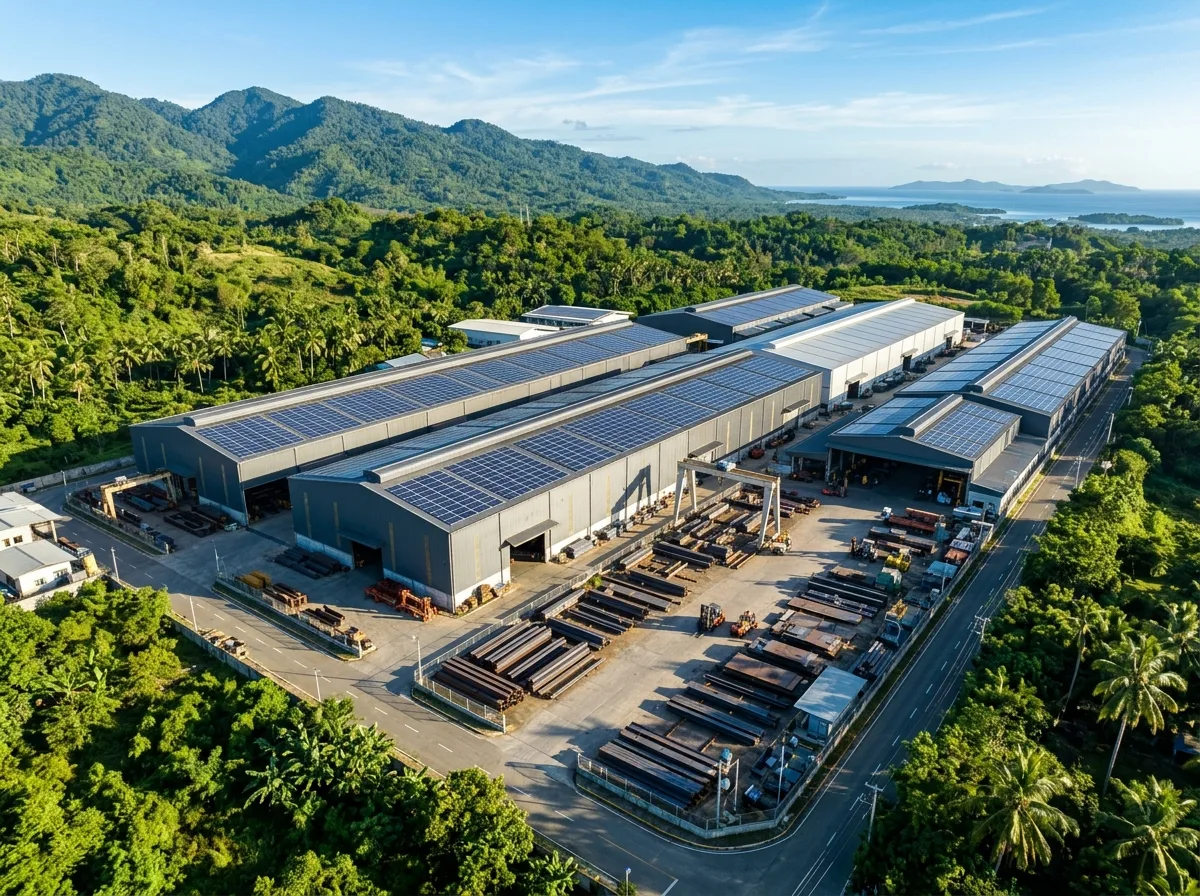
Boat hardware fabricators, deck winch assemblers, FRP vessel molders, stainless rudder workshops, and propeller balancing shops along Balamban, Mactan, Consolacion, and Cebu piers pull steep daytime 3-phase motor loads—turning sun into 3–5 year ROI via commercial and hybrid solar.
- 50–500 kW+ hull bays & CNC yards
- 3–5 yrs typical payback period
- Stainless fixings for coastal salt air
The problem
Why are 3-phase welding, CNC machining, & boatyard curing bills climbing in Cebu?
Marine equipment plants combine heavy continuous CNC bronze propeller cutting, high-cfm FRP fiberglass styrene extraction fans, rotary screw sandblasting air compressors, electro-hydraulic deck gantry hoists, and marine-grade switchgear assembly rooms drawing steep ₱15–₱16/kWh daytime electricity along exposed coastal utility grids.
Supply-chain subcontractors supporting shipyards across Balamban (CEBECO III), Mactan Island (MECO ~₱15.98/kWh), and Consolacion-Liloan coastal industrial belts run heavy daytime tooling shifts tightly timed from 7:30 AM until 5:00 PM. Running big cooling blowers across enclosed GRP laminating sheds plus compressed-air shot blasting booths drains heavy continuous kilowatts during bright noon sun hours.
Meanwhile seaside exposure demands sturdy corrosion-resistant fasteners while unplanned feeder sags interrupt precision CNC boring passes mid-cut on bronze rudder bushings.
- Multi-axis CNC boring mills & dynamic marine propeller balancers
- Fiberglass composite boat lamination extraction blowers & resin chillers
- Heavy TIG/MIG aluminum boat hull welders & plasma plate tables
- Sandblasting rotary screw air compressors, grit reclaimers & bridge cranes
- Marine electrical panel test bays, engineering offices & climate-cooled metrology suites
How solar helps
Which coastal solar engineering handles heavy maritime machine bays?
Sprawling steel boat-assembly bays carry wide sunlit purlin spans ideally suited for flush low-wind arrays—letting marine component makers pair battery-free 3-phase grid-tied inverters shaving midday crane and blower draw alongside focused hybrid storage backing precision CNC control cabinets across outages.
Daytime bay 3-phase grid-tied EPC
Multi-span metal fabrication halls connected to industrial substations save aggressively using zero-export 3-phase grid-tied solar—trimming initial capex while blocking reverse meter flow during holiday shop shutdowns.
Hybrid protection for CNC controls & metrology
Abrupt coastal feeder trips snap delicate carbide tools mid-bore inside costly bronze castings. Backing CNC servos, CAD stations, and precision measuring rooms via LiFePO4 battery subpanels keeps controls alive automatically.
Sub-tier marine shops & coastal stainless steel
Smaller rigging ateliers and life-raft servicing warehouses deploy transparent 6–18 kW hybrid packages (₱305,000–₱970,000) built with anodized rails and exclusively stainless bolts fighting harsh seaside gale gusts.
System sizing
What solar capacity suits a small marine workshop vs. a ship-gear plant?
We inspect twelve monthly utility statements beside bridge-crane peak kVA spikes, GRP fiberglass laminating roof dust exposure, C-purlin steel thickness against ocean winds, and enclosed inverter room cooling—sizing between compact 6–18 kW component hubs and 50–500 kW+ industrial factories across Cebu.
| Marine Manufacturer Scale | Representative Equipment Load | Suggested Solar Tier | Configuration & Pricing Model |
|---|---|---|---|
| Life-raft service depot, marine electronics bench & hardware store | Hydro-test pumps, radio test racks, small lathes, shop/showroom AC | 6 kW to 18 kW Hybrid (10–32 panels, 6.2–19.84 kW) | Fixed packages: ₱305,000–₱970,000 (with 5–16 kWh battery) |
| Single-bay bronze CNC propeller & winch assembly plant | CNC boring mills, aluminum welding machines, screw air compressor | 60–150 kW three-phase | Bay rooftop 3-phase grid-tie + CNC control UPS; custom quote |
| Fiberglass hull lamination & marine deck outfitting facility | High-cfm styrene extraction banks, resin climate rooms, gantry cranes | 150–350 kW three-phase | Zero-export 3-phase Solis plant upwind of styrene vents; custom quote |
| Large multi-hall maritime propulsion & steel marine industrial complex | Multiple foundry/machining bays, heavy grit blast rooms & cold stores | 350–500 kW+ three-phase | Full multi-bay C&I coastal EPC at switchgear; custom quote |
Estimates only. Waterfront wind anchoring checks, overhead bridge crane clearances, and locked itemized contract pricing follow a site audit. Actual savings depend on system size, usage hours, location, and local rates. Prices are subject to change without prior notice.
Cost and payback
How much does marine factory solar cost, and when does Cebu ROI finish?
Marine repair depots and gear suppliers select published fixed packages spanning ₱305,000 to ₱970,000—whereas full 50–500 kW+ marine factories receive custom itemized contracts post-audit. Offsetting steep MECO (~₱15.98/kWh), VECO (₱15.30/kWh), and CEBECO bills produces clear 3 to 5 year payback comfortably.
Benchmarked against Visayan Electric’s October 2026 schedule of ₱15.30/kWh, coastal Mactan rates (~₱15.98/kWh, September 2026), and western CEBECO III tariffs (~₱15.08/kWh) near Balamban maritime corridors, daytime shift operations absorb solar production tightly into active machining and ventilation motors. Battery-free 3-phase installations protect corporate liquidity while earning fast return.
Every installation standardizes Tier-1 620–630 W N-type bifacial modules (JinkoSolar, JA Solar, Trina Solar, LONGi, AIKO), Solis inverters, Schneider Electric/Suntree switchgear, Dyness/Pylontech LiFePO4 batteries, and stainless steel hardware (C&I pricing page).
- Transparent itemized fixed engineering quotation after yard & truss audit
- Balanced commercial milestones: 40% order, 40% delivery & mount, 20% switch-on
- 1-year workmanship, 12-year inverter & 30-year panel (at least 87% at yr 30) warranties
- Coastal stainless hardware & EPDM gaskets guard ocean-facing truss integrity
- We assist with LGU electrical permits and utility zero-export paperwork
How it works
How does CebuSolar build wind-safe coastal setups around welding fumes & styrene hoods?
Deploying crews out of our Cebu City office at Mclin Building, Corner T. Padilla St. and M.J. Cuenco Ave., our system designers check steel beams above active cranes, route conduit outside hot GRP resin rooms, and lock weekend breaker coupling without stalling boat outfitting targets.
Bay & structural steel audit
We audit twelve monthly bills, inspect high-bay structural trusses above gantry rails for weld corrosion, and map clear upwind arrays away from exhaust hoods.
Marine hardware spec & BOM
We align dense rail clamps strictly using stainless bolts & EPDM seals (storm-mounting spec), prepare LGU electrical paperwork, and lock fixed prices.
Yard-safe rooftop installation
Crews assemble frames outside overhead floor bridge-crane travel paths (install process), completing brief MDP switchboard synchronization over Sunday gaps.
Cebu City spare backing
Live SolisCloud telemetry monitors production alongside our 1/12/30-year warranty commitment and responsive stocked Metro Cebu spares.
What do Cebu marine hardware plant directors ask before approving solar?
Plant engineers, maritime shop superintendents, and fiberglass yard leads across Balamban, Mactan, and Consolacion ask how TIG welding or compressor peaks affect commercial inverters, whether GRP resin vapors pit panel coatings, how tall gantry roofs mount safely in gusts, and how local spares respond.
Can pulsed marine aluminum welders or crane hoists damage three-phase Solis inverters?
No. A grid-tied inverter works alongside the grid, and the grid supplies the short starting surge of large motors and welders while the panels carry the steady running load. We check your motor ratings and switchboard during the site visit.
Will fiberglass resin spray exhausts or paint overspray stick permanently to solar glass?
We intentionally cluster panels across adjoining clean warehouse finishing halls and machinery buildings clear of laminating spray booth vents—with simple access strips for gentle morning rinses (maintenance guide).
Can CNC precision turning benches keep running during Balamban coastal brownouts?
Battery-backed, yes. Putting CNC controls, metrology benches and CAD workstations on a LiFePO4 backup circuit keeps them running through the switchover while standby diesels take the heavy spindles; keep a UPS on controls that can’t take any interruption.
How do high coastal boatyard roofs stand against tropical cyclone wind uplift forces?
Low-profile mounting fixed into the high-bay purlins, with close rail spacing, anodized rails and stainless hardware, keeps wind uplift down; the racking is rated for 240 km/h winds (typhoon guide).
Get your personalized solar quote
Tell us about your place, pin it on the map and add a photo of your bill. Our team replies on Viber within one business day.
- 1. We size your system from your bill and map your roof by satellite.
- 2. You get your quote: panels, battery, monthly savings, payback and price.
- 3. Happy with it? We check your roof and wiring on site, then lock in one fixed price.