- Home
- Fishing Harbors & Ice Depots
Maritime harbors · Danao, Bantayan & coastal ports
Solar for Fishing Fleet Harbors in Cebu. Power dockside ice crushers, chillers, and boat slips.
Commercial fishing harbors, landing piers, dockside ice depots, and marine boat repair bays across Cebu City, Talisay, Danao, Toledo, Bogo, and Bantayan burn pricey power cooling freshly landed catch and running pier hoists all bright day—cutting power costs via commercial and hybrid solar.
- 6–500 kW+ pier stalls to harbor depots
- 3–5 yrs typical payback period
- Stainless fixings for harbor salt air
The problem
Why are dockside cooling, ice crushing, & pier power costs squeezing harbor fleets?
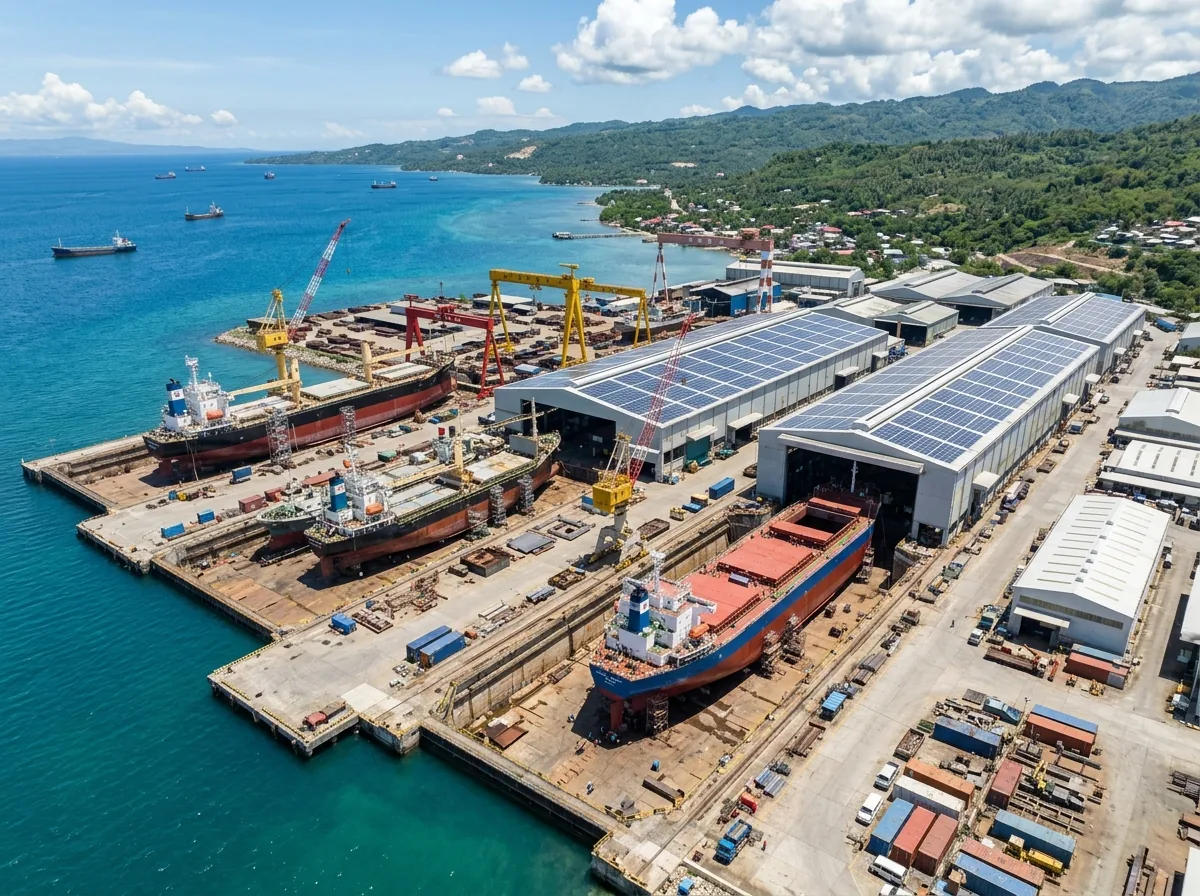
Between seaside flake-ice storage bunkers, electric ice crushers loading fishing vessel holds before twilight sailing, harbor-side blast chillers receiving auction morning tuna and lapu-lapu, and bilge maintenance bays running air tools across blazing daylight docks, coastal Cebu maritime yards pay relentless ~₱15–₱16/kWh power bills daily.
Working harbors from Pasil, Sawang Calero, and Talisay landing bays up through northern Danao, Bogo, and Santa Fe fisheries consume heaviest cooling tonnage squarely through sunny noon auction wrap-ups and afternoon re-icing rounds ahead of evening departures. Simultaneously, off-mainland landing coves endure unreliable coastal grid voltage spikes or long outage blackouts forcing dock bosses onto loud diesel generators draining ice depot margins quickly.
Salt spray whipping straight off tidal harbor seawalls corrodes thin ungalvanized steel brackets and bare indoor electrical panels rapidly unless strict coastal hardware specs protect every rail bolt.
- Flake/block ice holding depots & motorized ice crushers along boat wharves
- Wharf-side fish chill rooms, chest freezers & flash-cooling brine tanks
- Pier net-repair sheds, welding winches & boat hoist shore power boxes
- High-pressure saltwater/freshwater deck washdown pumps & fuel dock dispatch
- Marine radio offices, harbor cold-box security lighting & crew quarters cooling
How solar helps
Which solar setup suits coastal fishing piers & ice warehouses?
Seaside fishing compounds balance brutal daytime cooling heat against constant salty wind and frequent provincial feeder outages—CebuSolar specifies corrosion-resistant anodized rails paired strictly with stainless bolts, matching either 3-phase zero-export daytime chillers or hybrid LiFePO4 storage shielding harbor catch holds.
Seaside 3-phase ice & chiller grid-tie
Busy wholesale landing harbors and dockside ice plants operating automated genset backup maximize cash returns with zero-export 3-phase grid-tied solar—trimming initial investment while shaving peak midday ice condenser bills sharply.
Hybrid LiFePO4 backup for island piers
Coastal buyer hubs and outer-island harbors keep fresh seafood coolers, UHF radio repeaters, pier security floodlights, and electronic dock scales running automatically across utility cuts with sealed 6–18 kW packages.
Off-grid boatyard & freshwater pump power
Distant fishing camps lacking mainland lines deploy independent off-grid battery plants alongside solar freshwater cistern pumping (pumping systems), eliminating messy harbor gasoline drum hauling across rocky landing piers.
System sizing
What solar capacity matches a municipal landing pier vs. a fleet ice harbor?
We inspect twelve monthly VECO, MECO, CEBECO, or island co-op billing histories alongside ice compressor ratings, salt corrosion along waterfront trusses, inverter room humidity clearances, and daytime cold storage peak—sizing from 6–18 kW docks toward 50–500 kW+ maritime harbors.
| Harbor Operation Scale | Representative Maritime Load | Suggested Solar Tier | Configuration & Pricing Model |
|---|---|---|---|
| Small fish broker landing dock, cold chest & gear office | Wholesale chest freezers, dock ice crusher, VHF base, LED pier floodlights | 6 kW to 12 kW Hybrid (10–22 panels, 6.2–13.64 kW) | Fixed packages: ₱305,000–₱640,000 (5–16 kWh battery option) |
| Fleet depot wharf, fresh cold store & marine repair slipway | Walk-in fresh fish chill room, pressurized washdown pump, air compressor | 16 kW to 18 kW Hybrid (28–32 panels) or 50–100 kW 3-phase | Fixed 16–18 kW (₱795,000–₱970,000) or custom 3-phase quote |
| Municipal fishing port cold depot & regional block-ice hub | Multi-ton flake-ice makers, chiller vaults, slipway welding power | 100–250 kW three-phase | Zero-export 3-phase Solis harbor plant with ATS interlock; custom quote |
| Major coastal commercial fishing fleet base & cold harbor | Multiple cold-storage buildings, block-ice lines & shipyard bays | 250–500 kW+ three-phase | Full multi-warehouse marine C&I plant at switchgear; custom quote |
Estimates only. Waterfront truss inspection, coastal hardware auditing, and locked itemized pricing follow a site survey. Actual savings depend on system size, catch schedule, location, and utility tariff. Prices are subject to change without prior notice.
Cost and payback
What do maritime harbor solar installs cost, and when is payback complete?
Broker landing stalls and small boat depots pick published packages from ₱305,000 up to ₱970,000—while major 50–500 kW+ fishing ports receive custom itemized engineering contracts after audit. Displacing constant coastal cooling power billed near ₱15–₱16/kWh typically pays back in 3 to 5 years.
Benchmarked against VECO (₱15.30/kWh, October 2026), MECO (~₱15.98/kWh) and CEBECO (~₱15.08–₱15.91/kWh, September 2026) rates, harbor cold rooms work hardest in the hot afternoon, when the panels are producing. Lower daytime utility expenses protect boat profitability immediately even during lean moon-phase fishing breaks.
Every build combines Tier-1 620–630 W N-type bifacial glass (JinkoSolar, JA Solar, Trina Solar, LONGi, AIKO), Solis inverters, Dyness/Pylontech LiFePO4 batteries, Schneider protection, and strict stainless hardware (estimate savings here).
- Transparent fixed engineering pricing following pier & electrical inspection
- Balanced staged payments: 40% order, 40% delivery & mounting, 20% switch-on
- 1-year workmanship, 12-year inverter & 30-year panel (at least 87% at yr 30) warranties
- stainless steel fasteners & anodized aluminum resist sea corrosion
- We assist with municipal LGU electrical permits and co-op zero-export paperwork
How it works
How does CebuSolar build wind-safe seaside arrays right on harbor wharves?
Deploying crews straight from our Cebu City office at Mclin Building, Corner T. Padilla St. and M.J. Cuenco Ave., our system designers audit waterfront steel C-purlins for sea corrosion beforehand, isolate enclosed inverters inside protected dry dispatch booths safely above high tide wash, and commission.
Pier & chiller audit
We analyze twelve monthly power bills, check coastal iron roofs thoroughly for salt-pitting rust, and locate elevated dry inland walls shielding electrical boxes.
Marine hardware & fixed BOM
We specify dense rail clamping using exclusively stainless fasteners & EPDM roof barriers (typhoon guide), assemble LGU permit sheets, and lock quotes.
Quick between-landing erection
Crew fastens rails swiftly outside wet morning catch auctions (installation steps), syncing breaker connections neatly during afternoon shore lull hours.
Cebu warranty & spares team
SolisCloud telemetry pairs with stocked parts in Cebu City supporting a 48-hour Metro Cebu response target and province-wide warranty service.
Common Cebu fishing harbor & ice depot questions before buying solar
Pier managers, boat captains, and cold depot operators across Pasil, Danao, Toledo, Bogo, and outer islands ask how ocean spray and monsoon typhoons affect exposed wharf arrays, whether standby diesel boat-yard gensets sync alongside solar, whether salt haze cleans quickly, and how permits process.
Won’t heavy harbor typhoons and ocean gusts pull solar arrays off exposed waterfront roofs?
Low-profile mounting fixed through the structural purlins, with anodized rails and stainless fasteners, keeps wind uplift down; the racking is rated for 240 km/h winds. See our typhoon guide.
How do wall inverters survive constant salty moist sea mist beside open fish docks?
We place Solis inverters and Schneider protection panels strictly inside shaded dry dispatch offices or enclosed interior switchgear bays above possible storm surge height safely out of direct surf mist.
Can existing harbor diesel generators still handle heavy shipyard welding lines during outages?
Yes—three-phase commercial arrays tie safely behind ATS interlock controls so the inverters disconnect automatically whenever yard backup diesels pick up heavy inductive winches or dock welders.
How often do dockside ocean-front solar panels need fresh rinsing against salt haze?
During dry sunny months without afternoon monsoon squalls, crew simply spray salt film off gently during calm 6 AM washdowns using freshwater dock hoses (cleaning guide).
Get your personalized solar quote
Tell us about your place, pin it on the map and add a photo of your bill. Our team replies on Viber within one business day.
- 1. We size your system from your bill and map your roof by satellite.
- 2. You get your quote: panels, battery, monthly savings, payback and price.
- 3. Happy with it? We check your roof and wiring on site, then lock in one fixed price.