- Home
- Dried Fish & Squid Processing
Coastal seafood · Bantayan, Bogo & Tabogon
Solar for Dried Fish & Squid in Cebu. Power dryers, ice rooms, and vacuum sealers.
Coastal dried seafood processors in Bantayan, Tabogon, Bogo, Medellin, and Toledo rely on mechanical cabinet dryers, circulation fans, cold holding lockers, and vacuum pack sealers fighting coastal humidity and costly provincial electricity rates—paying systems back in 3 to 5 years via hybrid and commercial solar.
- 6–500 kW+ packing sheds to depots
- 3–5 yrs typical payback period
- Stainless fixings for coastal salt air
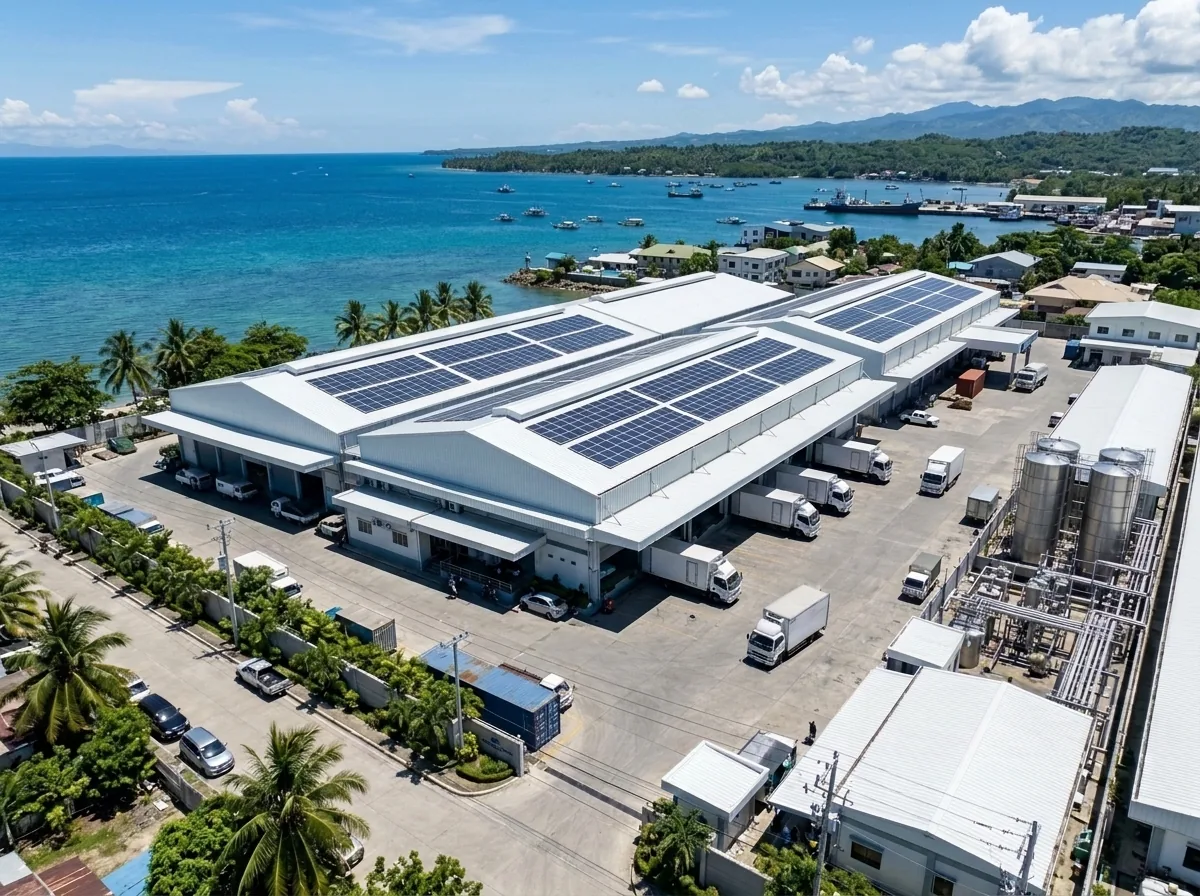
The problem
Why do power rates & coastal feeders pinch dried danggit and pusit processors?
Modern hygienic dried seafood exporters run electric air-dehumidifier drying cabinets, axial rack blowers, chest freezers storing salted fresh catch ahead of filleting, cleanroom packing AC, and vacuum pack machines across steep provincial CEBECO II (~₱15.91/kWh) and outer island power bills every sunlit morning.
Traditional sun drying along bamboo racks breaks down abruptly every wet Habagat squall week, ruining fresh morning danggit catches caught off northern Cebu and Bantayan reefs unless indoor mechanical dehumidified drying rooms take over. Running dozens of deep freezers keeping salted squid fresh alongside vacuum sealers and retail cooling counters pushes seaside utility charges painfully high.
Adding salt-spray exposure along ocean yards destroys weak unplated roof hardware fast while rural island feeders suffer long outage trips threatening spoilage inside freezer holds.
- Cabinet heat-pump & closed-loop dehumidifier fish drying rooms
- Chest & walk-in freezers preserving chilled raw danggit, pusit & fillet stock
- High-flow intake brine tanks, scaling tumblers & continuous vacuum sealers
- Air-conditioned spotless export packing tables fighting coastal humidity
- Coastal waterwash pumps keeping filleting slabs clean before drying
How solar helps
Which coastal solar setup protects seaside dried fish plants reliably?
Coastal seafood sheds need hardware built squarely for salty winds—combining anodized aluminum rails, exclusively stainless bolts, and EPDM roof seals alongside either 6–18 kW hybrid storage batteries defending raw catch freezers or 3-phase grid-tied inverters offsetting heavy mechanical dryer motors.
Coastal hybrid freezer & packing backup
Family packers and island exporters in northern towns shield raw catch chest freezers, chiller rooms, and vacuum sealers automatically across rural blackouts via sealed 6–18 kW LiFePO4 packages starting from ₱305,000.
Commercial 3-phase dryer & chiller EPC
Larger export seafood packaging depots with high daytime dehumidifier cabinet loads cut heavy CEBECO (~₱15.08–₱15.91/kWh) daytime power bills rapidly with zero-export commercial grid-tied arrays (lower initial capex).
Off-grid island drying & coastal stainless steel armor
Island processing islets lacking reliable grid supply gain independent daytime/night power via off-grid battery plants and clean freshwater washdown pumps (solar pumping) built strictly with coastal corrosion defense.
System sizing
What solar capacity matches a family danggit shed vs. a regional seafood packer?
Site evaluations tally freezer count, mechanical dehumidifier dryer amp ratings, vacuum packaging bench schedules, clean roof square meters upwind from smoky wood kilns, and co-op utility voltage—pairing transparent 6–18 kW fixed packs with small packers or custom 50–500 kW+ plants for major regional facilities.
| Seafood Plant Scale | Representative Equipment Load | Suggested Solar Tier | Deployment & Pricing Model |
|---|---|---|---|
| Artisan family danggit/squid shed & retail stall | Chest freezers, tabletop vacuum sealers, wash pump, stall coolers | 6 kW to 10 kW Hybrid (10–16 panels, 6.2–10.0 kW solar) | Fixed packages: ₱305,000–₱520,000 (5–16 kWh LiFePO4 included) |
| Commercial dried-fish co-op & mechanical drying center | Heat-pump dehumidifier dryers, walk-in cooler, chilled pack bench | 12 kW to 18 kW Hybrid (22–32 panels, 13.64–19.84 kW) | Fixed packages: ₱615,000–₱970,000 (expandable 5–64 kWh) |
| Multi-line dried seafood & salted fish export depot | Banks of mechanical dryers, automated thermoform packers, flake-ice | 50–150 kW three-phase | Commercial 3-phase coastal array + cold hold backup; custom quote |
| Large provincial cold storage & export seafood complex | Blast freezers, holding vaults, wash lines & shipping docks | 150–500 kW+ three-phase | Full multi-bay C&I coastal EPC at switchgear; custom quote |
Estimates only. Purlin corrosion checks, coastal inverter alcove siting, and locked fixed quoting follow our on-site survey. Actual savings depend on system size, operation schedule, location, and local utility rates. Prices are subject to change without prior notice.
Cost and payback
What do seafood drying & packing installations cost, and when is payback complete?
Family and cooperative processors choose published fixed 6–18 kW systems between ₱305,000 and ₱970,000—whereas larger 50–500 kW+ export depots quote custom after audit. Cutting northern CEBECO II (~₱15.91/kWh) and outer utility expenses typically returns the cost in 3 to 5 years.
Benchmarked against steep northern provincial rates (~₱15.91/kWh in CEBECO II, September 2026) and island utility rates, coastal seafood sheds earn swift investment recovery by slashing daytime cabinet drying and raw catch freezing power daily. When rain stops open-air rack drying, solar-powered heat-pump dryers can keep the morning catch drying indoors.
Every installation pairs verified Tier-1 620–630 W N-type bifacial glass (JinkoSolar, JA Solar, Trina Solar, LONGi, AIKO), Solis inverters, Dyness/Pylontech LiFePO4 batteries, Schneider protection, and stainless coastal fixings (check ROI calculator).
- Transparent itemized fixed pricing after seaside facility audit
- Staged milestone terms: 40% order, 40% delivery & mounting, 20% switch-on
- 1-year workmanship, 12-year inverter, and 30-year panel (at least 87% at yr 30) warranties
- stainless steel hardware stands strongly against ocean salt mist
- We assist with municipal LGU electrical permits and co-op zero-export paperwork
How it works
How does CebuSolar build corrosion-resistant seaside processing arrays in northern & island Cebu?
Traveling across Cebu highways directly from our Cebu City office at Mclin Building, Corner T. Padilla St. and M.J. Cuenco Ave., our system designers check coastal steel trusses for salt rust beforehand, isolate inverters inside dry shaded rooms away from damp brine mist, and finish installs without slowing pack runs.
Seaside structural audit
We review twelve months of CEBECO or island co-op bills, check roof purlins against salt rust, and trace dry ventilated alcoves for inverter mounting.
Salt-resilient BOM & permits
We specify anodized rails paired strictly with stainless bolts (coastal waterproofing spec), help with the LGU electrical permit, and lock quotes.
Rapid packhouse installation
Installation technicians mount panels above packing halls (install process) without contaminating seafood tables, switching into operation.
Province-wide Cebu service
Remote SolisCloud monitoring pairs with full warranty stock dispatched from Cebu City under our 1/12/30-year warranty commitment.
What do Cebu dried seafood owners ask before switching to solar power?
Packhouse operators and coastal fishermen cooperatives across Tabogon, Bogo, Medellin, Bantayan, and Toledo frequently ask whether damp ocean mist corrodes inverter terminals, whether mechanical fish dryers work off solar during rainy cloudy streaks, how batteries protect freezer holds, and whether offshore island setups are serviced.
Will salty brine steam inside fish packing rooms corrode batteries and solar inverters?
We intentionally mount inverters and LiFePO4 enclosures inside clean, shaded dry switch alcoves or dry packaging offices well separated from wet brine soaking tubs and outdoor ocean salt spray, preserving long equipment reliability.
Can heat-pump dried fish cabinets keep running when clouds roll over coastal Cebu?
Yes. With a grid connection or a hybrid battery, the dryers keep running: solar first when the sun is out, then grid or battery automatically when clouds roll in.
Does coastal salt haze dry onto glass and cut output significantly?
Sea breeze leaves light dry mineral haze over summer months; a gentle 6 AM freshwater hose rinse restores output (seasonal cleaning guide).
Can CebuSolar travel out to Bantayan or island barangays for seafood plant audits?
Yes—we survey northern CEBECO II ports and island processing plants, specifying tailored off-grid or hybrid solutions arranged around vessel cargo logistics.
Get your personalized solar quote
Tell us about your place, pin it on the map and add a photo of your bill. Our team replies on Viber within one business day.
- 1. We size your system from your bill and map your roof by satellite.
- 2. You get your quote: panels, battery, monthly savings, payback and price.
- 3. Happy with it? We check your roof and wiring on site, then lock in one fixed price.