- Home
- Ceramics & Tile Factories
Building materials · Consolacion to Carcar
Solar for Ceramics & Tile Plants in Cebu. Offset milling, hydraulic presses, and drying power.
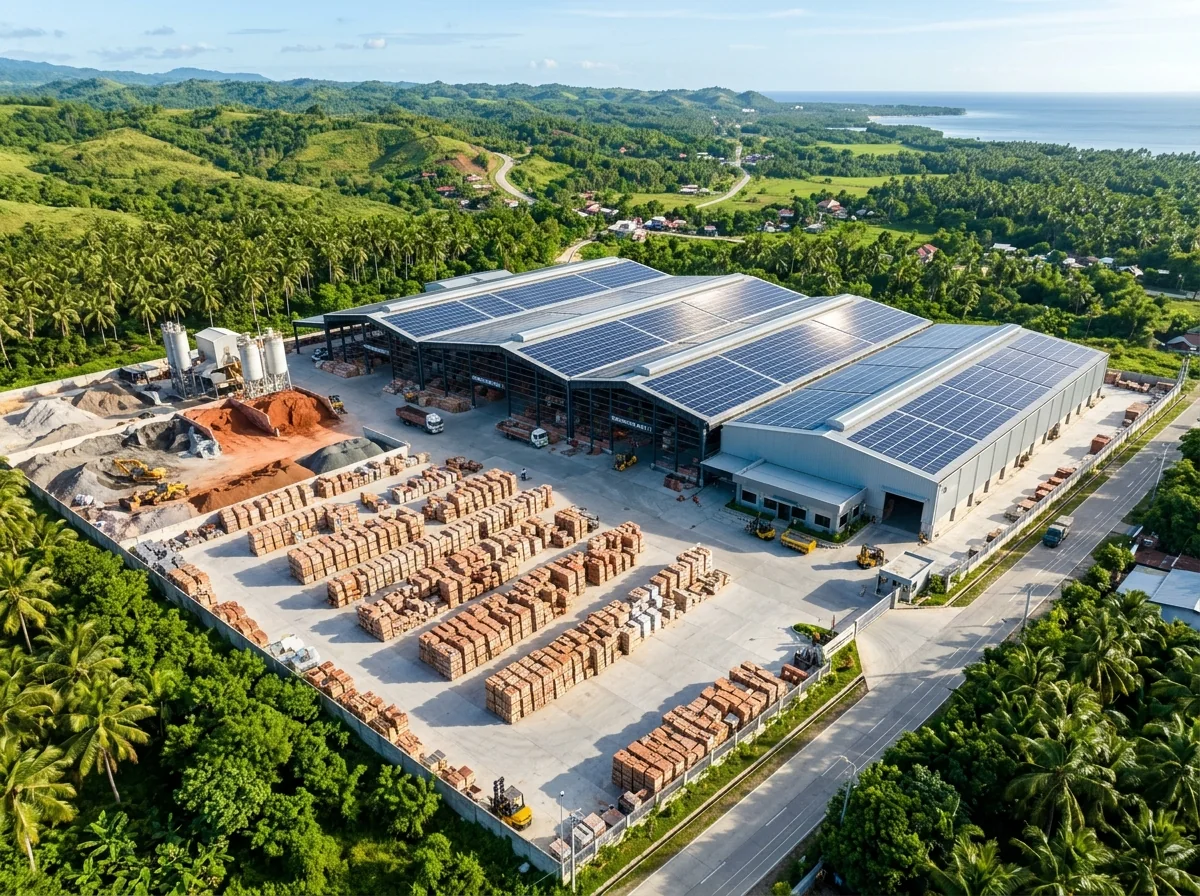
Ceramic tile factories, pottery workshops, terrazzo pavers, and terracotta makers across Cebu run continuous daytime electric ball mills, clay pugmills, high-tonnage hydraulic tile presses, and tunnel-dryer blowers under VECO and CEBECO industrial schedules—capturing rapid 3–5 yr ROI via commercial solar arrays.
- 50–500 kW+ wide-bay & ground arrays
- 3–5 yrs typical payback period
- 30-yr output at least 87% warranty
The problem
Why do daytime milling & pressing power bills weigh on Cebu tile factories?
Even where kilns fire on bunker oil or gas, electric ball mills grinding crushed feldspar and local clay, vibrating sieves, filter presses, hydraulic compaction lines, glaze conveyors, and recirculation fans run relentless 3-phase motors all sunlit day—driving VECO (~₱15.30/kWh) and CEBECO power costs steadily higher.
Sprawling building-materials compounds from Consolacion, Danao, and Mandaue south through Naga, San Fernando, and Carcar occupy multi-hectare factory sheds storing dry clay stocks and packed terracotta pallets alongside noisy crushing bays. Every dry-grind shift, vacuum extruder auger, compressed air blaster cleaning press molds, and showroom lighting complex drains high midday kilowatt demand directly off main utility substation feeds.
Fine airborne clay silica dust also cakes standard fans quickly unless solar layouts avoid furnace exhaust chimneys and incorporate safe dry-season freshwater maintenance pathways.
- Continuous wet/dry ceramic ball mills, hammer crushers & screening shakers
- High-tonnage hydraulic tile pressing stations, filter presses & clay extruders
- Electric hot-air chamber circulation blowers, glaze spray booths & kiln fans
- Plant-wide compressed air receivers, dust collector cyclones & pallet wrappers
- Material testing labs, admin offices & air-conditioned distributor tile showrooms
How solar helps
How CebuSolar engineers durable solar plants across dusty ceramic compounds
Mounting arrays directly atop scorching smoky kiln hoods wastes output—CebuSolar positions zero-export Tier-1 620–630 W N-type bifacial rows onto clean finished-pallet warehouses, material sheds, showroom roofs, or idle perimeter lots connected neatly through cooled switchgear rooms for peak industrial durability.
Clean-zone 3-phase warehouse grid-tied solar
Target cool wide-span pallet storage roofs and finishing bays safely upwind from furnace heat exhaust stacks—driving crushing, pressing, and glaze conveyors via zero-export grid-tied arrays at lower initial capex.
Ground-mount lots & truck canopy expansion
Plants with older clay-shed roofs or vast unpaved raw clay yards build effortless high-yield arrays along open factory perimeters via ground-mount solar racking—capturing crisp rear-side bifacial boost plus ground-level hose washing.
Control room & showroom hybrid backup
Prevent abrupt utility blackouts from locking hydraulic press PLC sequencers or killing main tile showrooms by backing critical control and admin offices on fixed 6–18 kW LiFePO4 hybrid packages.
System sizing
What solar capacity matches your Cebu tile plant or architectural ceramic yard?
Site surveys evaluate 12-month kVA interval demand logs, warehouse purlin strength away from furnace radiant zones, dust accumulation winds, and showroom operating schedules—tailoring anything from 6–18 kW craft/showroom units up toward multi-building 50–500 kW+ industrial factories across Cebu.
| Plant Scale | Typical Equipment Load | Suggested Capacity | Deployment & Price Structure |
|---|---|---|---|
| Craft pottery studio, terrazzo shed, or distributor tile showroom | Electric test kilns/wheels, polishing grinders, bright showroom LEDs & AC | 6 kW to 18 kW Hybrid (10–32 panels, 6.2–19.84 kW solar) | Fixed packages: ₱305,000–₱970,000 (5–16 kWh battery option) |
| Single-hall tile pressing or cement-terrazzo fabrication line | Ball mill, filter press pumps, extruder motors, air compressor | 60–150 kW three-phase | Pallet-warehouse rooftop grid-tie + PLC control backup; custom quote |
| Multi-bay glazed ceramic tile manufacturing factory | Multiple grinders, hydraulic presses, automated glazing & drying fans | 150–350 kW three-phase | 3-phase Solis EPC across clean bays + wash catwalks; custom quote |
| Large provincial ceramic & building-material manufacturing hub | Continuous crushing plants, warehouse yards, testing lab & offices | 350–500 kW+ three-phase | Combined clean-shed roof & perimeter ground-mount EPC; custom quote |
Estimates only. Purlin site audit, chimney clearance check, and fixed itemized pricing follow a site survey. Actual savings depend on system size, electric usage, location, and utility rates. Prices are subject to change without prior notice.
Cost and payback
How much do Cebu tile plant solar builds cost, and when do owners recover ROI?
Craft workshops and tile distributor showrooms install fixed 6–18 kW packages clearly from ₱305,000 to ₱970,000—while heavy 50–500 kW+ factories receive custom itemized contracts after site audits. Displacing VECO (~₱15.30/kWh) and CEBECO (~₱15.08–₱15.91/kWh) daytime demand yields swift 3 to 5 year payback comfortably.
Benchmarked against Visayan Electric’s October 2026 schedule of ₱15.30/kWh alongside provincial cooperative tariffs, ball mills and presses grinding throughout peak daylight use most of the solar output on site—cutting heavy per-square-meter energy manufacturing costs quickly. Eliminating large battery banks via three-phase grid-tied inverters holds initial capital lean and your accountant can usually depreciate the system as equipment.
Every installation delivers verified Tier-1 620–630 W N-type bifacial glass (JinkoSolar, JA Solar, Trina Solar, LONGi, AIKO), Solis inverters, Schneider Electric and Suntree switchgear, and stainless hardware. Test preliminary scenarios on our ROI calculator or inspect financing prep inside our financing guide.
- Transparent fixed engineering contract price after roof & site survey
- Structured staged payment: 40% order, 40% delivery & mount, 20% switch-on
- 1-year workmanship, 12-year inverter, and 30-year panel warranties (at least 87% at yr 30)
- Optional roof maintenance catwalks & ground-mount layouts simplify periodic clay-dust rinses
- We assist with municipal LGU electrical permits and VECO/CEBECO zero-export setups
How it works
How does CebuSolar build across dusty ceramic plants with practical hose access?
Traveling from our Cebu City office at Mclin Building, Corner T. Padilla St. and M.J. Cuenco Ave., our system designers trace clean upwind finished-pallet bays, integrate safe catwalk clearances or ground racks for fast seasonal clay-dust washing, and finalize breaker tie-ins without delaying crushing shifts.
Plant & dust-wind audit
We inspect twelve months of VECO or CEBECO bills, verify metal trusses away from hot furnace stacks, and map prevailing clay-dust wind paths.
Wash-ready array & fixed BOM
We space array aisles with safe service walkways (maintenance guide), assemble LGU permit packages, and present one transparent fixed quote.
Non-disruptive warehouse install
Technical crews anchor anodized rails with stainless steel bolts over storage roofs (install workflow), finishing main breaker coupling on scheduled pauses.
Long-term Cebu care & spares
SolisCloud tracks string balance daily backed by Cebu City spare inventory under our 1/12/30-year warranty commitment.
What do Cebu ceramic & tile plant managers ask before installing solar?
Plant superintendents, quarry-to-tile engineers, and distributor showroom owners across Consolacion, Danao, Naga, and Carcar often ask how fine clay dust impacts panel output across dry summer months, whether hot kiln radiant roofs damage module frames, how easy hose rinsing fits wide trusses, and how permitting works.
Does airborne clay grinding dust coat roof panels too fast at ceramic tile plants?
Rain clears lightly settled clay particles during wet monsoon months—while placing arrays upwind atop finished-pallet sheds and leaving simple catwalk walkways allows quick early-morning low-pressure hose rinsing during windy dry months (cleaning guide).
Can panels install directly over hot kiln rooms emitting continuous high heat?
We intentionally skip scorching kiln exhaust hoods where extreme ambient temperatures accelerate module thermal derating, placing arrays instead onto adjacent cool raw-material bays, packed tile warehouses, showrooms, or open yard ground-mount solar arrays.
What happens during brief electric trips that upset hydraulic press PLCs or air-conditioned showrooms?
Separating hydraulic machine controls, QC laboratory computers, and distributor tile showroom circuits onto dedicated hybrid battery subpanels shields operations automatically across utility glitches.
Can older corrugated clay storage roofs handle heavyweight commercial solar loads?
Our structural inspection checks purlin span steel thickness first—where older timber or thin sheets lack capacity, cleared pallet perimeter land accommodates engineered steel ground racks.
Get your personalized solar quote
Tell us about your place, pin it on the map and add a photo of your bill. Our team replies on Viber within one business day.
- 1. We size your system from your bill and map your roof by satellite.
- 2. You get your quote: panels, battery, monthly savings, payback and price.
- 3. Happy with it? We check your roof and wiring on site, then lock in one fixed price.