- Home
- Brownout solutions
Outage defense · Hybrid transfer
Brownout Solutions in Cebu. Automatic switchover that cuts your bill every day.
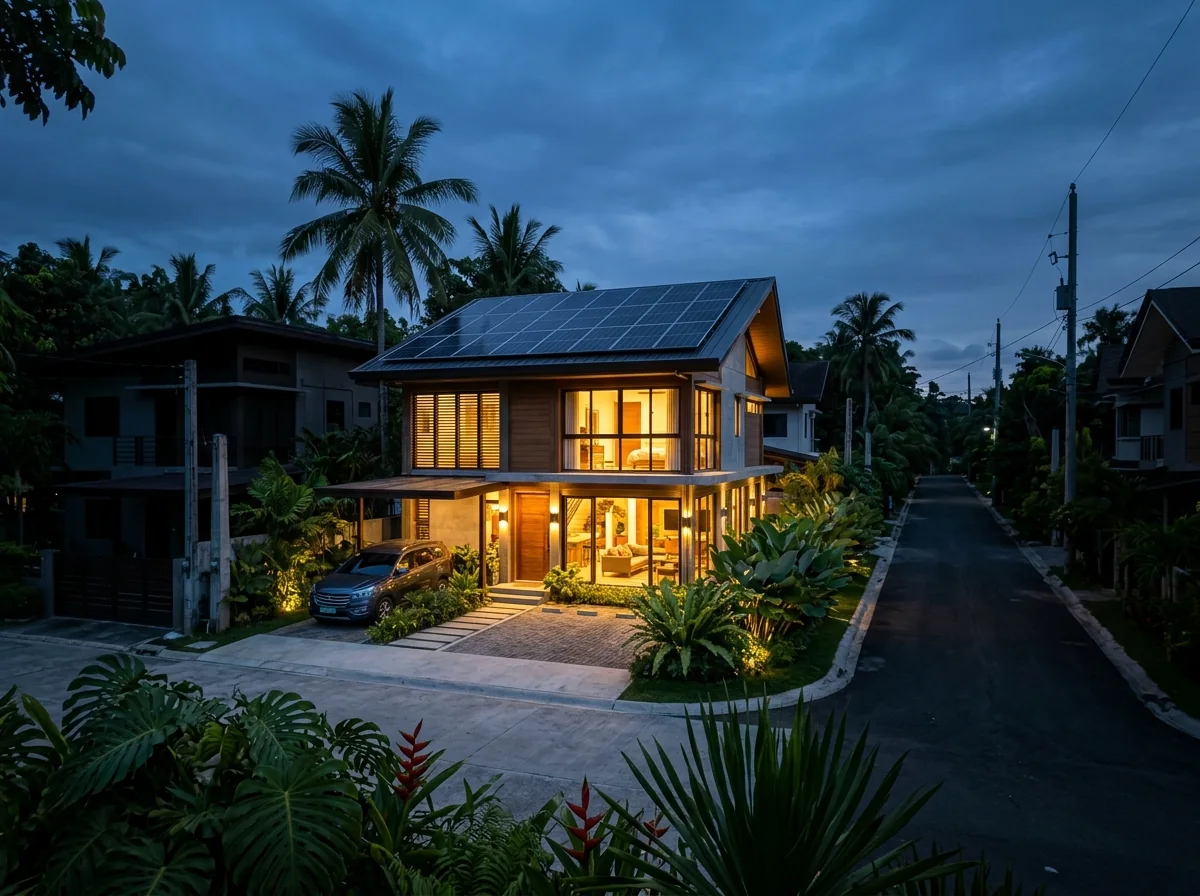
Every sudden transformer trip across Cebu stalls remote calls, halts cash registers, warms chilled vaccine or meat cabinets, and forces awkward diesel cranking—whereas LiFePO4 hybrid solar bridges blackouts automatically while slashing ₱15–₱16/kWh bills all month long.
- Auto-switch automatic outage transfer
- 5–64 kWh scalable LiFePO4 reserve
- From ₱305,000 6 kW + 5 kWh complete build
Less downtime
Why hybrid battery backup beats office UPS bricks and noisy generators
Small desktop UPS units only last minutes, and gasoline generators need someone to start them while the router goes down. A hybrid Solis inverter with a Dyness or Pylontech LiFePO4 battery switches over automatically and runs the circuits you choose for hours, depending on battery size.
Better still, unlike pure standby equipment collecting dust while paying zero return between rare grid disruptions, your hybrid array generates real daily savings every sunny morning—reducing VECO (~₱15.30/kWh, October 2026), MECO (~₱15.98/kWh, September 2026), or CEBECO (~₱15.08–₱15.91/kWh, September 2026) electricity bills across a conservative 3–5 year payback window while holding reserve outage energy silent indoors.
In the hot months the Visayas grid can go on yellow or red alert when power reserves run thin, which can bring rotating brownouts on top of local feeder trips. For multi-hour rural outages along northern CEBECO II, southern CEBECO I, or western CEBECO III lines, scalable batteries expand from 5 up to 64 kWh alongside Tier-1 620–630 W panels refilling packs each morning.
- Automatic transfer keeps Wi-Fi routers, servers & desktops online
- Quiet wall-mounted LiFePO4 lithium safety without smelly diesel exhaust in hallways
- Tier-1 620–630 W panels generate continuous daily bill reduction when utility power stays stable
- Stackable 5 kWh (₱75,000), 10 kWh (₱140,000), or 16 kWh (₱160,000) battery modules grow anytime
Match your property
Four common Cebu outage pain points solved with right-sized LiFePO4 backup
Not every building needs massive expensive battery rooms to survive blackouts—splitting essential routers, lights, cold freezers, or single-room inverter aircons onto dedicated backup subpanels cuts wasted hardware cost while stretching hours of calm backup power across residential, clinic, and office sites.
Home offices & WFH hubs
Keep video calls, internet, workstations and a bedroom aircon running through brownouts with fixed 6–12 kW hybrid packages.
Clinics & cold storage
Keep dental compressors, pharmacy fridges and meat freezers running through outages and protected from voltage spikes when power returns.
Resorts & rural towns
Protect guest rooms, dining refrigeration, and payment terminals along coastal Mactan or provincial CEBECO lines without rattling evening generators.
Full remote off-grid sites
Power sites the grid doesn’t reach with off-grid solar battery systems.
Compare backup options
Hybrid solar battery bank vs. portable or standby diesel generator in Cebu
Property owners across Metro Cebu and rural cooperatives often weigh buying another fuel generator against installing hybrid rooftop storage—comparing lifetime monthly operating spend, noise, morning automation, and daily bill reduction reveals why battery systems pay themselves back within 3 to 5 years.
| Comparison Point | Hybrid Solar + LiFePO4 Battery | Standby Fuel Generator |
|---|---|---|
| Daily return when grid stays on | Cuts VECO/CEBECO bills every day | Zero utility bill savings—sits idle depreciating |
| Switchover response speed | Automatic islanding | Manual start or 15–30 second ATS blackout dip |
| Multi-day typhoon fuel risk | Recharges autonomously whenever sun peeks out | Exposed to fuel station lines & dry tanks |
| Nighttime sound & fumes | Silent wall-mounted indoor battery bay | Loud engine noise & carbon monoxide exhaust |
| Typical financial recovery | 3 to 5 years via electricity savings | Permanent net running cost forever |
Fixed turnkey hybrid systems scale from 6 kW with 5 kWh (₱305,000) through 18 kW with 16 kWh (₱970,000), while stacked LiFePO4 storage grows modularly up to 64 kWh—browse options on Packages & Pricing or Solar Battery Storage.
Resilient engineering
Four protections built into every CebuSolar blackout-ready hybrid wall
Surviving Visayas grid instability takes far more than slapping panels onto tin roofs—voltage surges upon utility grid restoration often fry unprotected appliances faster than outages themselves. CebuSolar builds four engineering safeguards into every residential and commercial backup switchboard province-wide across Cebu.
Layer 1 · Critical load split
Separate essential backup subpanel
Routes lights, outlets, fridge, internet, and designated inverter aircons onto backed-up circuits so non-critical heaters never drain batteries fast.
Layer 2 · Battery floor
Reserve state-of-charge floor
Program a clear battery reserve cushion inside your Solis app so some battery is always kept back for outages.
Layer 3 · Reconnection guard
Schneider & Suntree surge defense
Grid voltage spikes on power restoration meet dedicated AC/DC breakers and surge arresters protecting inverters and home electronics.
Layer 4 · Solar refill
Autonomous next-morning recovery
Even if Visayas lines remain offline past dawn, daytime sun restores your LiFePO4 bank and powers the backed-up circuits.
Backup sizing guide
Compare backup circuit coverage by CebuSolar hybrid package tier
Choosing the right turnkey package matches daily kWh generation directly against blackout duration goals—checking fixed prices from ₱305,000 up to ₱970,000 clarifies which household or SME equipment remains continuously powered when utility transformers go dark across Cebu utility territories.
| Turnkey Hybrid System | Installed Price Range | Typical Backed-Up Circuits Covered |
|---|---|---|
| 6 kW Hybrid + 5–16 kWh | ₱305,000 – ₱330,000 | Lights, Wi-Fi, laptops, CCTV, ceiling fans & inverter refrigerator |
| 10 kW Hybrid + 5–16 kWh | ₱495,000 – ₱520,000 | All essentials plus home clinic/office outlets & bedroom split-type aircon |
| 12 kW – 16 kW Hybrid | ₱615,000 – ₱820,000 | Busy SME offices, retail stores, multiple aircons, freezers & rolling outages |
| 18 kW Hybrid (or Stacked 64 kWh) | ₱945,000 – ₱970,000+ | Large residences, boutique resorts, dental labs and chillers |
How long each circuit runs depends on battery size. Prices are subject to change without prior notice. Extra battery expansions add 5 kWh (₱75,000), 10 kWh (₱140,000), or 16 kWh (₱160,000)—run exact local math on our Savings Calculator or see all packages on our Cost Page.
Cebu aftercare
Clean installation, backup subpanel sorting, and Metro Cebu aftercare
Deploying our team straight from our Cebu City office at Mclin Building, Corner T. Padilla St. and M.J. Cuenco Ave., CebuSolar traces critical breaker panels free, issues fixed 40/40/20 proposals, assists with municipal permits, and defends components with stocked local replacement hardware.
Check warranty commitments on our Warranty page, or trace installation phases on how solar works.
- Critical load subpanel separation isolates high-watt electric ovens from backup battery banks
- Schneider Electric & Suntree breakers guard sensitive electronics when power surges back online
- Metro Cebu service: we aim to reach you within 48 hours
- 1-year workmanship, 12-year inverter & 30-year panel (at least 87% at yr 30) warranties
Blackout transfer and battery protection questions across Cebu
Homeowners and clinic supervisors often ask how fast hybrid systems take over during sudden midday blackouts, whether battery stacks recharge during utility outages when morning sun breaks out, how critical subpanels prioritize essentials, and how long standby fuel gensets compare financially.
How fast does power transfer when VECO or CEBECO trips without warning?
Automatically. The Solis hybrid inverter disconnects from the street line and powers the backup outlets, and most modems, computers and payment terminals keep running through the switchover.
Will our system stay powered if the neighborhood brownout drags for twelve hours?
During daylight, Tier-1 620–630 W panels power your backed-up subpanel straight from sun while charging your LiFePO4 battery bank; after dark, battery kWh capacity (expandable up to 64 kWh) runs reserved loads through evening hours.
Why do we separate critical loads instead of backing up every single wall plug?
Routing heavy optional circuits (old instant water heaters or heavy commercial welders) onto non-backup utility rails prevents accidental battery drain, reserving LiFePO4 power steadily for refrigeration, communications, lighting, and designated aircons (battery guide).
Can a hybrid system work alongside our office’s existing backup generator?
Yes—our system designers wire clean mechanical/automatic interlock logic safely separating standby gensets when utility power and hybrid banks coordinate heavy multi-day typhoon blackouts.
How quickly do brownout-ready hybrid packages recover cost through utility bill savings?
At current late-2026 Cebu rates around ~₱15–₱16/kWh, properly matched hybrid arrays typically achieve financial payback within 3 to 5 years while keeping your backed-up circuits running in brownouts; check details on Solar FAQ and Warranty.
Will morning sunshine still recharge my hybrid batteries if the entire barangay grid stays out for four days?
Yes, as long as the panels come through the storm undamaged (typhoon recovery guide): once daylight arrives above unbroken panels, your Solis hybrid inverter runs home lights, refrigerators, and fans directly off live sunshine while piping surplus afternoon kilowatts straight back into depleted LiFePO4 batteries every single day.
Can I run heavy hot-water heaters and multiple aircons simultaneously during a blackout on a small 6 kW hybrid?
Every hybrid inverter caps maximum off-grid discharge surge capacity neatly near its kW nameplate rating. That is why during our free home walk, CebuSolar wires refrigerators, Wi-Fi, lights, laptops, TVs, and targeted inverter aircons onto your backed panel while letting heavy spare heaters pause nicely until utility resumes (selection guide).
Does installing a simple grid-tied array first allow plugging LiFePO4 batteries directly onto it next year?
Plain string grid-tied inverters lack battery charge controllers, meaning upgrading later entails swapping inverters or AC-coupling a second box—whereas starting straight with a Solis hybrid inverter lets you snap extra batteries any day.
Installation, weather and care: what else should you read?
How Solar Installation Works in Cebu
From site visit to switch-on: how a CebuSolar install works in Cebu, with one fixed itemized price, permit help and 2–4 days on site for homes.
How Long Do Solar Panels Last in Cebu?
Tier-1 panels carry a 30-year output warranty (at least 87% at year 30); Solis inverters 12 years. What salt air and heat do in Cebu, and how to make it last.
Can Solar Panels Survive a Cebu Typhoon?
Yes, if they are mounted right: rails rated for 240 km/h winds, stainless bolts into inspected purlins and sealed roof points. Here is how we do it in Cebu.
Solar Panel Maintenance in Cebu
Keep your solar making power in Cebu: when to rinse panels, salt-air care, what to check in the Solis app and what the 1/12/30-yr warranties cover.
Cebu Peak Sun Hours
Cebu gets about 4.6 peak sun hours a day. See what that means per kW, how Habagat and Amihan change output, and what each 6–18 kW package makes a month.
Solar FAQ Cebu
Straight answers to what Cebu homes and businesses ask about solar: 2026 package prices, brownout backup, batteries, typhoons, roofs and warranties.
Get your personalized solar quote
Tell us about your place, pin it on the map and add a photo of your bill. Our team replies on Viber within one business day.
- 1. We size your system from your bill and map your roof by satellite.
- 2. You get your quote: panels, battery, monthly savings, payback and price.
- 3. Happy with it? We check your roof and wiring on site, then lock in one fixed price.